

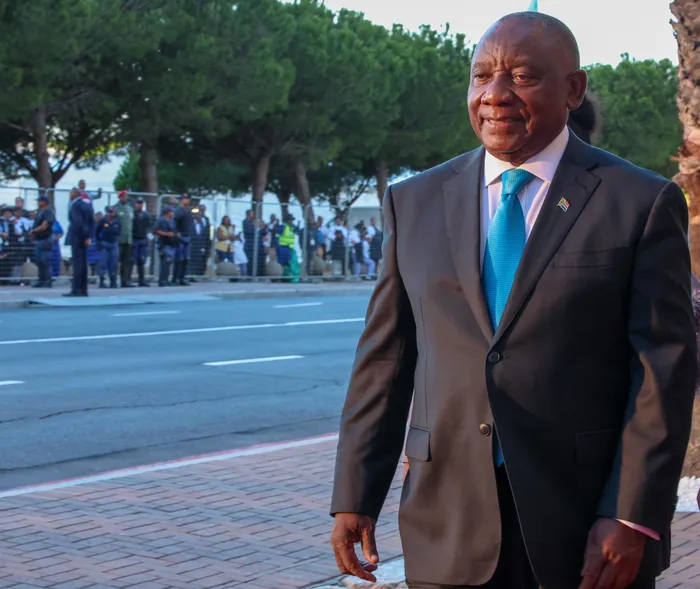
President Cyril Ramaphosa delivers the State of the Nation Address (Sona) last Thursday.
Image: Jairus Mmutle/GCIS
The 2026 State of the Nation Address (Sona) has stirred a mix of optimism and scepticism among economic analysts, as they dissected President Cyril Ramaphosa's plans aimed at addressing long-standing issues affecting South Africa's socio-economic landscape.
With a particular emphasis on crime, water supply management, and local government reforms, this year's address has been seen as both a response to the pressing concerns of citizens and a reflection of the government's intent to bridge the gap between high-level aspirations and the citizens' lived realities.
Frank Blackmore, Lead Economist at KPMG, noted that the President's focus on crime, covering corruption, gang violence, and illegal mining, was particularly pertinent given the escalating safety concerns faced by many South Africans.
"He went into considerable detail, ranging from creating an environment that is safer and more conducive to community wellbeing, such as improved street lighting and strengthened social services, to placing more boots on the ground. He also outlined specific actions aimed at strengthening institutions such as the SIU, the NPA and the Hawks, as well as reforms to the whistleblower framework," the KPMG lead economist told Business Report.
"I believe this would have been well received by most South Africans, given the current state of safety and security in the country, as highlighted by the ongoing Madlanga Commission and the parliamentary inquiry," Blackmore said.
In addressing the inadequacies of water supply, the President has introduced several initiatives, including the establishment of a National Water Agency and a National Water Crisis Committee, which could potentially alleviate the chronic water scarcity that afflicts many municipalities.

SONA 2026.
Image: Supplied
Ramaphosa also focused on local government reform, strengthening municipal finances, improving skills, ensuring proper staffing and enhancing accountability.
He referred back to last year’s commitment to an updated White Paper and suggested a revised operating model for municipalities.
"Economic growth was also central to much of the speech, encompassing infrastructure development, increased investment, innovative funding mechanisms and sectoral interventions in areas such as agriculture and mining to stimulate growth. He also touched on additional areas including education, technology, tourism, healthcare, small businesses and BEE, suggesting a broad and comprehensive policy agenda," Blackmore said.
While Blackmore acknowledged the positive steps taken towards funding water infrastructure, he cautioned against merely adding bureaucratic layers without addressing the fundamentally flawed delivery systems already in place.
"Approximately 90% of the address focused on decades of basic service delivery failures within government. While acknowledging these failures is important, the proposed solution often appears to involve establishing additional layers of government - new committees, oversight bodies and agencies - rather than fixing the departments directly responsible for delivery and oversight," Blackmore said.
Meanwhile, the Congress of South African Trade Unions welcomes the presidents 2026 Sona.
The trade union said in a statement, "Whilst appreciating the many dire socio-economic challenges facing society and the working class in particular, there are important green shoots that have been achieved in the past few years as part of the African National Congress led government’s renewal efforts."
"Whilst appreciating the important strides made by President Ramaphosa’s administrations to undo the damage inflicted during the decade of state capture and corruption and that the full benefits of these turnarounds are still to be felt, it is critical that government move with much greater speed to ensure their full implementation. It is equally fundamental that the 2026/27 Budget speak to these commitments," Cosatu further stated.
Tando Ngibe, Senior Manager at Budget Insurance, expressed a growing sentiment among South African households: as the nation grapples with economic recovery, many citizens are less preoccupied with GDP growth figures and more concerned about the tangible impact on their household budgets.
With lingering inflation and the pinch of rising living costs, families continue to feel financial pressures, primarily driven by high food prices, transport expenses, and increasing municipal charges.
“While lower inflation and easing interest rates are encouraging signs, many families remain under pressure,” Ngibe said.
One of the most significant aspects of the recent economic address was the heightened focus on improving the commuter rail network and tackling the issue of affordable housing.
Transport costs rank among the highest in monthly expenditures for households.
If rail services become more dependable and budget-friendly, the ripple effect could be substantial.
“Even modest savings in transport can free up vital funds for essentials like groceries, school tuition, and insurance premiums,” Ngibe noted.
The bedrock of financial wellbeing remains rooted in employment. Ngibe said that job creation stands as the pivotal factor in re-instilling consumer confidence.
“When more South Africans, especially youth, are employed, families can develop a sense of financial security, reducing their reliance on debt and social grants. A stable income allows them to budget, save regularly, and look towards a future with greater promise,” Ngibe said.
Ngibe emphasised that the true measure of progress lies in the lived experiences of consumers: Are they feeling safer? Are services being rendered more reliably? Are monthly expenses becoming more manageable?
Answers to these questions will reveal whether the aspirations of financial resilience, grounded in stability, secure employment, responsible debt management, accessible transportation, and consistent service delivery—are finally being realised in the everyday lives of South Africans.
BUSINESS REPORT