

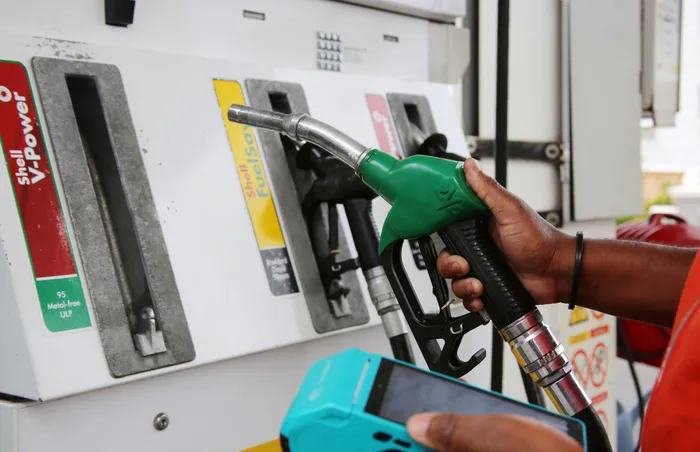
As geopolitical tensions escalate, South Africa braces for unprecedented fuel price hikes that could reshape the economy and affect everyday consumers
Image: Tumi Pakkies / Independent Newspapers
South Africans are facing record-high petrol and diesel price increases for April, with prices increasing by R5.31 a litre for 93 Unleaded and R5.82 a litre for 95 Unleaded.
Meanwhile, diesel looks set to increase by between R10.13 a litre in the case of 500ppm and R10.27 a litre for the cleaner 50ppm.
The price of Brent crude oil remained volatile near $112 a barrel on Monday, poised for a record monthly surge of more than 50% in March, as the ongoing Middle East conflict continues to disrupt energy markets.
This comes amidst Eskom’s 8.76% increase for the 2026/27 financial year to be implemented from 1 April 2026. Municipal customers will see increases averaging 9.01% from 1 July 2026.
Although the government is yet to announce the official fuel price adjustment for April that would kick-in on Wednesday, it is undeniable that South African consumers and businesses are poised for substantial fuel price shocks driven by escalating geopolitical tensions between Iran, the US, and Israel.
This has prompted calls for a Parliamentary debate to discuss the fuel crisis as a matter of national importance while workers' unions are calling on the government to urgently implement a temporary reduction in fuel levies.
The DA on Monday said it has written to the Speaker of the National Assembly to ask the House to reconvene before 1 April as the rules make special provision for discussions of national importance. The party has also requested the government to slash fuel levies in half for the duration of the crisis or as long as possible and thereby provide R3.17 in relief per litre of petrol.
According to recent insights from consulting firm EY, the ramifications of this unrest are profound, as disruptions have inhibited access to approximately 20% of the global oil supply, posing a direct threat to the nation’s fuel security.
“These disruptions have hampered access to around 20% of global oil supply, directly threatening South Africa’s fuel security,” said Angelika Goliger, EY Africa Chief Economist.
The implications for the local economy are significant, with fuel prices anticipated to see unprecedented increases in the near term.
South Africa's reliance on external oil supplies makes it particularly vulnerable to international disturbances.
Approximately one-quarter of the country's crude oil imports and nearly a third of its total fuel supply are sensitive to disruptions in the Strait of Hormuz.
With a significant supply shock now appearing likely, the combination of these dire circumstances and soaring prices presents a growing crisis for the nation.
The anticipated changes create a challenging landscape for South African consumers and businesses alike.
"Resilience during fuel shortages in the developing world is built not through idealised demand reduction, but through targeted efficiency measures and a realistic assessment of existing constraints," Goliger added.
The Motor Industry Staff Association (MISA) on Monday called on the government to urgently implement a temporary reduction in fuel levies to protect workers and their families from the devastating impact of rising fuel prices.
“Workers are being crushed between the rising cost of fuel and electricity. Families are forced to choose between commuting to work, putting food on the table, or keeping the lights on. This is not sustainable,” said Martle Keyter, MISA’s Chief Executive Officer: Operations.
As global strategies focus on measures such as remote work and travel reduction to manage demand, South Africa faces considerable structural barriers to such initiatives.
Only about 10-15% of the labour force can work remotely, limiting the viability of many conventional demand-management strategies.
Recommendations from the International Energy Agency (IEA) suggest prioritising public transport, safeguarding food and essential logistic services, and providing temporary fiscal relief to mitigate the effects of price shocks.
However, Goliger contends that these proposals may not fully address the realities faced by developing economies.
“While these suggestions are broadly sensible, they do not sufficiently account for developing-economy realities,” she added.
The structural constraints in South Africa further exacerbate the challenges posed by limited fiscal space, which restricts the government’s ability to implement extensive price interventions without jeopardising fiscal stability and debt sustainability.
As South Africans brace for steep fuel price increases, the economic ripple effects may resonate throughout the nation, with no simple solutions in sight.
The upcoming months will be critical in determining how the country will navigate the precarious intersection of global instability and domestic economic pressures.