

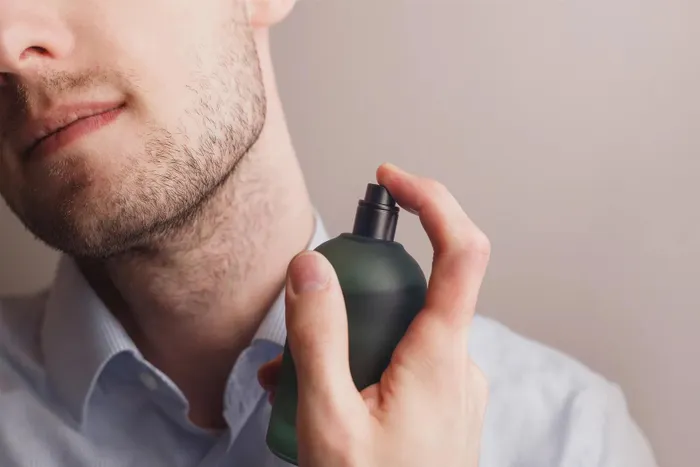
Discover how the fragrance industry is transforming with the rise of dupes, driven by affordability and social media influence. Are these smell-alike alternatives here to stay?
Image: Getty Images
The fragrance industry is experiencing a marked rise in the popularity of dupes, driven largely by consumer affordability, high inflation and greater access to alternatives.
This trend is further accelerated by social media marketing and e-commerce, alongside a noticeable shift in perception among younger consumers, who increasingly view dupes as acceptable and legitimate alternatives.
These factors together have contributed to a significant improvement in the quality of smell-alike fragrances.
This upward trend presents a substantial challenge for brand owners, many of whom have invested considerable time, money, and resources into creating, refining, and marketing their fragrances.
For context, the global fragrance dupe market was valued at approximately $2.71 billion by the end of 2024, with forecasts suggesting it could reach $11.75 billion by 2034.
Current issues arise not only from dupe brand holders mimicking the smell of famous brands, but also from how dupe fragrances are marketed.
Modern dupe producers tend to take a cautious approach in their marketing, circumventing legal liability by using phrases like “inspired by”, “smells like X” or “our version of X”.
Many also rely on social media influencers to make direct comparisons on social media platforms, while they distance themselves from any potential legal claims.
In modern slang, the term “dupe” is shorthand for “duplicate,” and is commonly used to describe a product designed to resemble, imitate, or evoke a more expensive or higher-quality branded product. Ironically, the word originally meant to deceive.
A key reasons dupes have become so common in the fragrance industry is the limited intellectual property protection available to perfume brand holders.
While brand holders are well-protected against copies of their packaging or branding, their options are far more limited when it comes to scents themselves.
This means they have fewer legal tools to act against fragrances that mimic their scent or use marketing strategies that clearly draw on the original product while avoiding legal liability.
Copyright protects the expression of ideas in material form and extends to creative works such as literary, artistic, and musical works.
However it remains debatable whether this protection can or should extend to scents.
In South Africa, the Copyright Act contains a closed list of protectable categories, and it is uncertain whether any of these categories would include fragrances.
This is due to the inherent nature of scents, which lack a stable, tangible form, making it difficult to argue that they qualify as copyrightable works.
This position is consistent with the French case Lancôme v Modefine, which held that copyright does not protect fragrances because protection is limited to creations that have a tangible form, are identifiable, and possess sufficient distinctive character to allow communication to others.
A patent is an exclusive right that grants the patentee the ability to prevent others from exploiting the patented invention.
To qualify for patent protection, an invention must be novel, involve an inventive step, and be capable of industrial application.
For fragrances, protection may be sought for formulations, production methods, or related technologies, provided they meet these requirements.
However, a patent directed at monopolising the scent of a fragrance itself may be challenging in South Africa, on the basis that the invention is not defined by technical features.
Another challenge is that many fragrance houses are reluctant to file patents because doing so requires public disclosure of the formulation.
Once the 20-year term expires, this information becomes publicly accessible, potentially revealing trade secrets that would otherwise remain protected indefinitely.
Furthermore, patents generally do not extend to protect marketing and branding elements, as it specifically protects technical inventions rather than commercial representation.
This leads us to trade marks, which remain an effective tool for brand owners trying to protect their rights, although they too have limitations.
A trade mark identifies and distinguishes the goods or services of one undertaking from those of another. In South Africa, the Trade Marks Act of 1993 (Trade Marks Act) allows for the registration of non-traditional trade marks such as shapes, colours, sounds, and at least in theory, scents, although this presents practical challenges.
From a trade mark perspective, the position seems relatively clear. If a dupe mimics a registered brand holders trade mark, packaging, branding, or overall get-up to the extent that it creates a likelihood of confusion, the brand holder can institute infringement proceedings based on trade mark infringement as envisioned in section 34(1)(a) and/or 34 (1)(b) of the Trade Marks Act.
The difficulty becomes far more pronounced where the imitation involves the fragrance itself.
While some scent marks have been registered internationally, South Africa has yet to record a successful registration of a scent trade mark.
Notably, the United States once granted a scent mark for “a flowery musk scent” applied to sewing thread, and more recently, India accepted its first smell trade mark for a rose-floral fragrance applied to tyres.
In South Africa, the EU case Sieckmann remains highly influential when considering the registrability of scent marks.
In this case, the court held that, for a sign, including a scent, to qualify as a trade mark, it must be capable of graphical representation, and that representation must be clear, precise, self-contained, easily accessible, intelligible, durable, and objective.
Scent descriptions, chemical formulas, and scent samples all failed to meet this standard. As a result, registering fragrance scents as trade marks remains practically very difficult.
The issue becomes more complex when a dupe producer uses a brand’s reputation in a way that doesn’t cause direct consumer confusion as modern dupes increasingly exploit the reputation of well known brands, a practice the EU confirmed as infringing in L’Oréal v Bellure because it takes unfair advantage of the original brand’s fame.
The South African Trade Marks Act contains a similar provision in Section 34(1)(c), which protects the selling power and distinctiveness of well-known trade marks.
Recent court decisions, including National Brands Limited v Cape Cookies CC and Akzonobel Coatings International B.V. and Another v Dumax, indicate an increased willingness by the courts to consider the likelihood of an unfair advantage being taken of a well-known trade mark.
These judgments reflect a growing emphasis on safeguarding the substantial investment made by proprietors in developing and maintaining brand goodwill.
Recently, although unrelated to fragrances, Lululemon successfully secured a trade mark registration for the phrase “LULULEMON DUPE” in the United States for services relating to advertising, marketing and retail.
While much speculation exists about the intention behind this filing and how the company proposes using the trade mark, the filing does show a shift in the company trying to address dupe culture.
In principle, this registration would afford the company the right to act against commercial use of the phrase in paid searches, product listings, and affiliate marketing, addressing the core issue of misuse of metadata and commercial language.
This is provided they can show the likelihood of confusion. Companies such as Aritzia have followed suit, filing applications for “ARITZIA DUPE” in the US and Canada.
Thembokuhle Danca (Associate), with oversight by Julia Hopf (Partner) at Spoor & Fisher.

Thembokuhle Danca (Associate) at Spoor & Fisher.
Image: Supplied.

Julia Hopf (Partner) at Spoor & Fisher.
Image: Supplied.
Follow Business Report on Facebook, X and on LinkedIn for the latest Business and tech news.