

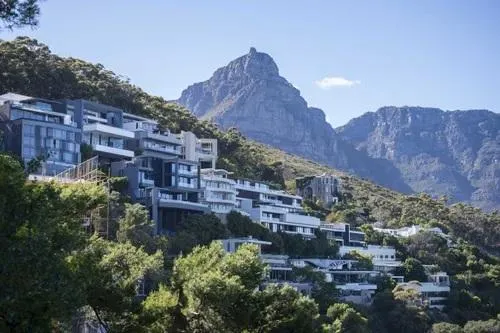
Nettleton Road is a prestigious, and reportedly the most expensive, street in Africa, located in the Clifton area of Cape Town, South Africa.
Image: Armand Hough/Independent Newspapers
By Vivian Warby and Given Majola
This was a year in which Cape Town’s property market pulled in two sharply different directions.
On one side, mega-projects, luxury sales and major policy shifts signalled confidence, investment and long-term growth potential.
On the other, affordability crises deepened, the middle class entered the housing struggle, and long-standing questions about spatial justice and public land resurfaced with new urgency.
From the coming Cape Winelands Airport and record-breaking sales along the Atlantic Seaboard, where luxury real estate is prime in Cape Town, to landmark court rulings in District Six and the rollout of South Africa’s most ambitious inclusionary-housing programme in Stellenbosch, the year captured the full spectrum of a sector in transition.
The property market continued to reflect both the country’s economic recovery – buoyed by interest-rate cuts and South Africa’s exit from the FATF greylist – and its deep structural inequalities, still shaping who gets to live where, and at what cost.
The year also marked a growing public reckoning with affordability in Cape Town.
Once a debate centred on the urban poor, the affordable housing crisis expanded into middle-class living rooms, prompting calls for rent regulation and raising concerns about digital-nomad visas, Airbnb saturation and foreign-buyer dominance.
Meanwhile, township micro-developers were recognised for the first time in planning policy even as extortion networks threatened to derail progress on the ground.
Taken together, these stories show a property sector at a crossroads – one defined by record highs, long-overdue reforms, and increasingly urgent questions about inclusion, access and the future of South African cities.
We take a look at some of the top property stories of 2025 and the real estate trends in 2025.
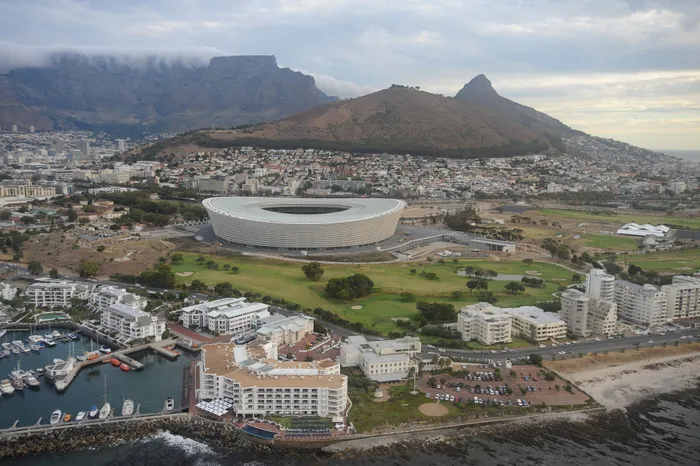
unaffordable even for the middle class: Atlantic Seaboard
Image: Henk Kruger/Independent Newspapers
Cape Town’s housing affordability crisis broke into full view in 2025 as middle-class households – long insulated from the worst pressures – began organising around rent control, rising prices and access to well-located neighbourhoods.
What was once a battle fought mainly by low-income communities pushed to the margins under apartheid spatial planning has now become a citywide confrontation.
Digital nomads, foreign buyers and the growth of short-term letting continue to shift market dynamics.
FNB Economist John Loos said while foreigners do like Cape Town, the number of higher skilled and higher income “semi-grants” from elsewhere in the country is higher, and added that house prices “to a large degree reflect a region’s economic performance, and the Western Cape is just performing too well economically to be a cheap housing market”.
The introduction of Cape Town’s digital-nomad visa for high-earning remote workers raised new concerns about rental escalation. At the same time, foreign investment surged: in the first five months of 2025, international buyers spent more than R1 billion on Cape Town property, part of nearly R2.5bn in total sales – the city’s strongest five-month performance in five years.
However, UCT’s Associate Professor François Viruly argues that Cape Town now operates two property markets: one defined by local household income, and another driven by exchange-rate-fuelled foreign investment.
The latter, he warns, is less sensitive to interest rates, pushes local buyers out of key suburbs and leaves holiday-home areas seasonally empty – weakening neighbourhood economies.

Cape Winelands Airport is strategically positioned to serve as an alternate airport for reserve fuel planning for airlines flying into Cape Town.
Image: Supplied
Cape Winelands Airport is expected to break ground in 2026, following its recent environmental approval, with a planned R8bn first phase that includes a realigned 3.5 km runway, cargo and industrial facilities, and a boutique terminal.
Backed by Growthpoint, the 450-hectare mixed-use precinct is set to become a major new growth node, combining logistics, commercial and hospitality development.
The availability of industrial land in Cape Town has become very scarce, and that has driven up the price. Cape Town’s only viable expansion direction is northwards along the Cape Winelands corridor.
This is already starting to happen, says Werner van Antwerpen, Growthpoint’s head of Corporate Advisory. The project is already driving interest in nearby residential areas, with potential boosts to short-term rentals and estate living.
Designed around renewable energy and water-reuse systems, the precinct may also command a “green premium.”
While job creation is expected to top 35,000 in early phases, risks such as infrastructure strain and phased timelines remain. Still, for investors, the next few years offer a strategic early-entry window.

Inga Dyantyi (attorney at Ndifuna Ukwazi) Dr Jonty Cogger (former attorney at NU) Adv Adiel Nacerodien, Mrs Allie.
Image: Supplied
In a significant ruling, the Western Cape High Court halted the eviction of 78-year-old Noor-Banu Allie from her District Six home, calling the eviction attempt “opportunistic”, “disingenuous” and “unlawful”.
Allie, whose family home was destroyed under apartheid and whose restitution claim remains unresolved, successfully appealed a Magistrates Court decision. The property manager did not oppose the appeal.
The case highlights the sharp pressures facing long-term residents as Cape Town’s housing market becomes increasingly dominated by tourism and high-income tenants.
A mid-2025 survey showed that 72% of Central City apartments listed were furnished and therefore inaccessible to most long-term renters.
For pensioners like Allie, eviction would almost certainly mean displacement.
Her attorney, Inga Dyantyi of Ndifuna Ukwazi, said the case underscores systemic failures in land reform and the urgent need for well-located affordable housing in Cape Town.
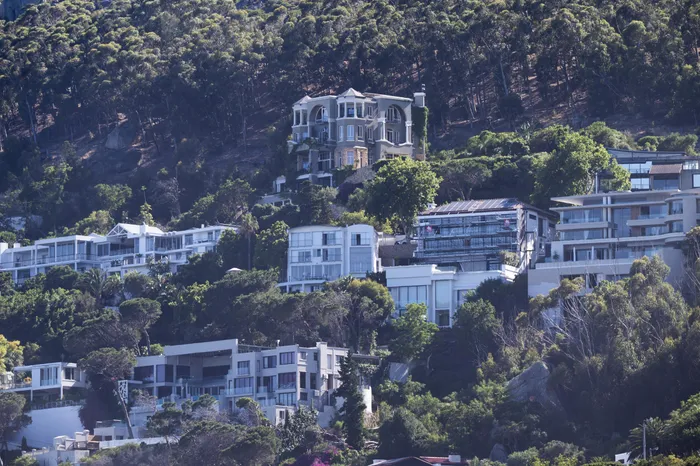
Nettleton Road is a prestigious, and reportedly the most expensive, street in Africa, located in the Clifton area of Cape Town, South Africa.
Image: Armand Hough
Nettleton Road in Clifton remains South Africa’s – and arguably Africa’s – most exclusive street. The year’s standout sale was DJ Black Coffee’s reported R157m cliffside purchase, said to be concluded in cash and brokered by Lance Real Estate CEO Lance Cohen.
According to Cohen, demand for ultra-luxury properties remains intense, and Nettleton Road will only become more expensive and in demand.
Once a row of modest holiday bungalows, the road has transformed over decades into a hyper-exclusive enclave with homes engineered into cliffs, panoramic Atlantic views and virtually no vacant land left.
Pam Golding sold two erven totalling 2,700 m² sold for R170m in 2025 (and now under construction), reinforcing its status as the pinnacle of scarcity-driven pricing on the Atlantic Seaboard.
Basil Moraitis of Pam Golding Properties notes that the broader Atlantic Seaboard mirrors this pattern: strong demand, limited stock and sustained investment signal long-term confidence in the area’s value.
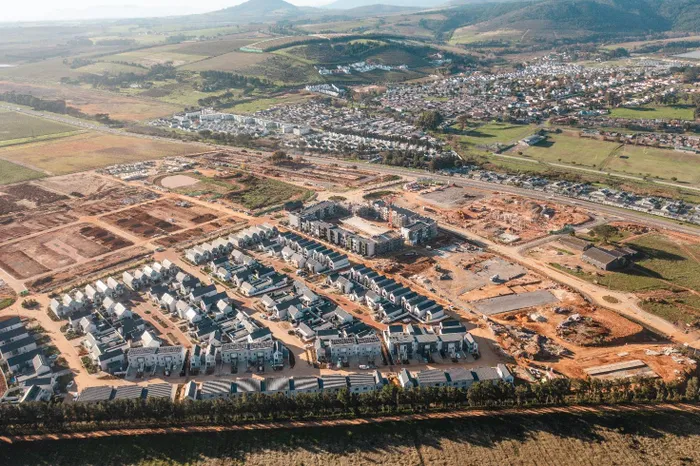
Construction of the Newinbosch Neighbourhood Estate development in 2025 where 144 inclusionary housing units (11% of the entire development) were developed.
Image: Sebastian Machill (2025)
Stellenbosch Municipality’s 2023 inclusionary-zoning policy shifted from theory to implementation in 2025 – and is already reshaping development in the region.
The inclusionary housing policy requires that 20% of units in developments of 20 or more homes be affordable, rising to 30% in the Adam Tas Corridor in exchange for additional rights.
Stellenbosch is only the second municipality in South Africa with a mandatory inclusionary-housing requirement.
More than 900 inclusionary units have been approved, and 144 have already been built in the Newinbosch neighbourhood – the clearest example yet of inclusionary zoning at scale. Units are targeted at employed households earning R3 500 – R22 000 per month, with affordability safeguards maintained for at least 30 years.
If successfully scaled, the policy may shift how high-value developments absorb social responsibility, embedding inclusion in some of the region’s most valuable land.
The prime lending rate dropped from 11.25% in November 2024 to 10.25% in November 2025, following a series of repo-rate cuts to 6.75%. For a R2 million bond over 20 years, this translated into a monthly saving of roughly R875 — over R200,000 across the loan term.
Lower rates have stimulated bond applications and helped first-time buyers re-enter the market, though affordability challenges remain pronounced.
South Africa’s removal from the FATF greylist has boosted investor confidence, reduced transaction friction and improved prospects for foreign investment into residential projects. Lower borrowing costs for both government and consumers could strengthen demand for housing and support broader economic recovery.
Despite progress, Human Settlements Minister Thembi Simelane notes that transformation in the property sector remains slow. Growth in the number of black property practitioners comes off a very low base, and long-standing structural barriers persist. While revised BEE charters and targeted funding have helped, systemic change is still needed across the built environment.
Despite public anxiety surrounding the Expropriation Act - signed into law last year but not yet in effect -industry leaders argue that fears are overstated and that arbitrary deprivation of property is prohibited. Banks continue to lend aggressively, signalling confidence that land reform will proceed without damaging the residential market.

The Ritz Hotel in Sea Point - will get a new name and look, as OKU Cape Town turns attention to its latest acquisition.
Image: Armand Hough
After years of standing dark on the Sea Point skyline, the once-glamorous Ritz Hotel finally changed hands in 2025.
The 23-storey landmark – shuttered, hijacked, abandoned and written off more than once – was snapped up by international boutique hotel group OKU Hotels. The sale closed at a striking R368 million, far above earlier expectations and signalling renewed confidence in Cape Town’s coastal property market.
The deal marks the end of a long, messy chapter for the building and the start of a complete re-imagining. For many Capetonians, the Ritz is more than concrete and glass – it’s nostalgia, nightlife, and a skyline icon. Now, after years of uncertainty, it finally gets the chance to live again.
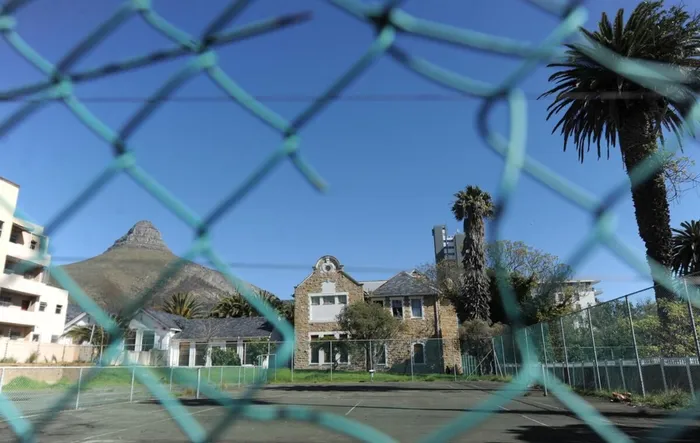
The battle of Tafelberg
Image: Armand Hough / Independent Media
If there is one property story that has defined Cape Town’s urban politics over the past decade, it is the fight over the Tafelberg School site in Sea Point. What began in 2015 as an obscure land disposal process has grown into one of South Africa’s most important debates: who gets to live in the city, who has access to opportunity, and how the government should use public land.
The long-running fight, however, reached new territory in 2025 when the Western Cape Government, for the first time, unveiled a concept plan centred on 252 social-housing units (something activists had wanted since 2017) plus affordable and market-rate homes. The site, one of the last large public parcels on the Atlantic Seaboard, has become the symbolic heart of debates over spatial redress, public land and urban fairness.
Key milestones expected in 2026 include a Constitutional Court ruling, land-use applications, heritage approvals and final design refinements. Construction is unlikely before 2027, but the direction is now unmistakably toward inclusion.
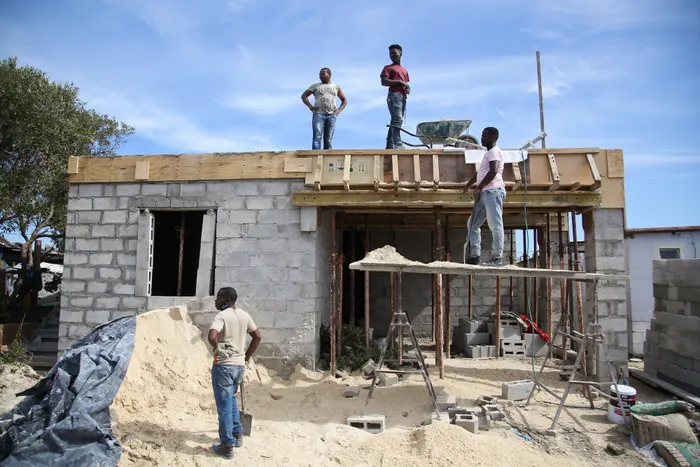
Property township micro-developers are addressing the affordable housing crisis. Picture:
Image: Supplied by DAG.
Cape Town’s 2025 amendments to its Municipal Planning By-law mark a major shift in local housing policy.
For the first time, township micro-developers can build 8–12 units per property without costly rezoning. Pre-approved plans and lower professional fees now make it easier to deliver formal, affordable rental stock in areas long excluded from major investment.
Supporters see overdue recognition of township-led development, while critics warn that densification without broader spatial reform may entrench existing inequalities.
The Township Rental Dialogue in Johannesburg recently - a partnership among Development Action Group, Planact, and the University of the Free State, highlighted that these township residents are driving one of South Africa’s most important housing markets (affordable rental market for the lower end) with almost no state support. Small-scale landlords produce thousands of units monthly – from backyard flats to multi-storey walk-ups – absorbing tenants shut out of both state and formal markets.
Yet the sector faces overloaded infrastructure, inconsistent regulations and weak tenant protections. “People are building regardless,” said Zama Mgwatyu of the Development Action Group. “The government must acknowledge, engage and lead in shaping rental markets.”
Professor Ivan Turok, the NRF Chair in City-Region Economies, described township rentals as “enormously significant” and warned that without a clear national vision, political and financial support will remain fragmented.
Cape Town’s reform signals long-needed institutional recognition, but the national question remains: can government now match the pace set by township developers?
Government efforts to curb construction-site extortion intensified in 2025. Since late 2024, 745 cases have been reported and 240 arrests made. Cape Town secured an interim interdict against extortion at a MyCiTi site and is moving to blacklist syndicate-linked contractors.
Yet township-level and beyond extortion remains widespread and the underlying shadow economy continues to constrain development.
Cape Town continues to distinguish itself in the global luxury property landscape. According to the Savills World Cities Prime Residential Index, prime markets worldwide remained resilient in 2025, with rents rising 2% and outpacing modest capital growth as investors prioritised income-generating assets.
This resilience is mirrored in the Western Cape, where the City Bowl and Atlantic Seaboard continue to attract strong local and international demand, pushing sales above R50 million — and in some cases beyond R100 million — into the realm of the ordinary.
Lightstone’s 2025 provincial data further underscores the trend: despite its smaller economy and population, the Western Cape consistently delivers outsized transaction values, reinforcing its position as the country’s most confident and high-performing residential market.
The Cape Town Central Business District continued its strong post-pandemic recovery in 2025, with the latest State of Cape Town Central City Report showing value rising to R9.03 billion, in new and ongoing property developments across 27 projects. Residential developments made up 44% of the pipeline. The median sectional-title apartment price in the CBD rose to R1.95 million by early 2025.
THE SA Property Owners Association filed an urgent application in the Western Cape High Court in July 2025 to challenge three new municipal tariffs introduced by the City of Cape Town: the city-wide cleaning levy, the fixed-water charge and the fixed-sanitation charge. All three are linked to property values, which SAPOA argues makes them function more like additional property rates than lawful service charges. In its papers, SAPOA states that municipal tariffs must be based on consumption or a clearly authorised levy, and that linking service charges to property value is both irrational and unlawful.
The City, however, maintains that the charges are reasonable, properly motivated and necessary to fund essential services. It deferred applying the new tariffs to business and commercial properties for one year, meaning those sectors will only be affected from July 2026. Residential and vacant land owners are already being billed.
The matter was originally set down for hearing in September 2025, but the court postponed it, and it is now scheduled for early December 2025. Until the High Court rules, the new tariffs remain in effect for residential and vacant properties, while their implementation for commercial properties remains on hold. The final outcome and potential budget implications are still uncertain.
"There's a clear distinction between the financial value of land and its social value. The financial view is solely about profit. In contrast, the social value of land is about ensuring the community benefits of land, beyond just financial returns, to promote social justice, and equitable access to resources,, says Noziphiwo Sigwela , researcher at Ndifuna Ukwazi.
“Currently, Cape Town is only prioritising the financial value of land, with everything dictated by the market. In a country with such profound inequality, this is the wrong approach. We cannot simply let the market regulate itself,” says Sigwela.
“The social value of land must be prioritised to level the playing field.
“We did not all start from the same place, and focusing only on markets deepens division. If we continue to see land only as a financial asset, we will never achieve the equality we seek, as people will remain unable to access land. We need policies that actively create equal opportunities for everyone."