

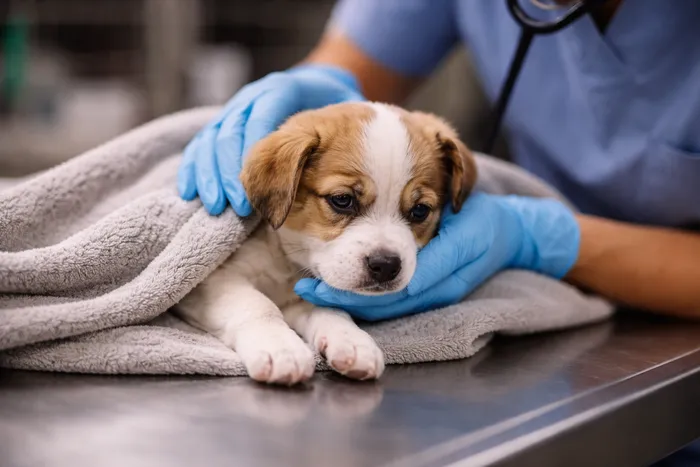
The SPCA says it is considering legal action after a viral Facebook post about a sick puppy sparked backlash online.
Image: AI Generated
The Cape of Good Hope SPCA says it is considering legal action after a viral Facebook post accusing its staff of mistreating a critically ill puppy sparked widespread backlash online.
The organisation says the allegations, posted in the Table View community Facebook group on March 12, were based on hearsay and misrepresented what happened when the puppy was brought to its mobile clinic.
The post spread rapidly and attracted more than 1 000 comments, many of them critical of the SPCA. Some commenters declared they would no longer support the organisation.
According to the SPCA, the author of the post was not present when the incident took place and relied on information from another person.
“No one from the SPCA was contacted and no attempt was made to verify the facts before serious allegations were published online,” the organisation said.
The Facebook post has since been removed, but the SPCA says the reputational damage caused by the claims remains.
The organisation said it launched an internal investigation after becoming aware of the allegations.
Two senior staff members were appointed to review the incident. As part of the process, the Animal Welfare Assistant who handled the puppy at the mobile clinic was interviewed, and the admission documentation completed when the puppy was handed over was examined.
The SPCA said the details provided on the admission form by the person who brought the puppy to the clinic included an incorrect phone number and address, which prevented staff from contacting the individual for further information.
However, the organisation said it was able to contact the person who published the Facebook post directly by telephone. During the conversation, the SPCA said the individual acknowledged that they had not witnessed the incident themselves and that the Facebook post was based on information provided by someone else.
According to the organisation, the individual also described the puppy as being extremely ill. The puppy was reportedly unable to walk, very weak, unwilling to eat and attempting to vomit.
The SPCA said this description matched the condition of the puppy when it arrived at the mobile clinic.
Staff immediately suspected the animal might be suffering from canine parvovirus, a highly contagious and often fatal disease that primarily affects puppies.
Because of the risk of infection, the puppy was placed in a cage away from other animals while staff arranged further veterinary care.
The organisation said this step was necessary to protect other animals at the clinic.
“Parvo spreads extremely easily and an infected puppy can expose other animals through contact with contaminated surfaces, clothing or hands,” the SPCA said.
The puppy was later transported to the SPCA hospital where it underwent a veterinary assessment.
According to the organisation, the puppy was extremely weak and unable to stand. A parvovirus test was performed and returned a positive result.
The SPCA said that because the puppy was already in a critical condition and suffering severely, a veterinarian made the decision to humanely euthanise the animal.
“This decision is never taken lightly, but when an animal is suffering beyond recovery, euthanasia may be the kindest option to prevent further pain,” the organisation said.
The viral Facebook post had claimed that the puppy had been taken from the finder and that money was demanded before treatment could be provided.
The SPCA said these claims were incorrect.
According to the organisation, the puppy was handed over voluntarily as a stray animal requiring assistance, and no payment was requested.
Staff also interviewed members of the public who were standing in line behind the person who brought the puppy to the clinic. The SPCA said their accounts supported the version of events provided by the Animal Welfare Assistant.
A media enquiry was sent to the person who published the Facebook post seeking comment. A response had not been received at the time of publication.
The organisation said publishing allegations without verifying the facts could have serious consequences.
“Constructive criticism is always welcome, but spreading misinformation based on hearsay is reckless and unlawful,” the SPCA said.
The organisation said it would pursue appropriate legal remedies to protect its staff and reputation.
The SPCA added that false allegations can undermine public trust and ultimately harm animal welfare efforts.
“Every member of our veterinary team enters this profession to save lives. Sometimes the most compassionate decision we can make is to end suffering when recovery is no longer possible,” the organisation said.