

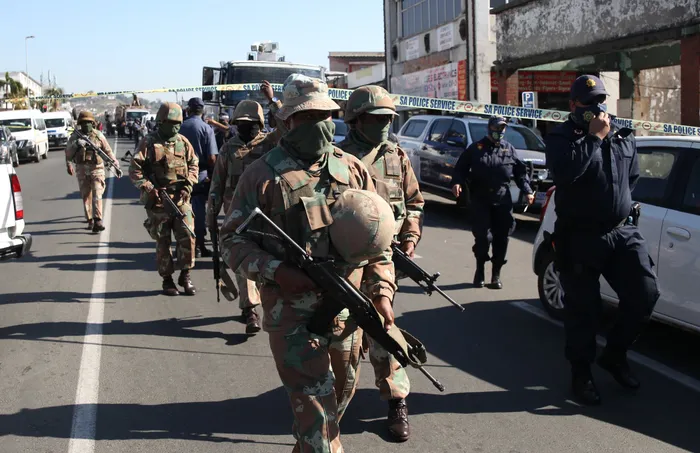
The SANDF earlier this week confirmed that there were “challenges regarding the provision of ration packs, and meal allowance payments.
Cape Town - SANDF troops deployed under Operation Prosper in KwaZulu-Natal have finally been paid meal allowances.
The troops were deployed in July in response to the unrest in KwaZulu-Natal and Gauteng, with the SANDF earlier this week confirming that there were “challenges regarding the provision of ration packs, and meal allowance payments”.
In a letter to Defence Minister Thandi Modise on Tuesday, the SA National Defence Union (Sandu) said it was inundated with complaints from members, specifically from units deployed in the northern regions of KZN, that troops were fed one meal per day, and on some days did not receive any rations/food.
They were also not being paid the meal allowances provided for in an Army Order.
Sandu confirmed on Thursday that meal allowances have been paid.
“Sandu is of the view that had the SANDF been adequately funded then the seamless provision of rations to troops would not have been an issue in the first place as the SANDF would have had adequate access and usage of mobile ration supply vehicles and equipment for this deployment.
“Sandu therefore will not cease to propagate for better funding of the SANDF and in this regard again expresses the hope that the new minister of defence will successfully pursue this issue,” the union said.
SANDF spokesperson Brigadier-General Mafi Mgobozi said they will be looking at what may have caused the problem.
“We have challenges when it comes to the rations and the payment of the meal allowances, and SANDF has acknowledged that problem.
“We have been walking around the clock to ensure that all our soldiers who are deployed get their meal allowances.
“I can assure you now that all our members have been paid their meal allowances.
“Now we will be looking at what has caused the problem so as to be able to address it, so that in future we don’t find ourselves in the same problem,” he said.
Cape Times