

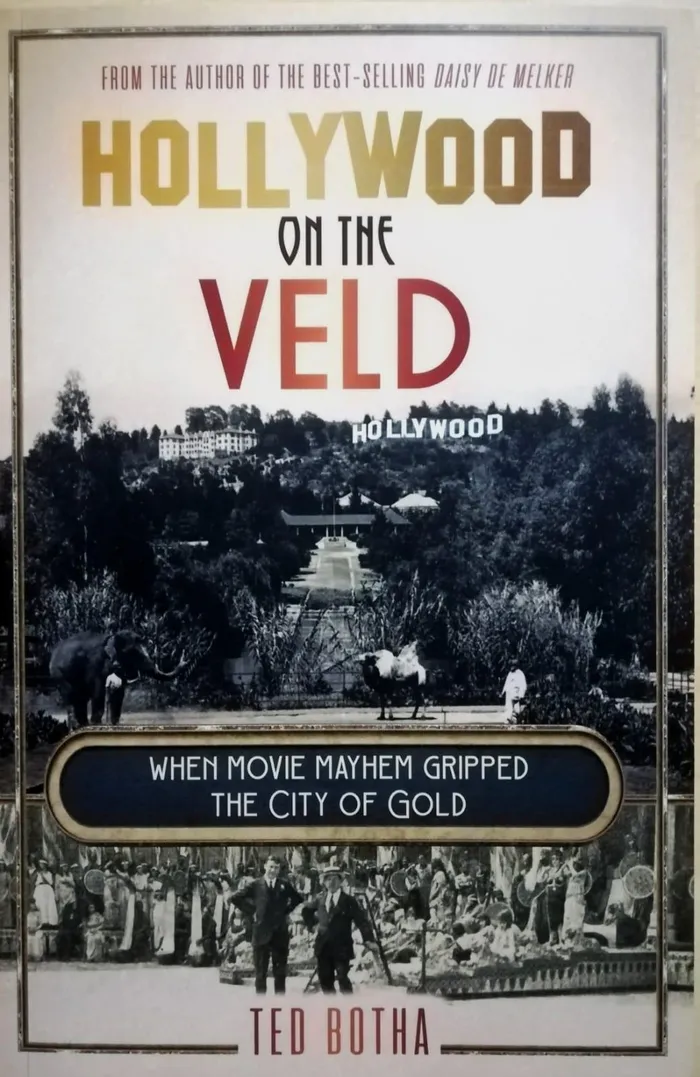
The cover of Ted Botha's new book.
Image: Mark Levin
Over the past two decades, the project to convert the old Natal Command military base into a film studio has been dogged by controversy, litigation, delays and yet more litigation.
In a new book, Hollywood on the Veld, Ted Botha resurrects the movie career of Isidore William Schlesinger, a man who took few prisoners and went to achieve remarkable success in less than half the time that the Natal Command saga has dragged on.
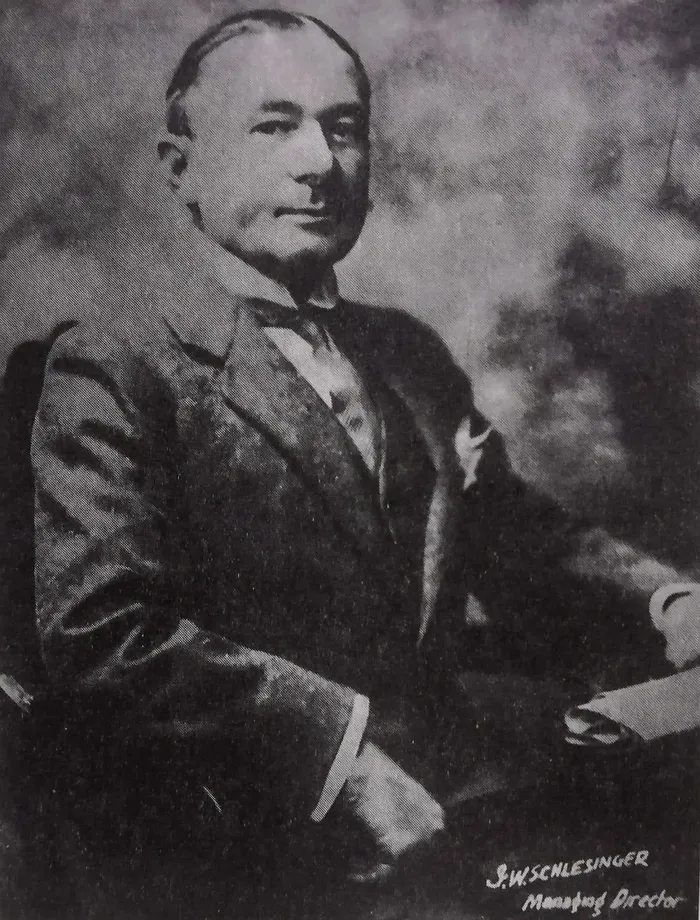
One of the few photos of Schlesinger, immaculately dressed as always.
Image: Hollywood on the Veld
Born in 1871 in a tough Eastside district of New York, Isidore William Schlesinger - known as IW to his close associates - decided to seek his fortune in South Africa. Sailing steerage class, he arrived in Cape Town in 1894 before making his way to Johannesburg. Entering the insurance industry, he travelled the length and breadth of the country. The landscape had a profound escape on him as did the people he met, particularly the Afrikaners, who told him their stories over farm dinner tables. He even tried to sell an insurance policy to President Paul Kruger: he declined.
IW was so successful that he founded his own insurance company before going into real estate, establishing new suburbs in Port Elizabeth and Johannesburg (Parkhurst and Orange Grove).
In 1906, he paid £60 000 for some acres of veld well aside the town. Naming it Killarney, it was where he would build a film studio in much the same way as the first American moguls built their studios in the citrus groves outside Los Angeles in what became Hollywood.
IW’s entry into the movie business began in May 1913 when he saw another opportunity: theatres. With no experience in entertainment, he bought the Empire Palace in Johannesburg at an auction, following it up with further purchases of distressed theatres.
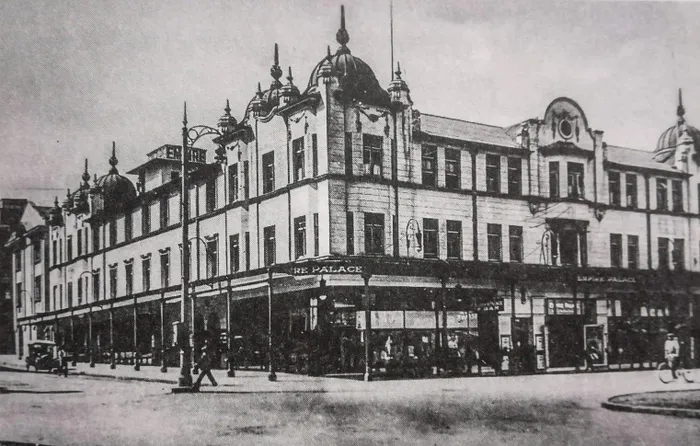
The Empire Palace in Johannesburg, the purchase of which in 1913 was the beginning of Schlesinger's career as a movie mogul.
Image: Hollywood on the Veld
By February 1915, he owned 40 across the country with plans to build more. He formed a company, African Theatres, but needing movies to screen in them, he launched a second company, African Films, with a springbok as its logo.
In the very month that IW bought the Empire, the 1913 Mineworkers Strike began. Short newsreels of daily events were popular with audiences, but without cameramen, IW immediately bought out a small outfit and began a third company, African Mirror. As the strike grew bloodier, so IW's team was there to record the footage.
By July a series of short films were ready to be screened. These morphed into “The Great Strike”, which unintentionally became his first film. Initially banned out of fears that it would incite further violence, it drew capacity crowds as soon as the ban was lifted. It was declared “a triumph of the bioscope art”.
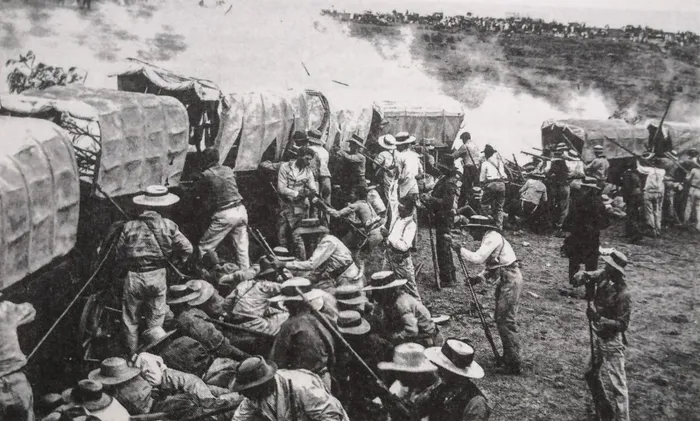
Filming Blood River on location at Elsburg, 1916. On the ridge are hundreds of spectators who arrived to watch.
Image: Hollywood on the Veld
The first foray into the world of film by IW was indicative of the man himself. A workaholic whose day began at 5 am, he was a visionary who relentlessly pursued opportunities, seeking, even buying talent to make his vision a reality. The Rand Daily Mail wrote that he was never content to stand still, always trying to perfect every business. He might have been short in stature, but he dominated everyone and stood no nonsense. Although the tough New York upbringing never left him, he was always impeccably dressed. Wearing a Savile Row suite, a bowler hat and the smartest shoes, there was never a hair out of place.
IW’s deep love of South Africa was behind some of his most ground-breaking films. The seductive landscape seemed to have beckoned him as “with a wand of witchery”. The wide horizons and great open spaces convinced him of the possibilities for cinema art.
“Winning a Continent” told the story of the Great Trek and the Battle of Blood River. (It’s Afrikaans title was ‘De Voortrekkers”). The scale to make this film in 1916 was staggering. Unusually for the time, it was filmed on location with a cast of 6000, all of whom required costumes. In addition, 12 000 assegais and 5500 knobkieries were made for the Zulu actors while old time muzzle loaders were tracked down for the Boers.
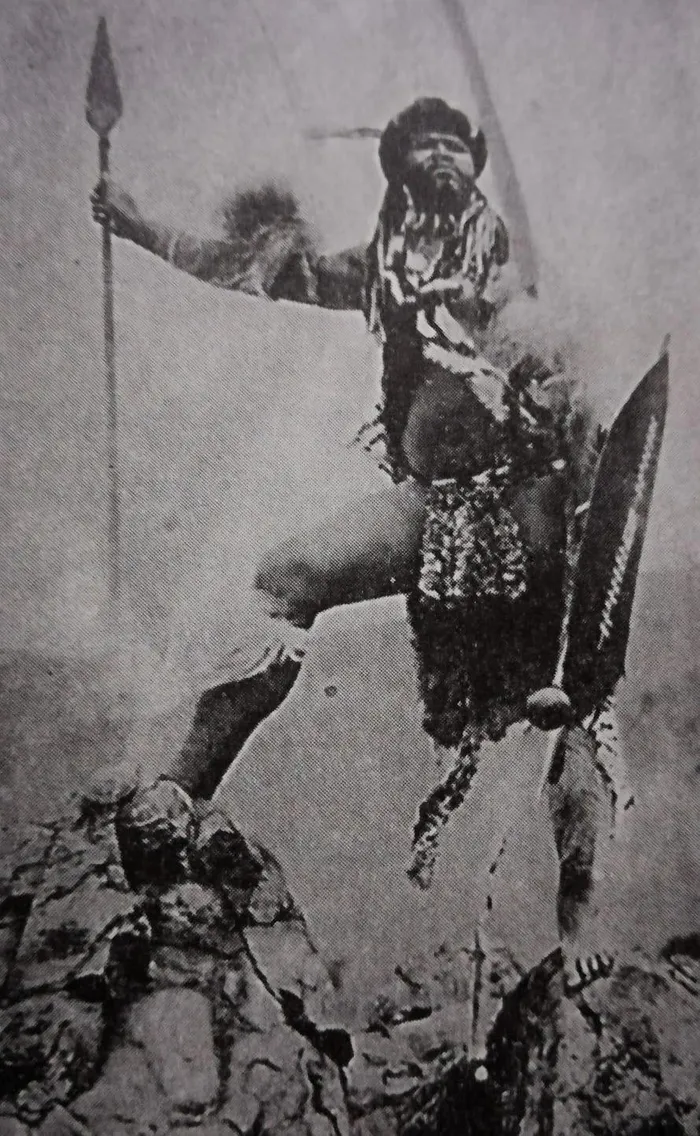
A still showing Cetshwayo readying for battle in "Symbol of Sacrifice", 1918.
Image: Hollywood on the Veld
The most difficult part was filming the Battle of Blood River. On a local mining property, a dam was constructed which could feed into a waterway to create a river. IW persuaded the Rand Water Board to sell him two million gallons, about 20 percent of Johannesburg’s daily water consumption. During filming, the director and his crew lost control and the battle between the Voortrekkers and Zulus turned real. One man died and 135 were injured. Meanwhile, conservative Afrikaners had protested that filming was taking place on the sabbath.
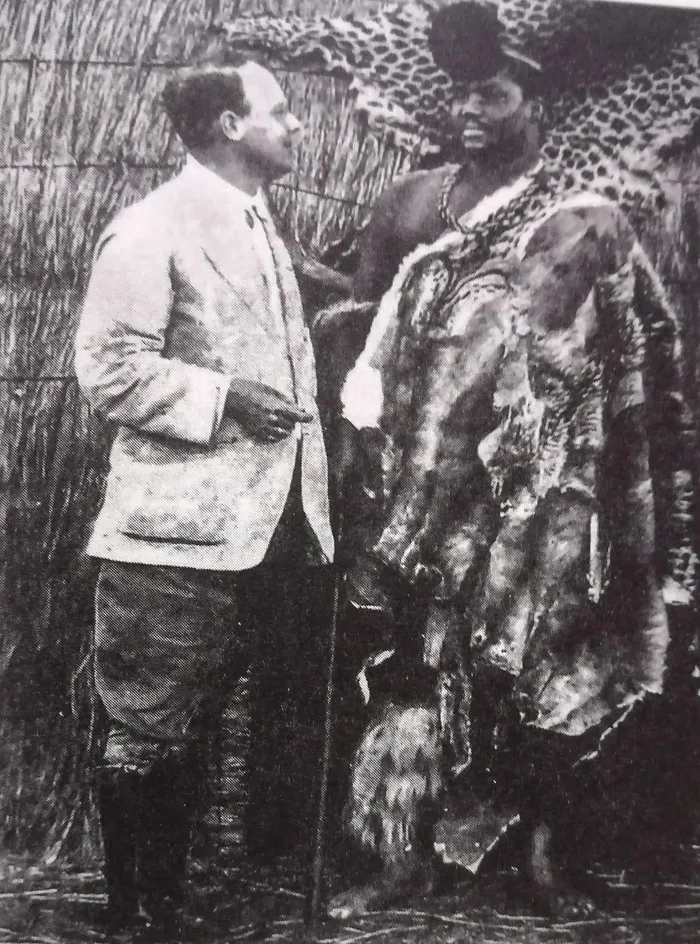
The director Harold Shaw with the towering Tom Zulu who played Dingaan in "Winning a Continent". The actor was spotted working in a police station in Stanger and brought to Killarney.
Image: Hollywood on the Veld
The final scene was filmed at Killarney on December 11. The following day the only copy of the film was taken to Pretoria where it was screened for Prime Minister, Louis Botha and senior ministers. Botha confessed that at times he was moved to tears. Its first public screening was four days later on December 16, then known as Dingaan’s Day. The movie, the biggest yet made in the British Empire, was declared, “the greatest ever produced in the history of cinema”.
Various authors have noted the similarities between “Winning a Continent” and the later Hollywood “trek movies”, particularly “The Covered Wagon”, which was a huge box office success. It did not, however, win the Academy Award for Best Picture as stated by Ted Botha. The first Oscar ceremony was in 1929, some years after “The Covered Wagon” (1923).
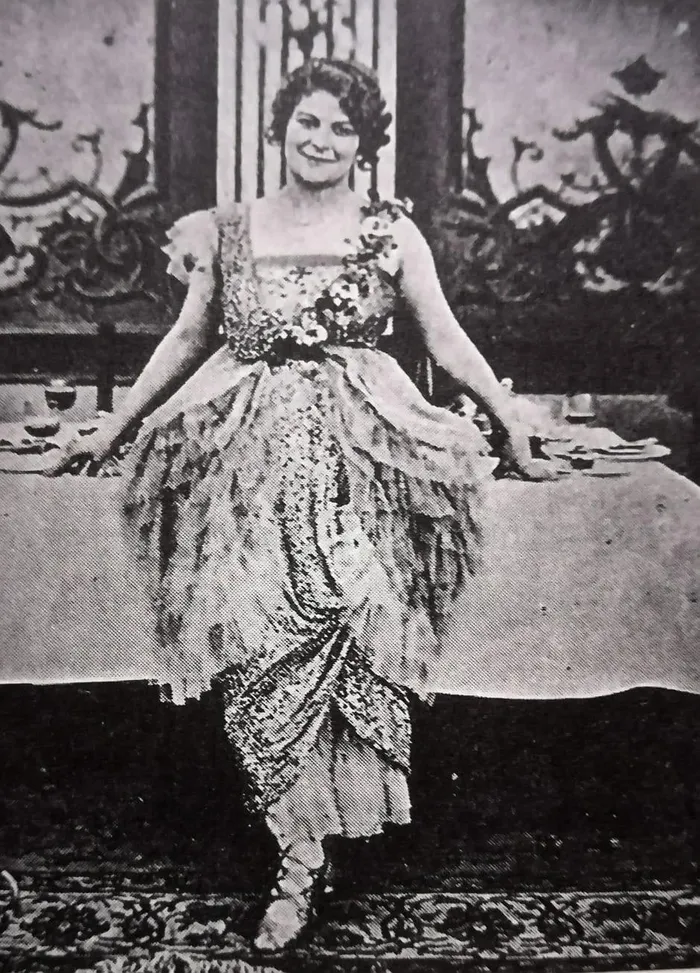
The young actress Mabel May whom Schlesinger married in 1921. Their son John, born in 1923, would sell off his father's empire and enjoy a life of leisure.
Image: Hollywood on the Veld
IW poured similar energy into other films, even directing “Symbol of Sacrifice” (on the Anglo -Zulu Wars, Isandlwana, Rorke’s Drift and Ulundi), which had a cast of 20 000 and broke box office records in 1918. On a personal level, its heroine was played by a young actress, Mabel May, with whom IW was smitten. Despite a 20 year age gap, they wed in 1921. IW was 48.
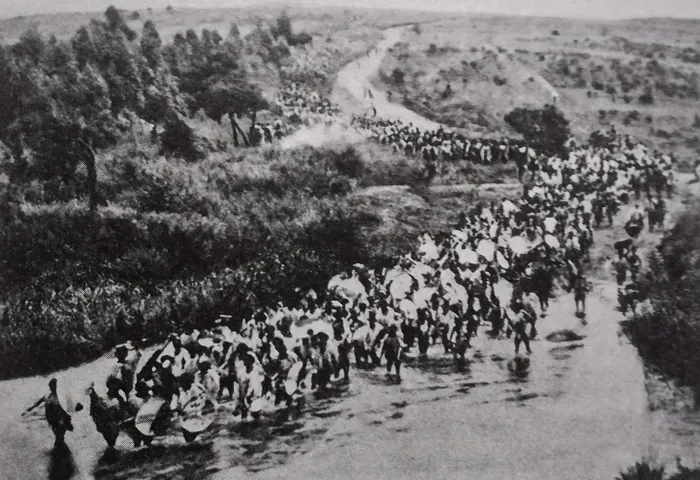
One of the battle scenes from "Symbol of Sacrifice". Thousands of extras were used. Other film makers would later mercilessly hack these remarkable sequences and use the footage in their own films.
Image: Hollywood on the Veld
No less demanding was the filming of Rider Haggard’s “King Solomon’s Mines” and “Allan Quatermain”, which were shot back to back “with no expense to be spared”, in 1918. Cast and crew covered 5000 miles travelling from locations in Johannesburg to the Victoria Falls, the Skeleton Coast, the Cango Caves and Portuguese East Africa. It is entirely fitting that the first silent screen versions of these classic novels were filmed in Southern Africa where the young Rider Haggard had found his own inspiration in the 1870s and 1880s.
In an echo of the grand, exotic cinemas being built in the US and Britain in the 1920s and 1930s, IW did likewise in four major cities. Cape Town had the Moorish - Spanish Alhambra (1929), Pretoria the Roman - Renaissance Capitol (1931) and Johannesburg the Colosseum (1933) in the modern Art Deco style. Only the Capitol survives - barely, its once glorious auditorium is today a car park.

Two of Schlesinger's surviving theaters in Durban. On the left is The Playhouse with the Prince's next door. The photo was taken soon after the £200 000 Playhouse was opened in 1935. Nearly 2000 people went to the opening.
Image: Mark Levin
It is a pity that the author omitted Durban as both its theatres not only survived but were fully restored in the 1980s and are still in use. The Prince’s opened in 1926 followed, after some delay, by the Playhouse in 1935. Its theme was Elizabethan Tudor with a restaurant which soon gave the Royal Hotel (three doors down the road) a run for its money.
IW’s legacy is far more significant than is realised, yet in the decades since his death in 1949, his name has largely been forgotten. For a man who spent so much of his career in the entertainment world, he obsessively avoided the spotlight, refused to give interviews or be photographed. One apparent contradiction not referred to, is that he commissioned one of the most prominent and influential painters, Edward Roworth, to paint his portrait which manages to capture the essence of IW. Perhaps the Playhouse should commission a bust of IW to remind patrons of his legacy.
At his peak, IW owned or controlled 90 companies. Ted Botha has concentrated on his film career and after years of persistent research has restored IW to his rightful place of honour in South Africa’s film history. His book is an accessible read, written, not inappropriately, in a style sometimes resembling the Perils of Pauline: will our protagonist escape the next hair - raising ordeal? The footnotes, grouped together at the end of the book, contain some fascinating details which could easily have been incorporated into the main text. The gift to Mrs Smuts on her 74th birthday in 1944 was extraordinary.
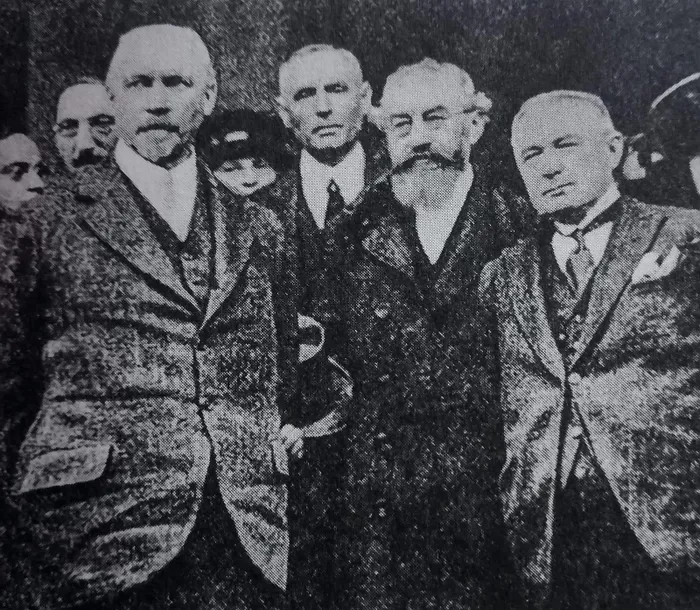
Jan Smuts (left) and Schlesinger (right) at the opening of the orphanage at Villa Arcadia in 1923. Smuts was godfather to Schlesinger's son John. Mabel and Mrs Smuts became good friends, especially during World War 2.
Image: Hollywood on the Veld
Two points are worth highlighting. Most of IW’s 40 films are lost. South Africa’s National Film, Video and Sound Archives has five of IW’s films, but no equipment to watch them on. Poorly funded, this almost forgotten archive “is a sad epitaph to his incredible achievement”. Of equal concern is the state of our libraries where valuable newspapers are fast decaying. No matter how many researchers raise the alarm, still nothing is done.
The other point is the public perception of locally made films. As far back as 1923, a journalist wrote of the prejudice against local productions, where a film could be condemned, often without even being seen. It is a perception which, a century later, continues to bedevil this country’s fragmented film industry.
Hollywood on the Veld: When Movie Mayhem Gripped the City of Gold by Ted Botha (Jonathan Ball, 2025) is available at all good bookstores.