

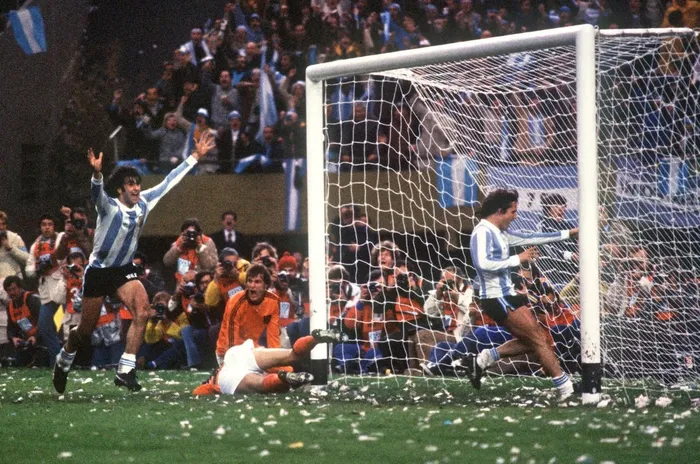
Argentinian midfielder Mario Kempes, left, scored a brace in their 1978 Fifa World Cup final win over the Netherlands.
Image: AFP
The world was in the grip of chilling geopolitical tension, and there were already blatant signs of institutional dread and state propaganda at the Fifa World Cup in Argentina in 1978.
The tournament took place under the dark shadow of General Jorge Videla’s brutal military junta, which had seized power in a coup two years prior. Amidst whispers of mass disappearances and political torture occurring just blocks from the venues, several European stars openly questioned whether they should even travel.
West Germany's Paul Breitner refused to go, while rumors swirled that Dutch maestro Johan Cruyff boycotted the showpiece due to the political climate — though he later revealed a kidnapping attempt in Barcelona influenced his decision.
Despite calls for a wholesale European boycott, all qualified nations ultimately participated, but the tournament remained forever stained by the terrifying intersection of sport and military dictatorship.
Africa: Tunisia
Asia/Oceania: Iran
Europe: Austria, France, Hungary, Italy, Netherlands, Poland, Scotland, Spain, Sweden, West Germany
North America: Mexico
South America: Argentina, Brazil, Peru
After securing the hosting rights, Argentina selected six venues across five cities. The final was played in Buenos Aires at the Estadio Monumental, the iconic home of River Plate.
The ground is famous not only for its deafening atmosphere and the mountains of ticker-tape that rained down from the stands, but also for its proximity to the Navy Mechanics School — the junta's most notorious secret detention and torture facility.
The knockout system was shelved in favor of a dual group-stage format. The 16 teams were divided into four groups of four for the first round. The top two teams from each group then progressed to a second round, where they were split into two pools of four. The winners of these two second-round groups qualified directly for the final, while the runners-up contested the third-place play-off.
The tournament marked a historic milestone for African football when Tunisia recorded the continent's first-ever victory at a World Cup finals. On June 2 in Rosario, the Carthage Owls fell behind early to Mexico but produced a roaring second-half comeback to win 3–1.
This landmark result shattered the patronising European perception of African football and laid the direct foundation for Fifa to eventually grant Africa a second guaranteed qualification spot for future tournaments.
Second Round — Group A Winner: Netherlands
Second Round — Group B Winner: Argentina
Brazil beat Italy 2–1 in Buenos Aires to secure the third-place play-off spot, finishing the entire tournament unbeaten but missing out on the final due to goal difference.
Argentina were under immense state pressure to win the title on home soil. In a highly controversial final, the Albiceleste beat the Netherlands 3–1 after extra time in an absolute cauldron at the Estadio Monumental.
Mario Kempes scored twice to secure Argentina their first-ever World Cup star and finish as the tournament's top goalscorer. The Dutch, furious with what they perceived as biased refereeing and aggressive gamesmanship from the hosts, refused to attend the post-match official banquet.
Argentina's passage to the final remains shrouded in one of the greatest controversies in football history. Needing to beat Peru by at least four clear goals in their final second-round match to edge out rivals Brazil, the hosts romped to a suspicious 6–0 victory.
Rumours have persisted for decades that the junta struck a corrupt political deal with the Peruvian government — allegedly involving grain shipments and unfreezing bank accounts — to ensure the required scoreline was met.