

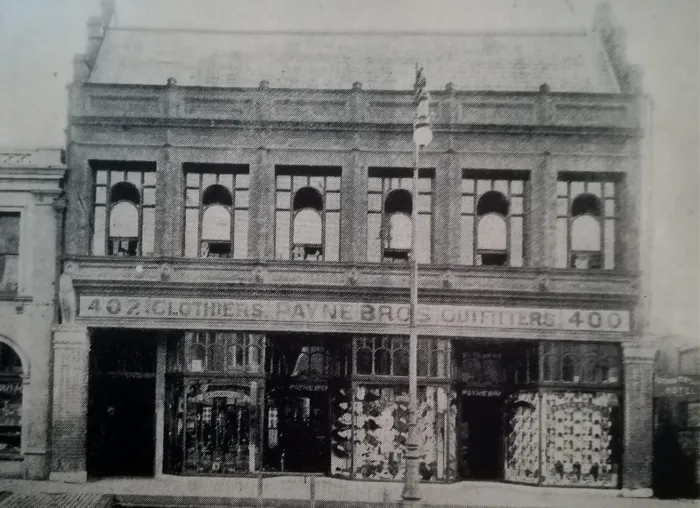
Payne Brothers at 400 /402 West Street in 1903.
Image: Supplied
Many older readers will recall Durban’s old department store. Greenacres, John Orr’s, Payne Brothers and Stuttafords with their tearooms, wide array of services and merchandise, were a favourite haunt of shoppers, particularly in December when their windows were festooned with Christmas decorations.
Payne Brothers was founded by two brothers, John and George Payne in 1869. George had arrived in Durban in 1863, aged just 19. His first job was with Benjamin Greenacre, who had recently opened a small clothing shop. Quickly learning the business, the two brothers decided to open their own shop at the end of 1869.
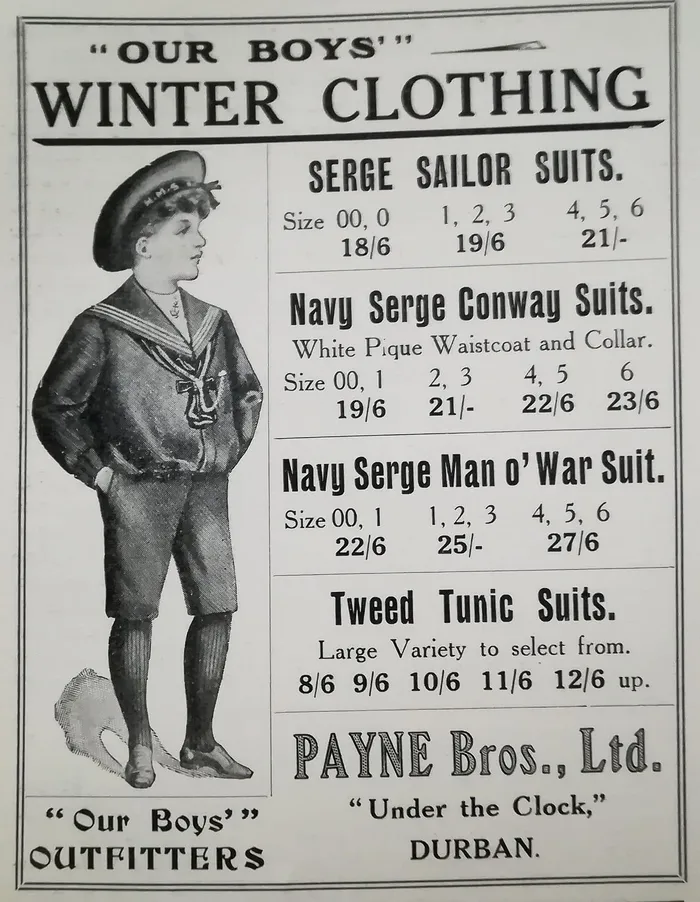
A 1915 advert gives an idea of what every boy was begging his mother to buy for him: a serge sailor suit.
Image: Supplied
George Payne and Benjamin Greenacre had much in common. Both were ambitious, hardworking and knew what their customers desired. Both created formidable department stores with legions of loyal customers. As they prospered, each built a magnificent home in Musgrave Road - Greenacre had the Caister, while Payne had Overdale. Both men were elected to the Durban Town Council and would serve as Mayor on multiple occasions.
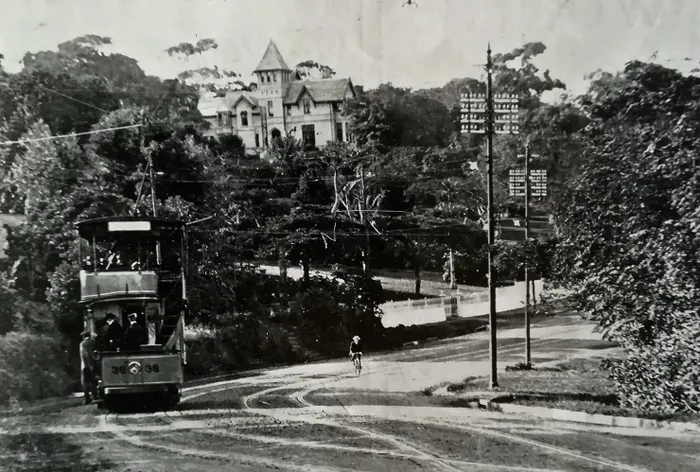
This 1909 photo of Overdale was taken from Musgrave Road. The sprawling grounds, retaining many indigenous trees, was likened to a country retreat.
Image: Supplied
Seven years after opening, the Payne brothers bought the site at 400/402 West Street and built their own store. In 1877, John returned to England leaving George in control of the Durban business. Encouraging him in his venture was George's wife, Rhoda, whom he had married on December 3, 1868, her 22nd birthday.
She was one of William Cowey’s five daughters. Cowey had emigrated to Natal in 1850 as part of the Byrne Settler scheme. His arrival could not have been more dramatic: after three months at sea, their ship, the Minerva, was wrecked on the Bluff rocks. No lives were lost, but the Cowey family lost all their worldly possessions except for one of Rhoda’s frocks which washed ashore.
An ox wagon took them to a small holding in Verulam and their first home- a wattle-and -daub house where Mrs Cowey did all her baking under a large tree. After their simple house burnt down, the family moved to Durban where Cowey eventually became a successful draper.
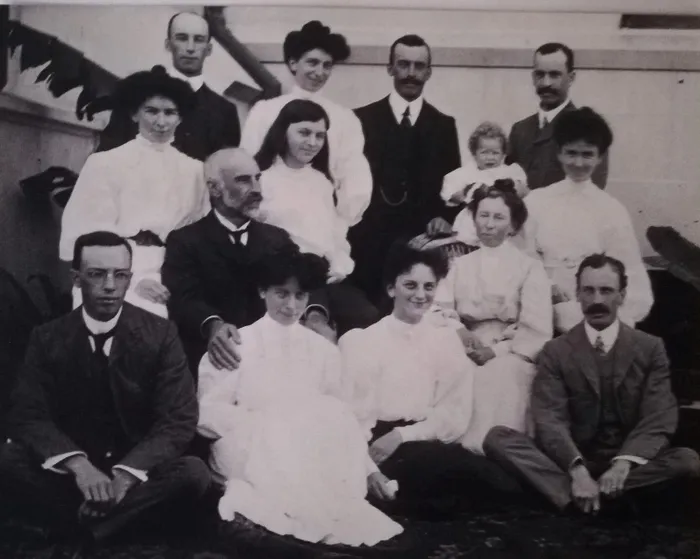
George and Rhoda Payne with some of their family. Back row left is Wilfred. Arthur is on the right. Front row left to right are Edwin, Hilda, Millie and Harold.
Image: Supplied
In the early years of their marriage, George and Rhoda lived in modest houses in Smith Street and Convent Lane, where their eldest sons, Harold and Arthur were born. By 1882, George was ready to build a home of his own. He purchased 10 acres on Musgrave Road where he built “one of the finest residences in Durban.”
Naming it Overdale, it would be the Paynes home for over 40 years and where their 10 surviving children enjoyed its sprawling grounds, the Conservatory and the stables. Before the age of the motor car, the family had a landau, a phaeton (for Mrs Payne) and a rickshaw which was pulled by a much- loved pony called Acton.
Over the years, many prominent people were entertained by the Paynes. One of their grandsons, Douglas, told of the occasion when Cecil John Rhodes was an unexpected visitor. He arrived to find Rhoda shelling peas on the front veranda. He promptly sat down and helped her. During the First World War, many a fundraiser was held on the lawns of Overdale, which also hosted scores of servicemen and women, often from naval vessels docked in Durban.
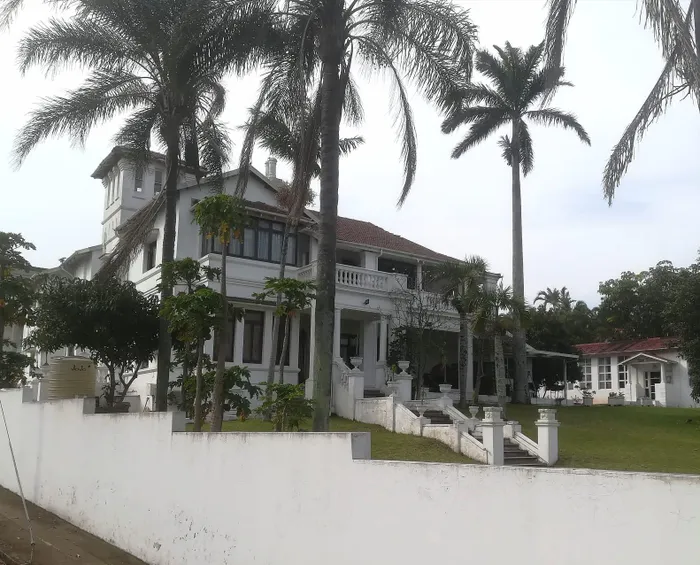
Overdale, the former home of the Payne family, photographed in 2024. The house has been divided into three flats and further land has been sold since 1925.
Image: Supplied
Many self-made businessmen believed it was their duty to support the welfare of the town by standing for election to the Council. George was one of them. He was first elected in 1884 and then again from 1890 to 1897, during which period he was Mayor on three occasions. He was the driving force behind the new Town Hall (opened in 1885 and today the Post Office) acquiring an organ.
Short of funds, the Council shelved the idea until 1893 when George succeeded in carrying the motion. In an editorial to coincide with the inaugural concerts in December 1894, The Natal Mercury commented that probably no man had done more than “our worthy Mayor…in the acquisition of the grandest of all musical instruments”.
In 1910, the organ was enlarged and moved to the current City Hall. Today, a lack of repairs and maintenance have rendered the organ unusable. Silent and decaying for over two decades, it is unlikely to be heard again.
Payne was Mayor during Queen Victoria’s Diamond Jubilee in 1897. Three days of festivities took place in June. Two significant reminders of those events linger: the first was when Mrs Payne switched on Durban’s first electric street lights; the other is the statue of Queen Victoria by the sculptor Sir Hamo Thornycroft, one of three he did of the Queen during his career. It still stands opposite the City Hall.
As Mayor, Payne declined to accept the table money allowed to the Mayor, choosing for it to be invested in Durban Corporation Debenture Bonds. Known as “Mayor Payne’s Benevolent Fund”, the annual interest was paid to the Durban Benevolent Society. Payne’s grandson recorded that it still existed in the 1960s; one wonders if it still does. The councillors from that era were a different breed from today’s career politicians jockeying for positions and employment.
While on a visit to London in 1910, George died and was buried in Tunbridge Wells cemetery. His widow continued to reside at Overdale and was particularly active in charity work during the First World War. By 1924, the house was too large for her and as none of their children wanted it, Overdale was put up for sale.
Financially the sale was a huge success. The land was subdivided into 12 lots with a new road, Overdale Road, built through the property. Although the house survives, it has been divided into three flats. In 1925, Rhoda retired to Shinglewood in Gillits where she celebrated her 90th birthday in 1936.
Payne Bros continued to expand under the direction of their eldest sons’ Harold and Arthur. Later, Harold’s son Peter became Chairman in 1935, thus preserving the family link into the third generation. In 1938 Paynes opened their huge Art Deco store in West Street. At the time, it had the biggest escalator in the Southern hemisphere.
The bold new shop was designed by Payne and Payne. Two of George and Rhoda's other sons, Wilfred and Edwin, had chosen architecture as their careers. Although Edwin had died in 1927, having never fully recovered from his service in the First World War, Wilfred continued to practice under the firm’s original name.
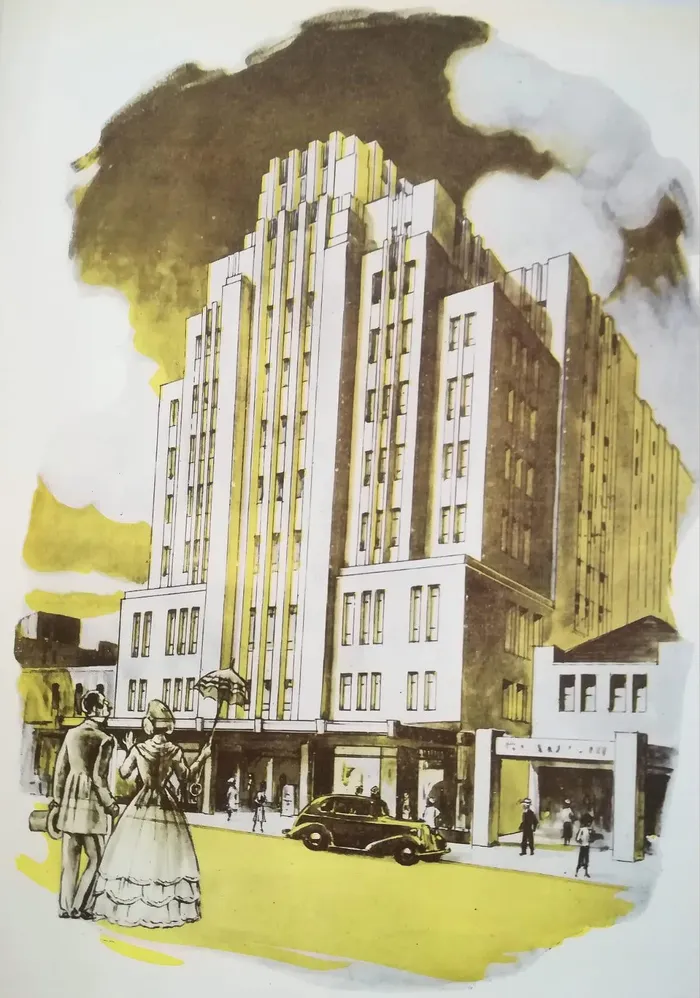
This illustration is from the 1938 brochure of Payne Bros bold new Art Deco building designed by George Payne's son, Wilfred. In the foreground, a ghostly Victorian couple look at the future.
Image: Supplied
Two years after the shop’s grand opening, Rhoda died in 1940 aged 93. From being shipwrecked on the Minerva in 1850 to the Second World War, she could claim to have seen it all. She was buried in the West Street cemetery. In 1953, the six Payne members who controlled Payne Bros (of whom only Peter lived in South Africa) sold out to Greatermans, bringing to an end 84 years of family control.
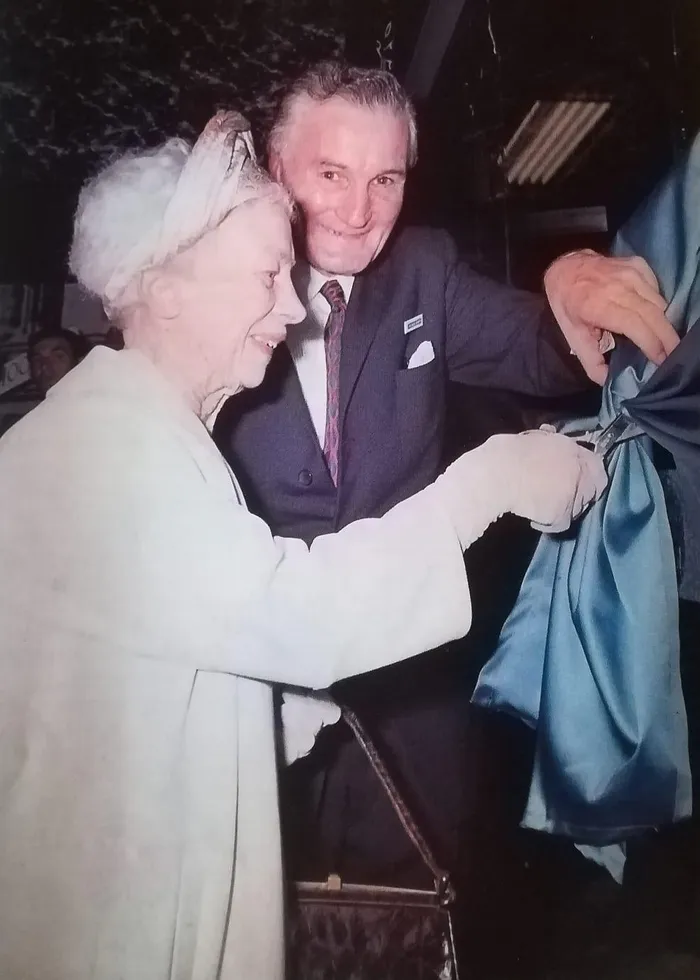
Hilda Payne Cook cuts the ribbon at the start of Payne Bros centenary in 1969. She was the first of the Payne children born at Overdale in 1885. Her son, Douglas, born in 1924, was the last of the family born there before Overdale was sold. Growing up at Overdale, Hilda was taught to ride a horse and then to drive a car.
Image: Supplied
There was one final hurrah for the family. In 1969, Paynes celebrated its centenary. To mark the start of the celebrations, which included a parade along West Street, one of George and Rhoda’s surviving daughters, Hilda Payne Cook, cut the ceremonial ribbon with Durban’s Mayor and Mayoress, Mr and Mrs Trevor Warman, in attendance. Few would have guessed that it was also the last hurrah for Paynes. In just over a decade, the era of the department stores would begin to fade away.
It is something of an irony that after Payne Bros closed its doors, it was an upstart called Game (founded in 1970) that moved into Payne’s famous store. On another level, just as the two founders of Payne built a brand on what their customers wanted, so did the founders of Game for a different generation.