

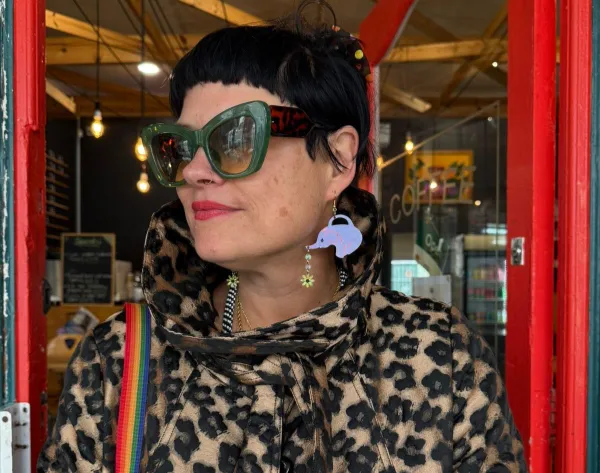
Media personality and podcast host Jane Linley-Thomas.
Image: Supplied
THERE'S a particular mythology around rugby in South Africa. It is loud. It is powerful. It is gladiator under stadium lights. It is power, grunt, anthem, bruised muscle, and national expectation.
And yet, as I sit down with former Springbok centre Waylon Murray on The House of Motherly podcast, instead of talking about the biggest hits, we go to the places that demand the greatest courage - without a crowd, without a whistle, without the roar of Kings Park Stadium behind him.
We start with Waylon as a young boy, the boy before the Bok. What did he dream about? What made him feel safe? Who made him feel seen? Because so often, before the world requires greatness, there is simply a little boy who wants to belong. This is where the tenderness begins.
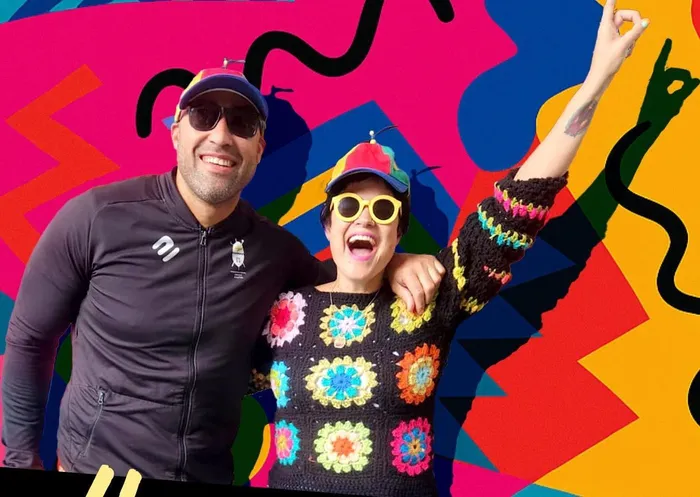
Former Springbok player Waylon Murray and podcast host Jane Linley-Thomas.
Image: Supplied
We trace the exact moment rugby became more than just a game, when it shifted from pure play to identity, responsibility, and meaning. When the body, talent, and opportunity collide, but so does expectation. We speak about how much the world asks men to be strong. Strong bodies. Strong jawlines. Strong silence.
And then we speak about the moment he realised that physical strength alone could not carry him through life. What does strength actually mean when you are not on the field? What does strength look like when you are on the field, battling to keep fear out and alone with yourself?
Waylon speaks about finding his courage, the love of his mother, and how he softens without feeling like he’s losing strength. We dive into the journey of reinvention, when your purpose, routine, identity, brotherhood, structure, and meaning have been tied to something that ends.
A career in elite sport that saw him in our beloved Springbok jersey, in a sport that unites us like no other. How do you unhook yourself from what you used to be? How do you gently let go of a version of yourself that the world still sees but you no longer are?
The conversation is deeply human. It is gentle. It is unarmouring. It is about navigating the mental-health landscape of the “after.” Not the glory. Not the transformation highlight reel. But the uncertain, liminal middle place where you’re rebuilding the inner scaffolding that no longer comes from stadiums and schedules and coaches and captain’s runs. We go into tips. Tools. The practicalities of how he self-brothers.
Movember is not just about noticing that men are hurting; it is about giving language, access, permission, and support to do something about that sometimes-silence. To create a safe space, to normalise, to take up space.
We speak about what he turns towards when he needs grounding, inner self-talk, fear, and how softness works inside a body once trained to be unbreakable. And of course, there are some playful questions too, like: if his rugby jersey had an affirmation stitched into the collar, what would it say? Which three teammates from the Boks would he choose to have dinner with? Did he have pre-game rituals?
All of these bring colour, memory, and humanity to an extraordinary man. They remind us that deep inside the stories that shape sporting icons are human beings who are learning, rebuilding, and choosing to stay tender while living in a world that keeps rewarding toughness. Waylon opens the door to courage in a way that is quiet, steady, wise, and real.
This Movember, we hold space not just for the loud stories but for the invisible courage of the internal battles men take on alone every day.
The gentle power of Waylon Murray podcast can be heard on Spotify.
To respond to the author email: hello@lovejlt.com