

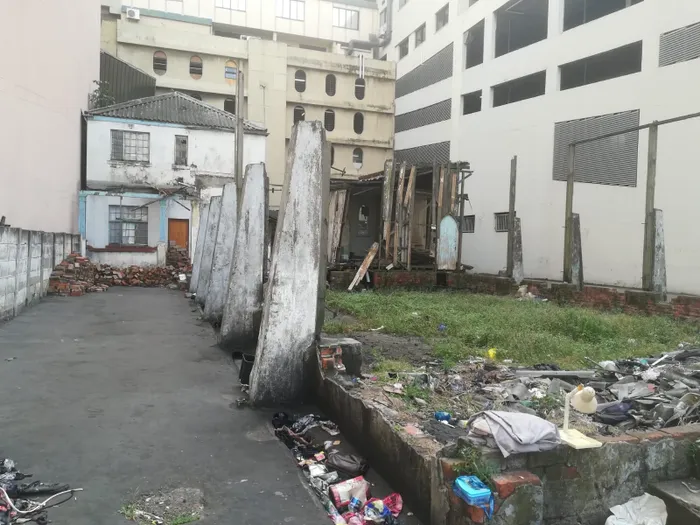
The site of the Beatrice Street Congregational Church with the manse at the back. The buttresses survive on both sides.
Image: Mark Levin
THREE months ago, we looked at some lost churches of Durban. This week, we take a further glimpse at churches which were moved, demolished or lie in ruin.
St Augustine’s at 440 Musgrave Road, was built in the 1880’s to serve the growing number of Anglicans who were moving to that part of Berea. The land on which the church was built had been donated by C J H Jenkyn, who also designed the church and supervised its erection. His daughter was the organist there.
In the 1891 Annual Parish Report, the Rev Herbert Johnson of St Cyprian’s noted the death of Jenkyn, a man whose great professional abilities were always at their service, and whose strong convictions, gentleness and piety were an example to all. Jenkyn lived long enough to witness the last of the debt incurred to build the church paid off and the purchase of a new harmonium, which had much pleased his daughter.
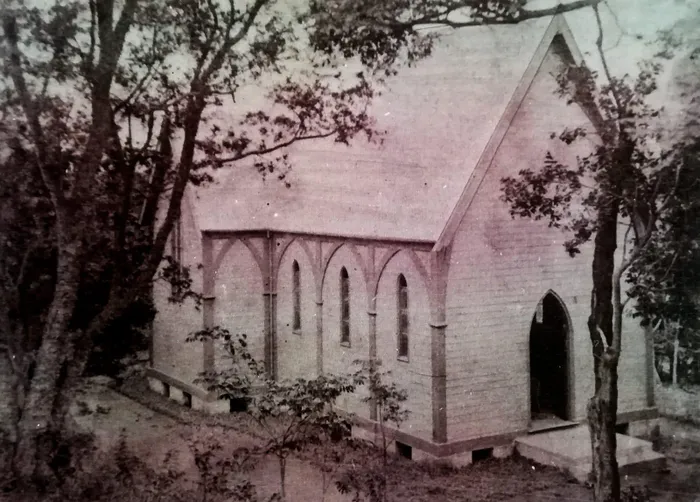
St Augustine's church, circa 1890s.
Image: Supplied
By the 1920s, some of the larger properties were being subdivided for development. With the rise in value of the church’s land, it was sold. Today, St Augustine’s Mansions stands on the site. The church itself was dismantled and moved to Cedar Road, Congella to serve the African community. In 1928, its acting vicar was Rev E. Lawson. When St Cyprian’s moved to Umbilo Road in 1940, parts of the old church were incorporated as St Augustine's Chapel.
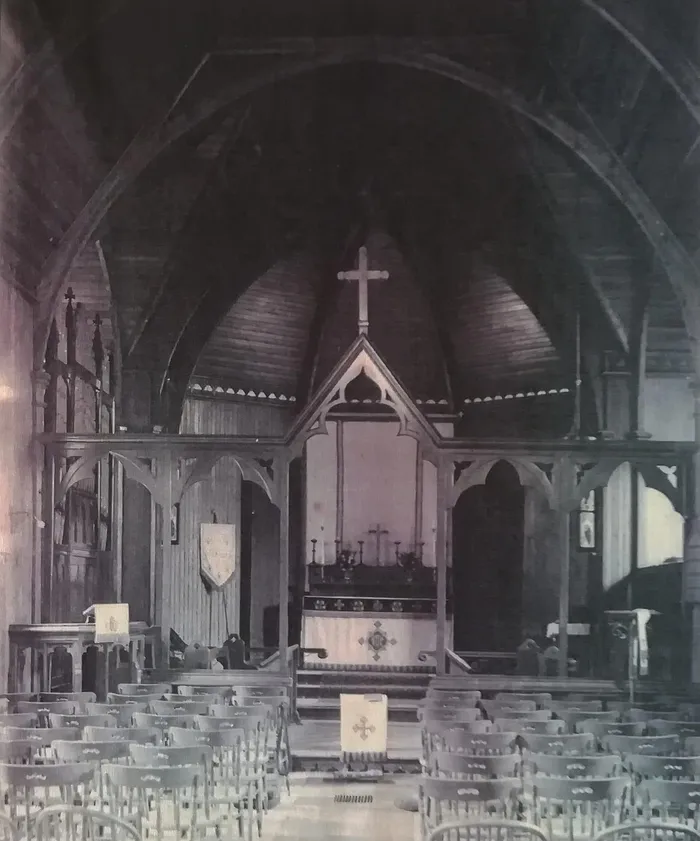
The interior of St Augustine's church in the 1900s had surprising details and craftsmanship considering its modest exterior.
Image: Supplied
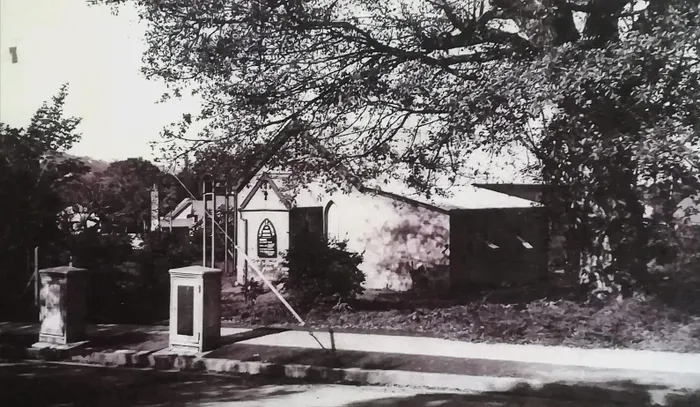
The rural setting of St Matthias in 1934.
Image: Supplied
An even older Anglican church was St Matthias which was consecrated in 1874 to serve the Umgeni village residents. Situated on the corner of St Matthias Road and Burman Drive, it was a small but vibrant church, whose first and long- serving vicar, Thomas Goodwin, was also vicar at St John’s Sydenham. One energetic- and devout- family who lived on North Ridge Road, used to walk to St Matthias for morning prayer and then to evensong at St John’s. After its congregation dwindled, St Matthias was deconsecrated and stood unused for some years before it was demolished in about 1952.
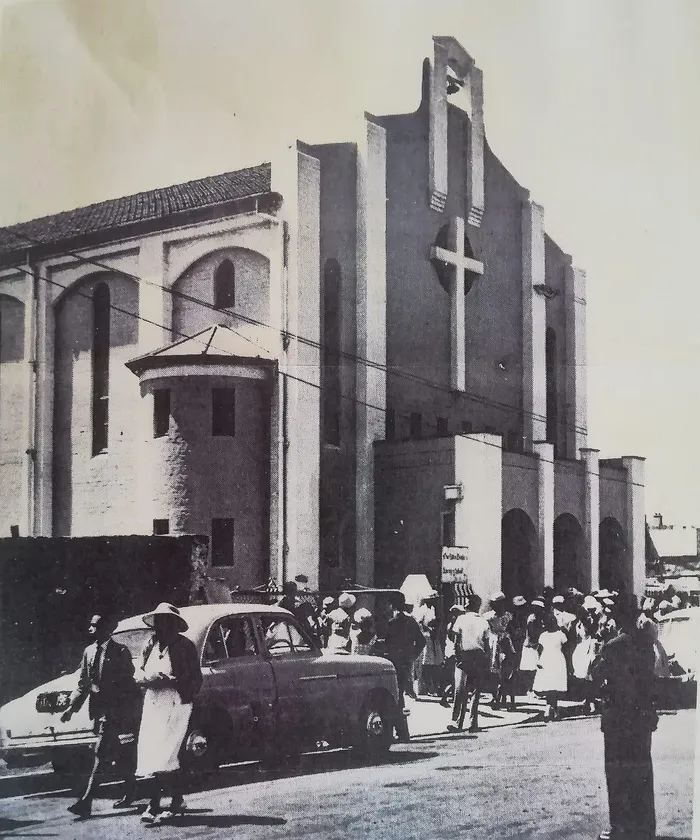
St Raphael's in Stratford Road in 1961.
Image: Supplied
Another Anglican church to face the wrecking ball was St Raphael’s at 65 Stratford Road, which was demolished because it was in the path of the new road development in the Warwick Triangle area in the 1970’s. Its origins dated back to 1917, when Miss Emily Landale began a Sunday school for coloured children using premises firstly in Leopold Street, then Old Dutch Road and Berea Road before permission was obtained to hold services in the old chapel in the West Street cemetery.
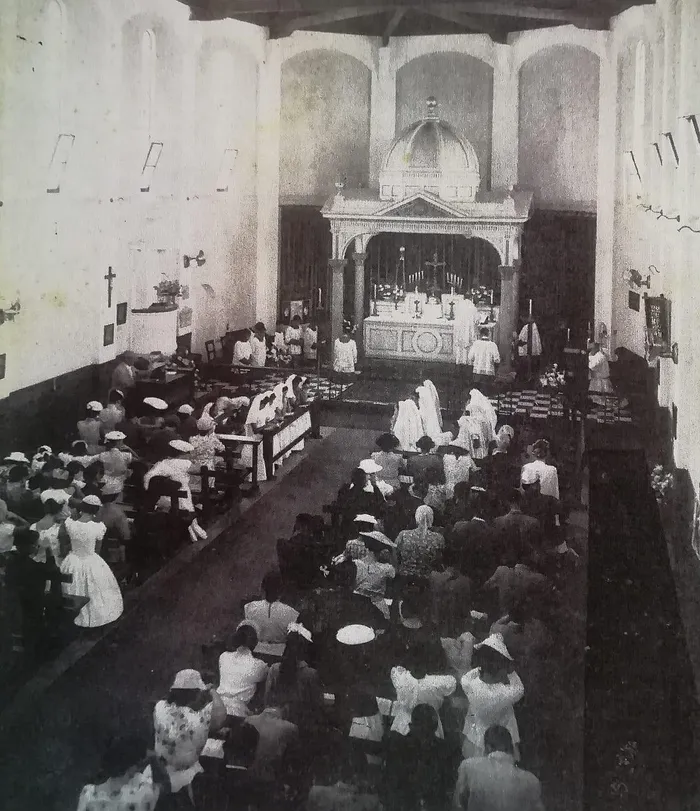
The interior of St Raphael's in 1961
Image: Supplied
n 1922, the Diocese purchased the Stratford Road site. Since the old St Stephen’s church in Point Road was no longer in use, it was dismantled and re-erected for St Raphael’s. It was the successful recycling of St Stephen’s that prompted the Diocese to move St Augustines’s a few years later.
By the 1930’s, the congregation needed a larger church and so began a lengthy fundraising campaign led by a determined Father Robinson. However, St Raphael’s was not a wealthy parish and when Foundation Stone was laid by the Bishop of Natal on June 22, 1937, less than half the necessary funds had been raised. As a result, the actual building did not begin until November 1939. Completed in June 1940, it was consecrated three years and one day after the laying of the Foundation Stone.
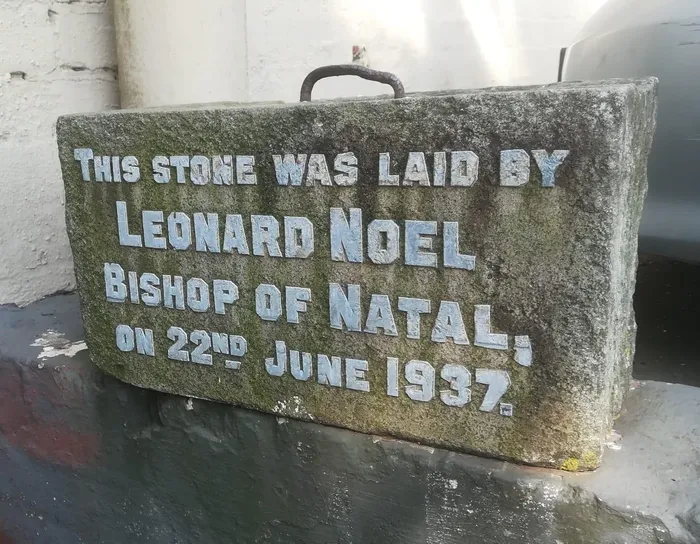
The Foundation Stone is all that survives of St Raphael's. It can be seen at St John's with St Raphael's at 80 Rippon Road, Sydenham.
Image: Mark Levin
Father Robinson was well-pleased with his imposing new church, having watched it was said, every brick being laid. When he died in December 1946, his ashes were laid to rest in the sanctuary where a memorial plaque read: “He built this church and loved its people”. After its demolition, its congregation merged with St John’s in Rippon Road. There is one forlorn reminder of St Raphael’s: its Foundation Stone was saved and can be seen outside the entrance to the offices at St John’s.
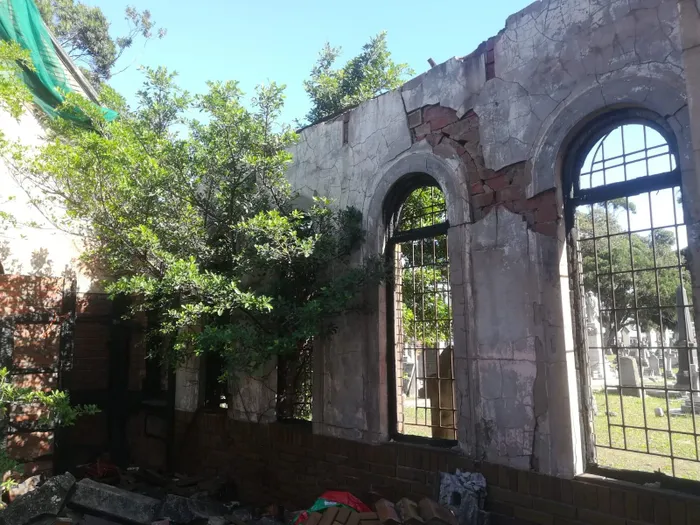
The crumbling interior of the Chapel of the Resurrection at the West Street cemetery, May 2025.
Image: Mark Levin
If the loss of St Raphael's was not enough, an Act of God badly damaged another Anglican church. In February 2007, lightning struck the Chapel of the Resurrection in the West Street cemetery. This small chapel near the Theatre Street entrance was designed by Powers and Powers in 1939. Edgar Powers formed his architectural partnership with his sons Walter and Ernest in 1935. They designed a number of prominent Durban buildings in the 1930s including the SABC, King Edward Vlll hospital and St Cyprian's church.
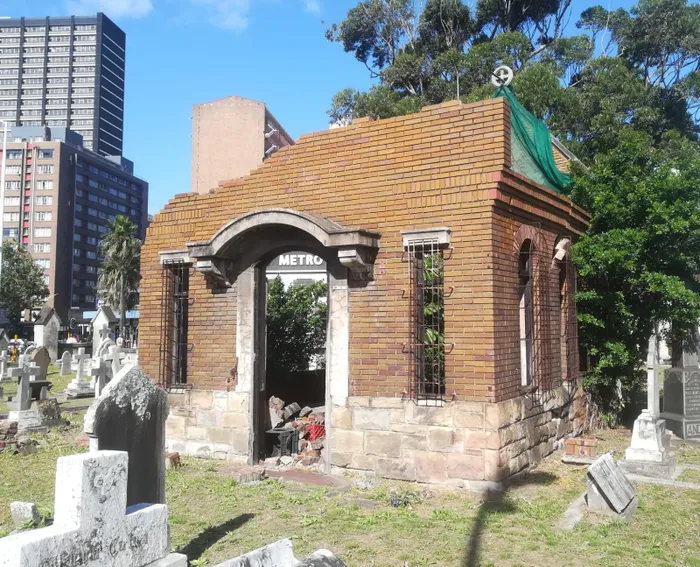
The derelict ruin of the Chapel of the Resurrection at the West Street cemetery in May 2025.
Image: Mark Levin
In early 2009, the estimated cost to repair the chapel was R150 000. The city undertook to cover the roof to protect the burnt-out interior from further damage while sourcing historic tiles for the roof. According to a 2015 newspaper report, the tiles were delivered in 2013. In the 18 years since the fire, no work has been done to the chapel. Neither the city nor the church has resolved the funding issue for what is now a derelict eyesore. Is this not where the National Lottery would have been approached?
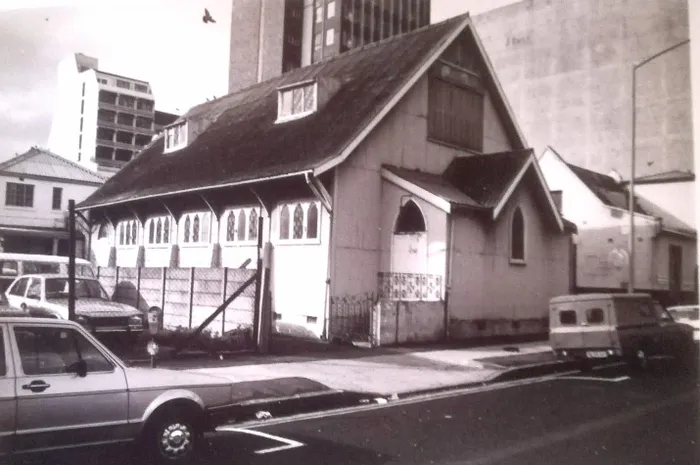
The Beatrice Street Congregational Church was still in fairly good condition when Brian Kearney took this photo in 1982.
Image: Supplied
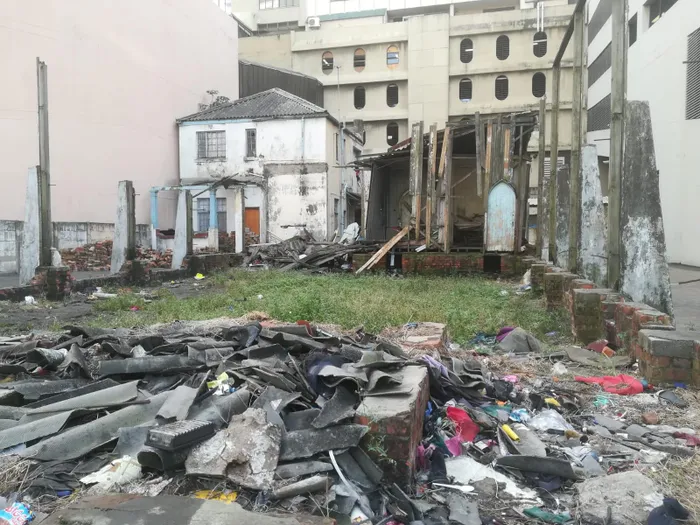
The site of the Beatrice Street Congregational Church with the manse at the back. The buttresses survive on both sides, May 2025.
Image: Mark Levin
If there is still faintest hope that the chapel might be restored, there is none for the Congregational Church of the American Board of Commissioners at 88/90 Beatrice street. A lack of funds and the ravages of time led to its collapse in various stages in 2011 and 2012. All that precariously remains is part of the vestry. It's date of construction is sometimes given as 1891, but Brian Kearney states that Arthur Fyfe designed the wood and iron church with its Gothic revival features in 1905. In its early years, it was presided over by the Rev F.B, Bridgman and the Zulu pastor, Rev W.J. Makanya. Next door, at 86 Beatrice Street James and Margaret McCord built a dispensary which provided medicines until its closure in the 1960s.
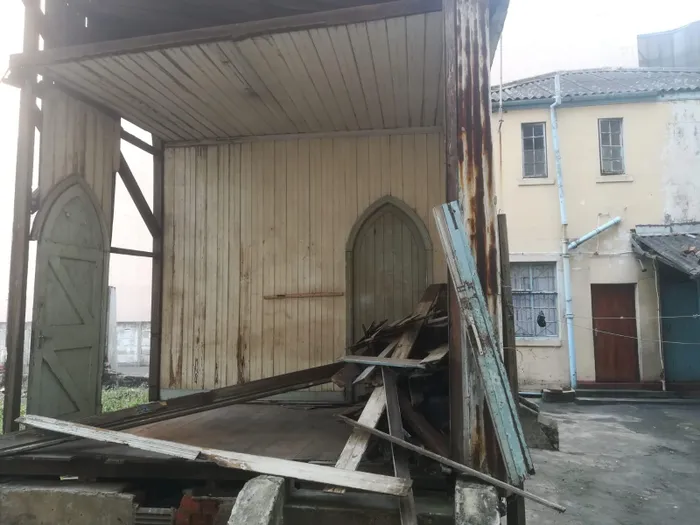
The remains of the vestry of the Beatrice Street Congregational Church, May 2025.
Image: Mark Levin
The site of the Beatrice Street Congregational Church with the manse at the back. The buttresses survive on both sides, May 2025.
Image: Mark Levin
In 1937, a manse was built behind the church. It became the home of Rev Bhekisipho Dludla in 1964 and there he remained for almost 60 years until his death in about 2023, a year or two short of his 100th birthday.
City hospital tried for many years to acquire the site in order to build a parking garage, offering various proposals to accommodate Rev Dludla and the church, to no avail. In the end, he witnessed the complete loss of everything he had hoped could be preserved. All that is left of this once charming church of historic importance in Durban’s social history, is a valuable site with an unknown future.