

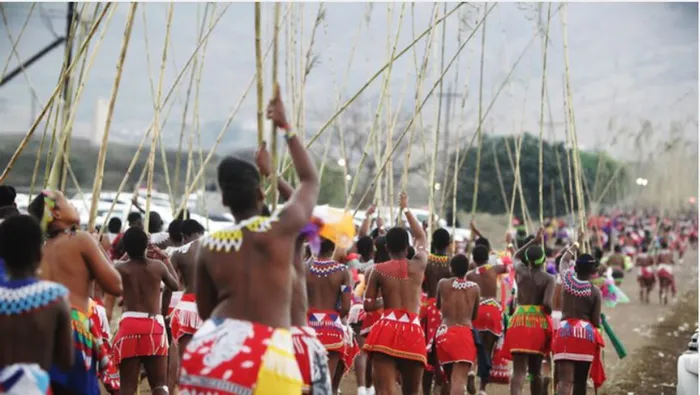
THOUSANDS of young Zulu maidens and guests from eSwatini and the Ndebele nation are expected to descend in northern KwaZulu-Natal for uMkhosi woMhlanga which celebrates the chastity of women. The ceremony has recently come under fire for the traditional virginity testing of girls under the age of 16 which has been outlawed by the amended Children's Act 38 of 2005.
Image: File

ZULU Roya family spokesperson, Prince Thulani Zulu, has come out guns blazing in defence of criticism against traditional virginity testing of girls younger than 16, ahead of uMkhosi woMhlanga (Reed Dance).
Image: Khaya Ngwenya/Independent Newspapers
The Zulu royal family has dismissed growing criticism over the practice of virginity testing on girls under the age of 16, saying opponents are seeking to undermine one of the Zulu nation’s most enduring cultural traditions.
This comes as preparations intensify for this year’s uMkhosi woMhlanga (Reed Dance), which will be held later this month at King Misuzulu’s newly built Machobeni Palace in Ngwavuma, near the KwaZulu-Natal's border with eSwatini.
Royal spokesperson Prince Thulani Zulu accused detractors of trying to erode the cultural significance of virginity testing.
He was speaking at a briefing on the upcoming festivities.
“I think they are missing the point when they say girls younger than 16 should not go for virginity testing,” he said.
“We have girls, maidens, young women and women, all of whom take pride in their chastity. For them to demonstrate their celibacy, they undergo testing. It is extremely difficult to start at 17; it must begin earlier.”
The Children’s Act 38 of 2005, prohibits virginity testing for girls under 16, but the royal household maintains that the practice is conducted safely and respectfully.
“There is no form of abuse whatsoever,” Prince Thulani said.
“Hygiene is paramount. Women who conduct the testing wear gloves and take great care not to harm children.”
He criticised what he described as selective outrage from human rights groups, arguing that activists tend to raise objections around the Reed Dance while ignoring deaths linked to other cultural rites.
“Every winter children go to the mountains and some of them die, yet we never hear from these same activists,” he said.
“The problem is that many rights campaigners are disconnected from rural life. Their children do not walk long distances to fetch water.”
Yesterday’s ceremony marked the first time the Reed Dance was staged at the new Machobeni Palace in more than four decades.
Another event is scheduled for the Mashobeni Royal Palace in ePhongolo next weekend.
Prince Thulani acknowledged challenges in the build-up but said various government departments were working with the royal household to ensure the success of this year’s celebrations.
The Reed Dance was revived by the late King Zwelithini during his reign and in the early 1990s it became a platform to fight HIV/Aids through celibacy.
SUNDAY TRIBUNE