

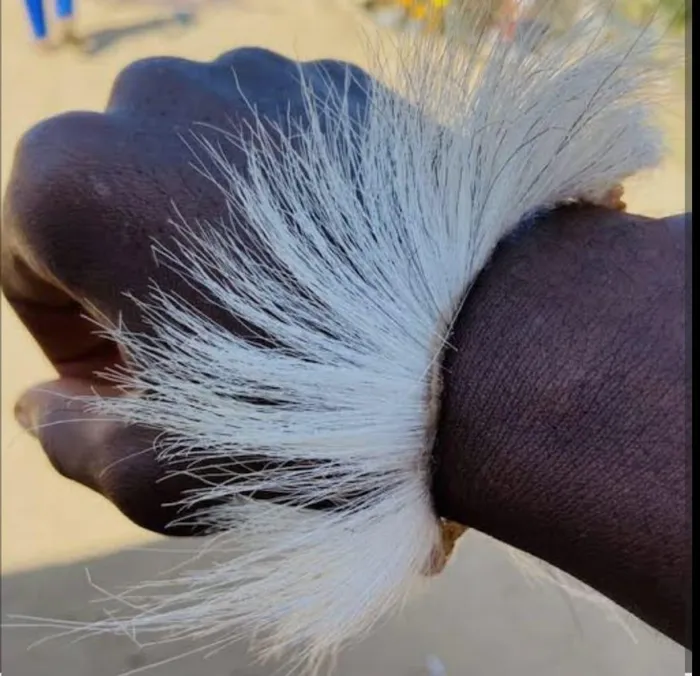
THE little wristband that carries so much weight in the sacred ancestral realm which has been a source of many clashes and debates in the workplace and public spaces.
Image: i-Afrika.org
The issue of wearing isiphandla (a sacred ancestral goat-skin wristband) in professional settings has long been a source of sensitivity and division, shaped by conflicting interests and widespread misunderstandings of its true significance.
Recently, Sekhukhune FC midfielder Thabang Monare was forced off the field in a Betway Premiership clash against AmaZulu FC by referee Cedric Muvhali for wearing isiphandla, in line with FIFA’s Law 4, which prohibits jewellery or wristwear of any kind.
The incident highlighted a longstanding controversy: many Premier Soccer League players who wear isiphandla often conceal it beneath wristbands or bandages. For Monare, the situation was more difficult.
Once hardened, the goatskin wristband cannot easily be removed, leaving him with two stark choices: cut it off or sit out the match. As a result, Sekhukhune played with ten men for twelve minutes before he was substituted.

September is Heritage Month
Image: File
Cultural expert Professor Gugu Mazibuko of the University of Johannesburg explained that within the Zulu nation, isiphandla serves as a sacred bridge between the living and the ancestral realm.
“The head of the household wears isiphandla after slaughtering a goat to request or report something to the ancestors. Even a newborn can wear it if a ritual such as imbeleko has been performed to introduce the child to the ancestral lineage,” said Mazibuko.
She added that isiphandla features prominently in other ceremonies, such as umhlonyane (a girl’s coming of age), umemulo (a rite of passage into womanhood), or when an individual seeks ancestral protection after acquiring and reporting new property.According to Mazibuko, the belief system holds that if isiphandla falls off naturally, it signals ancestral approval of the ritual performed.
“Removing isiphandla before it falls off on its own undermines the ancestors and is considered disrespectful. It was believed that doing so could bring misfortune to the household and anger the ancestors,” she said.
Mazibuko further argued that compelling individuals to remove isiphandla in modern settings undermines cultural identity, particularly when other faiths and traditions allow protective wrist strings without interference.
“How would you feel if someone cut you off in the middle of your prayer?” she asked, adding that despite such challenges, people continue to observe their cultural practices, even as some workplace policies persist in excluding or devaluing them.Her perspective was echoed by
Professor Sihawu Ngubane of the University of KwaZulu-Natal, who noted that isiphandla is a symbolic marker of reverence for ancestors, worn after the spilling of blood in ritual sacrifice.
“Isiphandla brings fortune and protection from evil spirits. It is common among most African countries,” Ngubane explained.
He stressed that respect and protection should be afforded to those wearing isiphandla, particularly in public spaces such as sporting arenas.“In this era of safeguarding intangible cultural heritage, we must embrace and respect cultural traditions. The South African Constitution protects this right,” said Ngubane.
In the hospitality industry, some establishments, especially restaurants, order the isiphandla to be under wraps. The cultural wristband can have a strong smell when it's still raw but there are ways to manage it, like covering it in a scented cloth and spraying vinegar over it when it's still new.