

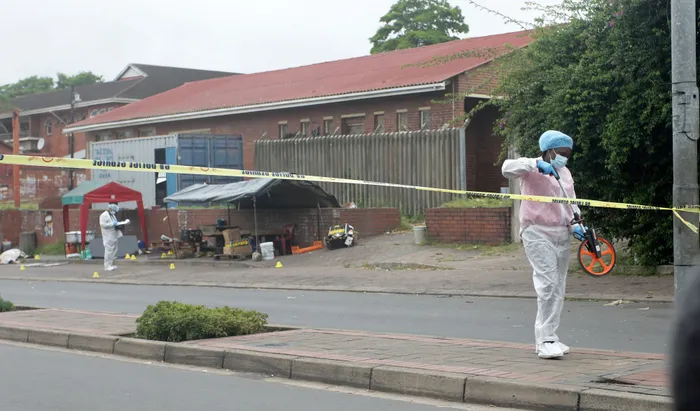
A crime scene tape marks the spot where two street traders who sold inyama yenhloko (cow head meat) were gunned down in Clermont, west of Durban. Street traders of the popular cuisine are being targeted by a protection ring.
Image: Independent Newspapers Arcives
Street traders who sell the popular Zulu cuisine, inyama yenhloko (cow-head meat, also known as beef lip meat) around Durban are living in fear after a protection ring started targeting them for extortion.
The traders spoke with the Sunday Tribune's sister title, Isolezwe, on condition of anonymity for fear of their lives.
One of the traders said the situation was getting out of hand.
He said towards the end of last year, three men alighted from a grey VW Polo and bluntly told him that every month he has to pay R... (the exact amount, which is more than R300, is withheld to protect the trader).
"I thought they were joking. When I realised that they were serious, I asked them what the money was for and how they knew me. They told me that they don't know me, but from this point on we know each other," said the trader.
And at the end of the month, as promised, the men returned and demanded that he "give Caesar what belongs to Caesar".
"One of them was carrying a gun that day. I gave them the money. They bid me well and said they'd return at the end of the following month," said the trader of the popular dish that's usually served with uphuthu (crumbled maize meal) or ujeqe (steamed bread).
He said that since then he had been paying, yet he didn't understand what the money was for.
He once contemplated refusing to pay, but someone warned him against it.
"Someone said I should rather quit selling the meat because if I continued selling and resisted paying, it would be tantamount to digging my own grave."
He said there were two cow-head meat traders who got shot under mysterious circumstances a few years ago.
He said he tried to open a case, but the police turned him away.
Another trader in Durban said they'd been paying the fee for two years.
"They collect the money at high noon with everybody watching.
"To me they come pretending to be customers, then I give them the money," said the trader.
He said they flatly refused when he asked to deposit the money at the bank.
The men became angry at the suggestion and asked if he thought there was something wrong in their heads for wanting cash in hand.
The businessman said he was now tired of paying an unending debt.
"What these people are doing to us is so painful. I hope someone can help."
He said he asked a cop he's acquainted with to be present when they come to collect.
"The cop was off-duty on the day but froze when he saw them and said they are well-known and feared and there was nothing he could do," said the businessman.
Another trader who's based in one of the townships south of Durban said it's been three months since this protection fee ring started operating in the township.
"I'm still shocked by what is going on. I have been selling inhloko for many years, but it's the first time experiencing something like this," said the trader.
All traders who spoke up say what pushed them to speak out was because they've been recently informed that the fee will increase soon.
"Who's going to pay so much money?" another worried trader asked.
Attempts to get comment from the police were unsuccessful, but they'd previously urged businesses that are being extorted to approach them to get help.
In January 2023, two traders of inhloko were gunned down in Clermont on the busy Zazi Road.
Inhloko is popular in Zulu culture and when served during traditional ceremonies, it is reserved strictly for grown men. However, its street trade and being available at restaurants has made it accessible to women.
Extortion has become widespread in many townships in KwaZulu-Natal, with the criminal gangs targeting mostly informal traders, especially spaza shops run by foreign nationals, and business owners who have rental units, as well as scholar transport.
SUNDAY TRIBUNE