Celebrating Diwali: A guide to the auspicious nights and rituals
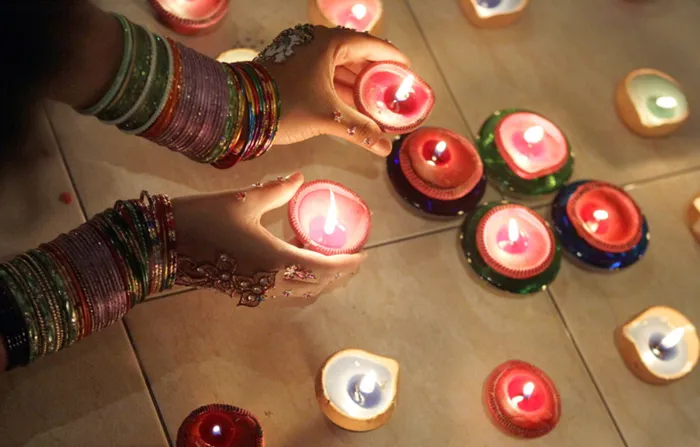
Lamps for Diwali
Image: File
HINDUS deem some nights auspicious for material and spiritual success. These nights are so magical that worshiping with sincerity can alter your destiny, making it more favourable even if it's not written in your horoscope.
One can easily tap the divine cosmic energy through proper prayer and rituals at these auspicious times.
Among such nights are Hanuman Jayanti, Navarathri, Janmashtami, Sharad Purnima, Diwali and Shivarathri. Holi night is also very auspicious to do secret prayers.
On Diwali, Sharad Purnima and Navarathri, devotees can please Mother Lakshmi easily.
Diwali is a five-day festival, with the first three days crucial to pleasing Mother Lakshmi. This year it is over six days, as per astrological calculations in South Africa. So, October 21 provides a gap because Amavasya sets at midday.
On the first evening called Dhanteras, which was celebrated yesterday (October 18 ), a person would have lit 11 diyas (clay lamps) to invite Mother Lakshmi. It was a good time to buy any metal or stainless steel kitchen item etc. It is believed that buying metal on this day increases your wealth throughout the year.
Special note: On this evening, a person would have lit a big diya (lamp) comprising four wicks facing the four different directions. This diya should be placed at the entrance of the door.
Roop Chaudas is the second day of Diwali and is often known as Choti Diwali (October 19). 10 diyas should be added to the ones put out the previous day, which would increase the tally of diyas to 21."Roop" means beauty, while "Chaudas" is the Hindu date.
On the day before Diwali, you should wake up about an hour before sunrise, while the stars are still out, and take a bath. Once you are dressed, stargaze for a minute. While doing this, you will feel like you are receiving positive energy from the universe to keep you healthy and beautiful. This will keep your skin glowing throughout the year.
*Note: While bathing, don't turn on the light, instead light a diya containing mustard oil.
According to the legends, on this day:
The powerful demon Raktabija was killed by the Goddess Kali. This day is also known as Kali-Chaturdashi and the Goddess should be worshipped.
The demon Narakasura was slain by Lord Krishna and Satyabhama. This day is also referred as Narak-Chaturdashi and Lord Krishna should be worshipped.
On the third evening of Diwali (October 20 ) the most powerful and sacred night of the year, to please Maha Lakshmi, you should add a further 10 diyas or even increase your total diyas to 51 or 108. You should chant "Shreem" (pronounced as Shree-em) 108 to 1080 times. While chanting, concentrate on a picture of Mother Lakshmi on a lotus flower, with two white elephants and their raised trunks on either side of her.
The fourth day of the Diwali celebration is Govardhan Pooja (October 22). This prayer is performed by making a hill called Govardhan Parbat, using cow dung to make a small mould. Early in the morning it is usually placed at the entrance of the front gate of the home, where it is worshipped for this day. It is believed there was once a drought in a village in Vrindavan. The villagers were worried and wanted to pray to Lord Indra (God of heaven).
At the time, Lord Krishna convinced the villagers they should instead pray to Mount Govardhan.
This made Lord Indra angry and he sent a big thunderstorm to flood the village.
Lord Krishna lifting Mount Govardhan to form an umbrella over the village and protect the villagers and their cattle.
Govardhan has since been worshipped on this day. It is a manifestation of Lord Krishna, so Lord Krishna is also known as Govardhan Dhari.
Bhai Dooj (October 23) the last day of the five-day Diwali festival. On this day, sisters show their love by putting a tilak or vermillion mark on the forehead of their brothers.
They perform aarti (prayer) for their brothers and show the light of the holy flame as a mark of love and protection from evil forces.
Sisters in turn are spoilt with gifts, goodies and blessings by their brothers.
In India, legends are the backbone of the festival. They are also a great way for parents to interest the younger generation and impart the values of Indian festivals.
Legends of Bhai Dooj:
It's believed that on this day Lord Yamaraj (lord of death ) visits his sister Yami, who put the auspicious mark on his forehead and prayed for his well-being. It is said that anyone who receives a tilak from a sister will increase his luck on this day.
On the auspicious day of Bhai Dooj, Lord Krishna, after slaying the Narakasura demon, goes to his sister, Subhadra, where she welcomes him with a lamp, sweets and flowers. She puts the holy protective tilak on his forehead.
With this legend in mind, the festival of Bhai Dooj is celebrated with enthusiasm.
Diwali Prayer Time:
One should perform "Lakshmi-Pooja" (prayer) at an auspicious time to reap maximum benefits by pleasing Maha Lakshmi, who will shower you and your family with wealth and prosperity.This auspicious time is between 6:09 pm and 8.22 pm. The most auspicious time for prayer is between 8.10 pm and 08:22 pm.
According to Vedic astrology, if you perform Lakshmi Pooja during Vrushabh Lagna, which means Taurus ascendant, wealth will remain stable throughout the year, with Mother Lakshmi's blessings at your side.
Please note that if you are unable to keep to these times for whatever reason, bear in mind that the entire day is very auspicious to perform your pooja.
Happy Diwali