Row erupts over South African school admissions policy for foreign learners
Migration vs Education
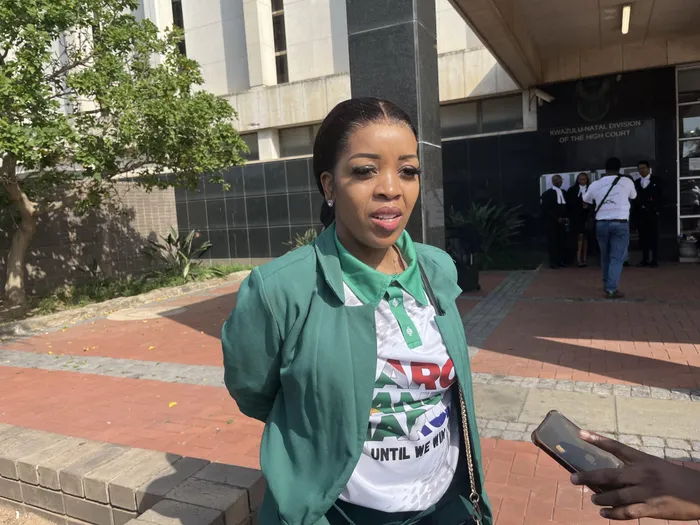
THE founder of March and March Movement (MAM) Jacinta Ngobese-Zuma has written an email to Basic Education Minister Siviwe Gwarube demanding answer over what her movement terms the department's failure to prioritise local learners in the school admissions policy.
Image: NOMONDE ZONDI
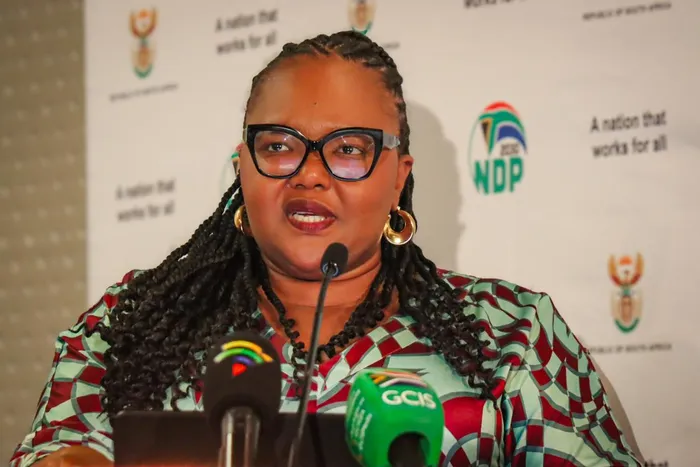
BASIC Education Minister Siviwe Gwarube whose department is being accused of failing to prioritise local learners in its school admissions policy which fuels overcrowding in classroms and stretches resources.
Image: Basic Education Department / X
The anti-illegal migration movement, March and March, has launched a stinging attack on the Department of Basic Education (DBE), accusing it of neglecting South African learners through what it calls “weak and ambiguous” school admission policies that allow undocumented foreign pupils into already overburdened public schools.
In a statement issued this week, the March and March Movement (MAM) said the department’s approach “dilutes the right of South African citizens and legal residents to timely and equitable access” to the country’s limited educational resources.
MAM's founder, Jacinta Ngobese-Zuma said they've written to Basic Education Minister, Siviwe Gwarube, demanding answers.
The movement insists that while the constitutional right to basic education is universal, it must be exercised within the bounds of fiscal capacity and national sovereignty.
“The current crisis is undeniable,” the statement reads.
“South African citizens and children of legal permanent residents are facing massive placement backlogs and overcrowded classrooms. The DBE cannot, and must not, hide behind constitutional ambiguity while our own children are denied their future.”
MAM alleges that public schools in several provinces are buckling under pressure, with reports of overcrowding so severe that pupils are being forced to sit on floors due to a shortage of desks and classrooms. The group attributes this to what it calls the DBE’s “administrative negligence” in enforcing admission requirements that verify a learner’s legal status.
“Any policy that mandates schools to accept learners without verifiable legal documentation rewards illegal immigration and compromises the integrity of the state,” the movement stated.
The statement further argues that public education, being funded through domestic taxes, should first and foremost serve the interests of citizens and legal residents. Placing undocumented foreign nationals ahead of South African children, it said, “is a betrayal of the department’s constitutional mandate.”
The movement’s list of demands includes making valid South African identification or permanent residency permits a non-negotiable requirement for placement, establishing a clear protocol for reporting fraudulent documentation, and ensuring that citizen applications are processed before those of non-citizens.
“We will not allow the DBE to use politically convenient rhetoric to avoid its obligation to the South African public. The education and future of our children are not negotiable,” MAM claimed.
The group has called on parents, teachers and taxpayers to “demand accountability” from the department, warning that the quality of education is being eroded by overcrowding and resource constraints.
“The future of South Africa is dependent on the quality of education we provide for our citizens. Demand action today,” the statement concluded.
Policy context
The DBE has in recent years defended its inclusive admission policy, arguing that all children in South Africa, regardless of nationality or immigration status, are entitled to basic education under Section 29 of the Constitution.
The department maintains that excluding undocumented learners would amount to a violation of children’s rights and international obligations under the UN Convention on the Rights of the Child.
However, the policy has long been contested by some education unions and civic groups, who say it places additional strain on already overcrowded public schools, particularly in Gauteng and KwaZulu-Natal, where placement backlogs have persisted for years.
The Department of Basic Education had not responded to queries at the time of publishing and will be updated accordingly once they've responded.
SUNDAY TRIBUNE