Employers warned against locking workers inside factories
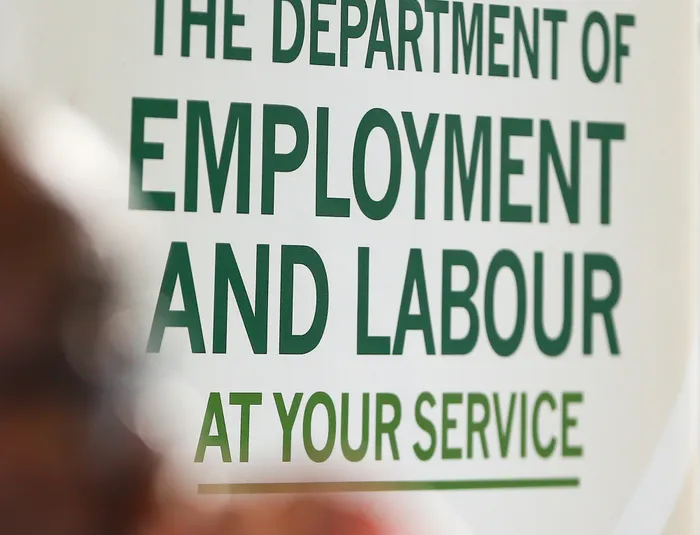
The Department of Employment and Labour embarked on a joint inter-departmental inspection blitz at clothing and textile factories on the KwaZulu-Natal north coast this week.
Image: Leon Lestrade/ Independent Newspapers
EMPLOYERS have been warned against locking employees inside business premises.
The warning was issued by the Department of Employment and Labour following this week’s joint inter-departmental inspection blitz at clothing and textile factories on the KwaZulu-Natal north coast.
Advocate Michael Msiza, the department's acting chief director of statutory and advocacy services, said they will not tolerate the exposure of workers to fatal situations.
His comments follow a three-day inspection blitz in partnership with the Department of Employment and Labour, the Department of Home Affairs, the police, and the Mandeni Municipality at Mandeni’s Isithebe Industrial Estate of the clothing and textile factories.
Force had to be used to open some of the inspected factories.
One of the factories that was found to be locked during an inspection on Thursday was Rongshou Clothing, where the manager was alleged to have locked workers inside.
The premises had to be forced open.
“One can assume that this conduct highlights a serious level of concealment and illegality happening inside. Sealing a factory on its own is tantamount to non-compliance,” said Msiza.
During the inspection at Rongshou Clothing, eight illegal immigrants from Mozambique and Malawi were arrested.
The factory had an ablution facility not suited for human use, posing health, safety, and dignity risks.
It was found that workers were paid R5 per hour, way below the current statutory R28,79 per ordinary hour worked. There was also non-compliance with the Occupational Health and Safety Act and non-compliance with firefighting regulations.
Msiza said it is illegal to install steel doors and lock workers inside the factory.
“It is illegal to lock people behind high walls and locked gates, as this may pose serious health and safety issues. Workers have a right to freedom of movement both inside and outside the premises,” he said.
He said the recent trial of seven Chinese nationals sentenced to 20 years for human trafficking and child labour had also exposed horror practices that take place behind high walls and locked gates in the workplace.
The objective of this week’s inspections was to measure and test the level of compliance with labour-law legislation, including the Basic Conditions of Employment Act (BCEA), Compensation for Occupational Injuries and Diseases Act, and Employment Services Act, the National Minimum Wages Act, the Unemployment Insurance Act, and Employment Services Act.