
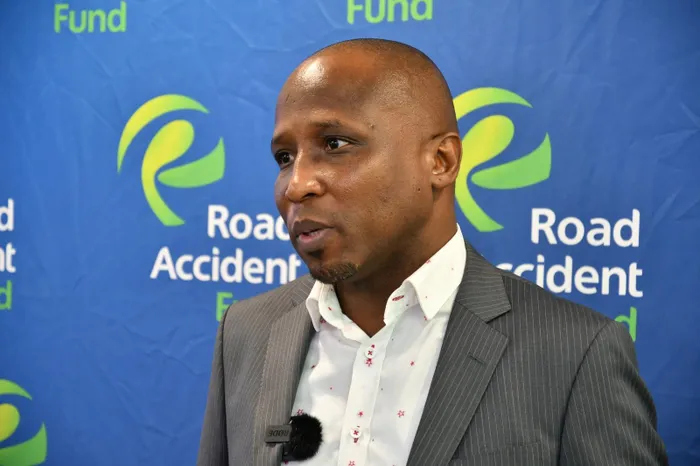
Former Road Accident Fund CEO Collins Letsoalo
Image: Supplied
The Road Accident Fund (RAF) has come under heavy scrutiny following alarming revelations regarding the exorbitant expenditure on close protection services for its former CEO, Collins Letsoalo.
In a testimony before the Standing Committee on Public Accounts (Scopa), RAF's head of security, Stephen Msiza, disclosed that the fund spent a staggering R8 million annually on security for Letsoalo, a figure that sharply exceeds the R480,000 fringe benefit cap set by the board.
During the inquiry, Msiza confirmed that despite a finding by the South African Police Service (SAPS) indicating no threat to Letsoalo's life, the board insisted on procuring security, branding it a “policy issue.”
The revelation raised eyebrows among committee members, highlighting a significant discrepancy between board determinations and actual expenditures.
Scopa chairperson Songezo Zibi expressed concern over the financial practices, noting that similar institutions manage far larger sums without providing such extravagant levels of personal security.
The inquiry further uncovered that the costs associated with Letsoalo's security did not end with the close protection services. Over the last three years, an additional R7 million has been spent on fuel, hotel accommodation, and travel, with figures soaring from R797,954 in 2023 to R3.1 million and R3.2 million in the subsequent years. This raises further questions about the fiscal responsibility of the RAF regarding security allocations.
Adding to the unfolding saga, Msiza revealed that the provision of personal security extended beyond Letsoalo to include two former board chairpersons, despite the absence of threat assessments for them as well.
“Close protection services are allocated to the chair and CEO based on benchmarks from other entities,” he explained, indicating that such reasoning does not justify the unrestrained spending pattern evidenced in the RAF operations. With escalating costs and a growing number of bodyguards—from an initial three to nine at Letsoalo's exit—this situation has escalated to concerning levels.
Msiza recounted his origins within the organisation, sharing that he had joined RAF in 2021 after being seconded from the Passenger Rail Agency of South Africa (Prasa). He initially provided security for Letsoalo due to perceived threats, a situation that transformed into a challenging relationship marred by dissatisfaction over the demands placed upon him, particularly regarding the protection of Letsoalo's family members.
This dissatisfaction culminated in a notable confrontation when Letsoalo insisted on securing his wife and son, which Msiza had objected to, stating, “Our relationship became sour precisely because of those things.” He warned Letsoalo that issues surrounding the security arrangements would eventually come to light, an intuition that rings true with the public scrutiny now faced by RAF.
Furthermore, Msiza provided details on the procurement process for Letsoalo's security, noting that the initial service provider had underquoted, forcing the board to seek alternative firms. One provider charged R144,000 monthly, yet significantly, that amount did not encompass extensive operational or maintenance needs, resulting in accumulated costs for vehicle repair and travel.
As the inquiry progresses, it raises critical questions about governance and accountability within the RAF. The startling revelations of Letsoalo's protection expenses not only spotlight inefficiencies within the organisation but also serve as a catalyst for broader discussions surrounding state resource management and ethical standards in public service.