

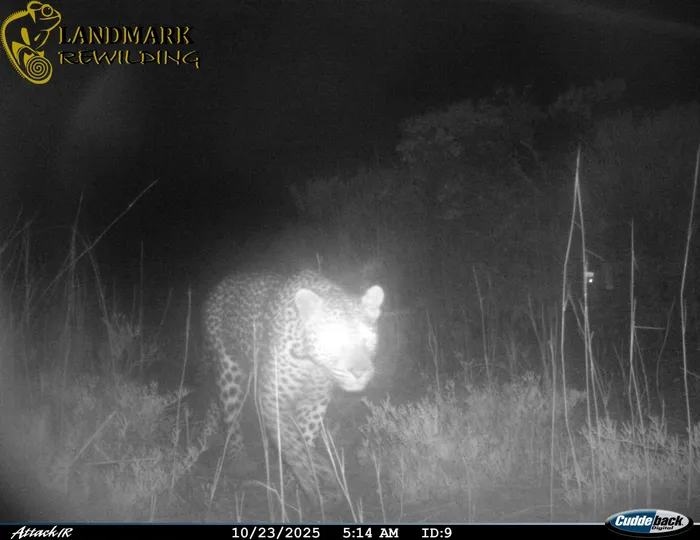
The return of the leopard to the West Coast National Park underscores the success of long-term conservation partnerships.
Image: Supplied
IN a historic conservation milestone, a leopard has been photographed in the West Coast National Park for the first time in 170 years. The landmark sighting marks the natural return of the species to South Africa’s coastal landscape, a sign of ecological recovery. The leopard had been extirpated as a species in the mid-1800s and only in the last while naturally returned.
The image, captured by a remote camera trap, confirmed that the elusive predator has recolonised a region from which it had long been absent.
The discovery is the result of a collaborative effort between Landmark Leopard and Predator Project and South African National Parks (SANParks), together with the University of the Western Cape, Saldanha Bay Municipality and multiple private landowners, working together to monitor and protect the country’s recovering leopard populations, said JP Louw, head of communications and spokesperson for SANParks.

A leopard has been photographed in the West Coast National Park for the first time in 170 years.
Image: Supplied
The project has been running for the last few years on the West Coast between Cape Town and the Berg River.
Conservationists attribute this extraordinary return to a combination of factors, including coordinated efforts by NGOs and conservation authorities, progressive changes in land use (and the development of conservation areas, like the West Coast National Park), protective environmental legislation, and a growing tolerance and coexistence between local communities and wildlife.
Louw said that over the past two decades, the Landmark Leopard and Predator Project, in partnership with SANParks and other stakeholders, has worked to restore ecological corridors and reconnect fragmented habitats across the Western, Eastern and Northern Cape. These efforts have allowed wildlife like leopards to move more freely and safely through the landscape. A critical component to these efforts is tolerance and coexistence of landowners and the implementation of wildlife protection legislation, which has been evident in the area.
"The return of the leopard to the West Coast National Park underscores the success of long-term conservation partnerships and highlights the importance of continued collaboration to ensure that this remarkable recovery endures," said Louw.