

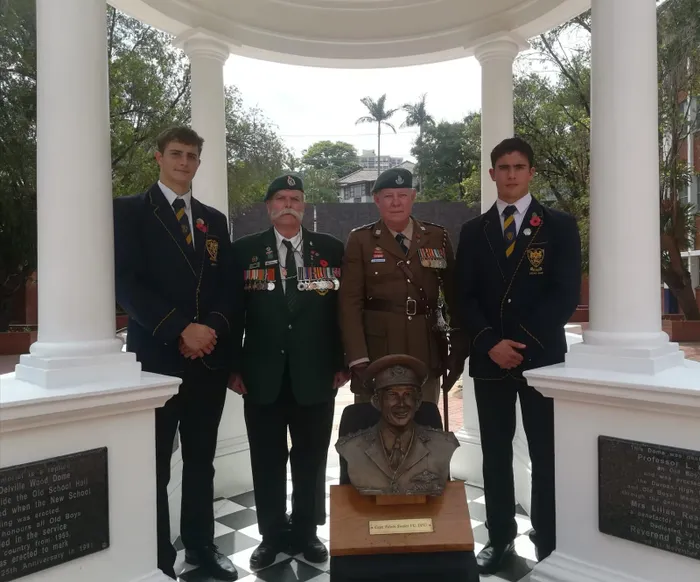
Head Prefect 2025 Kirk Wilson, Colonel Pat Acutt, Lieutenant Colonel Greg de Ricquebourg and Head Prefect 2026 Zion Smith standing in the Delville Wood dome with the bust of Captain Edwin Swales VC at Durban High School on Wednesday, November 12, when the school held their Remembrance service.
Image: Mark Levin
DURING the past week, remembrance services have been held in many countries around the world. Members of royal families, prime ministers and presidents have represented their nations to honour their war dead and to lament the horrific loss of life and destruction wrought by war.
In Durban, a wreath-laying was held at the Cenotaph, organised by the SA Legion and on behalf of the city. There were no soldiers on parade nor were the reserve force army regiments represented by their commanding officers, a disturbing absence considering that most of the war dead served in their regiments. As one senior officer commented, the act of remembrance has faded in South Africa.
Not so in the schools. In the Durban area, Glenwood High mounted a parade on their main sports field.
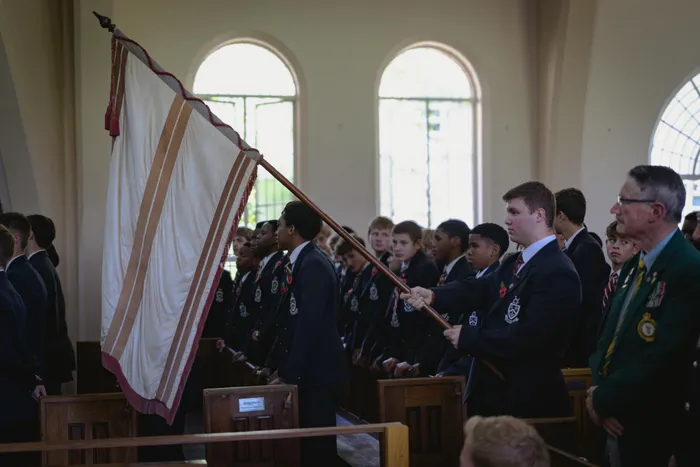
Head of School Luke Faure solemnly carries the Kearsney Colour into the Chapel at Kearsney College.
Image: Kearsney College
St Henry’s and Kearsney both held church services attended by all their pupils, except the matrics. At Kearsney, the school colour was carried into the chapel by Luke Faure, the Head of School for 2026, with an old boy, Wray Radford (1989), bearing the Roll of Honour.
The service began precisely as the clock chimed 11 o’clock, symbolising the moment when the First World War ended at the 11th hour on the 11th day of the 11th month 1918.
In collective reflection, the 2026 Deputy Head of School, Nhlanhla Ndlovu, noted that, “remembering is both a journey into the past and bridge to the future”.
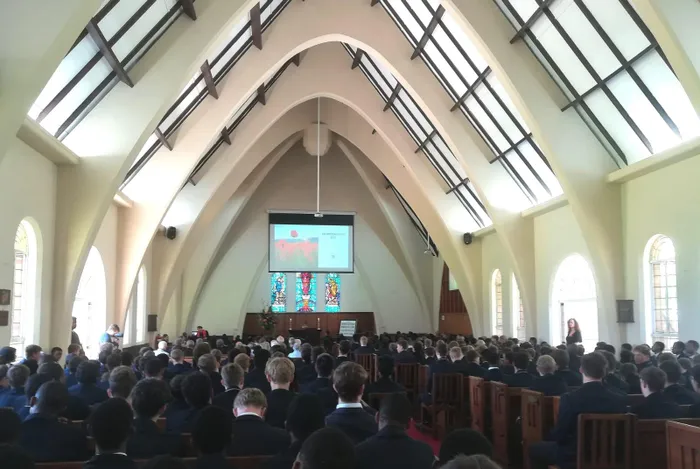
Kearsney boys assembled in the Chapel before the commencement of the Remembrance Service, on Tuesday, November 11, 2025.
Image: Mark Levin
In honouring the legacy of the 32 old boys who died in war between 1939 and 1990, the pupils of today "find strength in their memory”. Listening to the boys singing those age-old hymns accompanied with the grandeur of trumpet and organ, there was that sense of continuity between past and present.
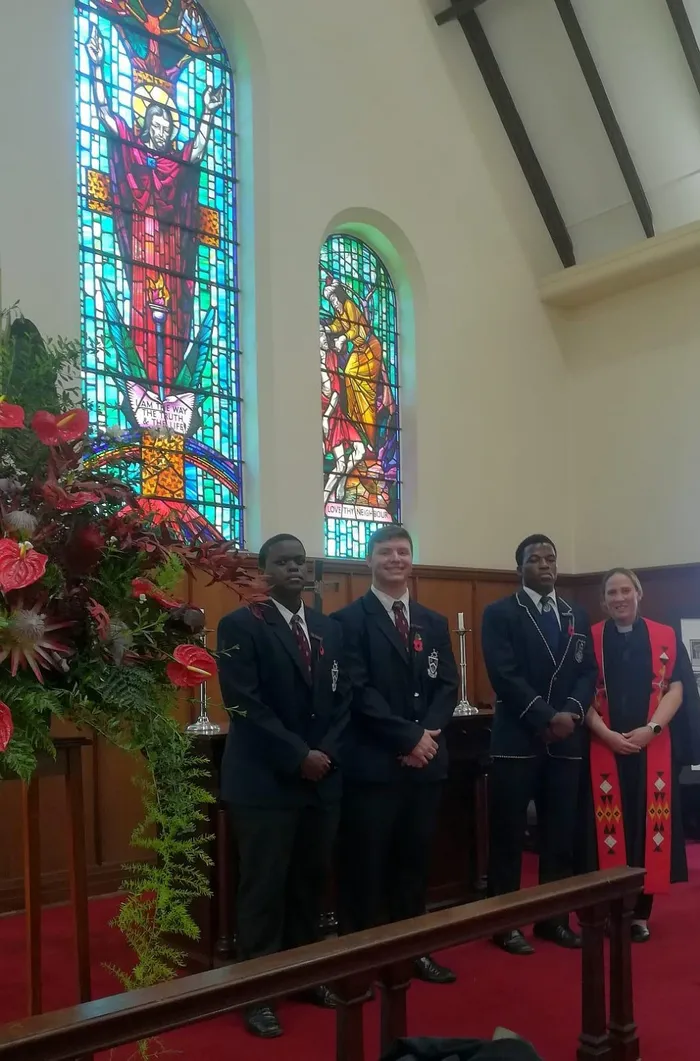
Head of Chapel Zanda Mnqayi, Head of School Luke Faure and his Deputy Nhlanhla Ndlovu, with Reverend Kym Bishop in the Kearsney Chapel.
Image: Mark Levin
After the Second World War, Kearsney old boys honoured the sacrifice of their fellow pupils, some barely out of school, by erecting a cricket pavilion in their memory.
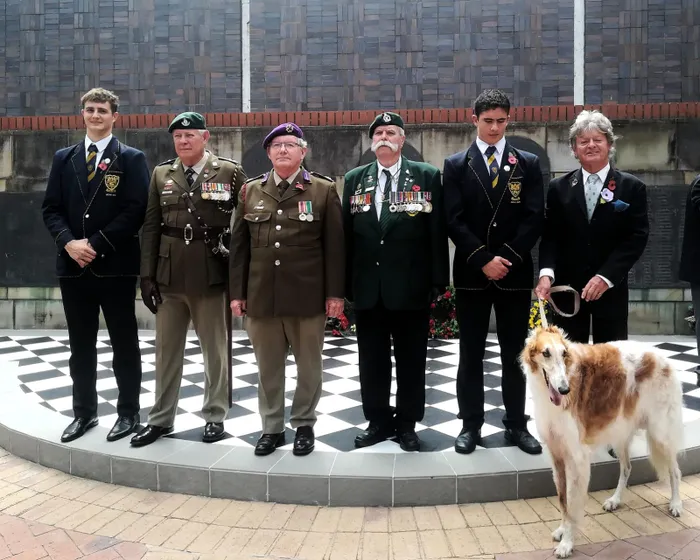
Kirk Wilson (Head Prefect 2025), Lt Col Greg de Ricquebourg (Durban Light Infantry), Father Dane Elsworth, Colonel Pat Acutt (Natal Mounted Rifles), Zion Smith (Head Prefect 2026), and Alan Yates with his borzoi dog at the Durban High School Memorial Wall.
Image: Mark Levin
At Durban High School (DHS), the Armistice Service was held in their Memorial Courtyard with a group of boys representative of the school's pupils. The service was conducted by the rector of St Cyprian’s and volunteer military chaplain, Father Dane Elsworth.
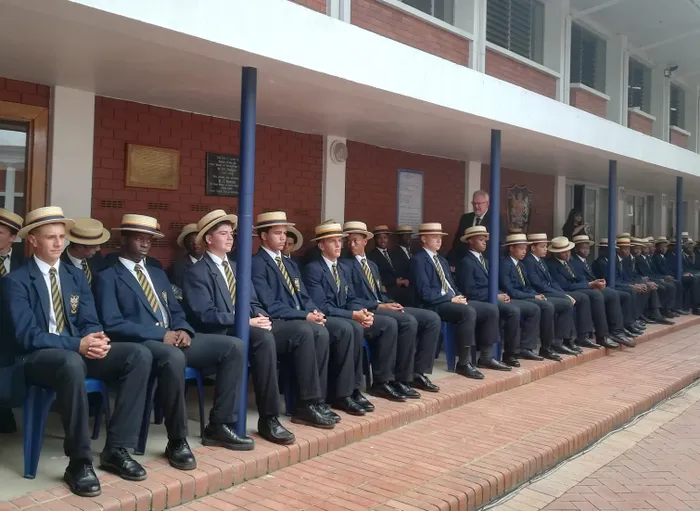
Durban High School pupils at their school's Armistice Service on Wednesday, November 12, 2025.
Image: Mark Levin
A common theme in so many sermons was that their supreme sacrifice should not have been in vain. It is not enough to merely recite their names: it is up to each of us to ensure that our country was worth their sacrifice.
At the Cenotaph, Legionnaire Chaplain Shange spoke out against the corruption bedevilling South Africa. Fr Elsworth referred to the scourge of crime so violent that approximately 500 000 South Africans have been murdered since 1994.
A DHS old boy and retired Commanding Officer of Durban Light Infantry, Lieutenant General Greg de Ricquebourg, read In Flanders Fields in which the poet John McCrea starkly wrote:
“We are the dead. Short days ago
We lived, felt dawn, saw sunset glow,
loved and were loved, and now we lie,
in Flanders Fields.”
Two brothers from DHS, Sergeant John Lucas (aged 21) and Lieutenant David Lucas (aged 24) both died in the fields of Flanders on consecutive days, September 20 and 21, 1917. One can only imagine their family’s grief, opening not one but two of those dreaded official notifications.
The headmaster, Tony Pinheiro, quoted the ancient Greek historian Herodotus, who wrote that "in peace the sons bury their fathers, but in war the fathers bury their sons.”
That is as true today as it was in 1917 and 2 500 years ago.
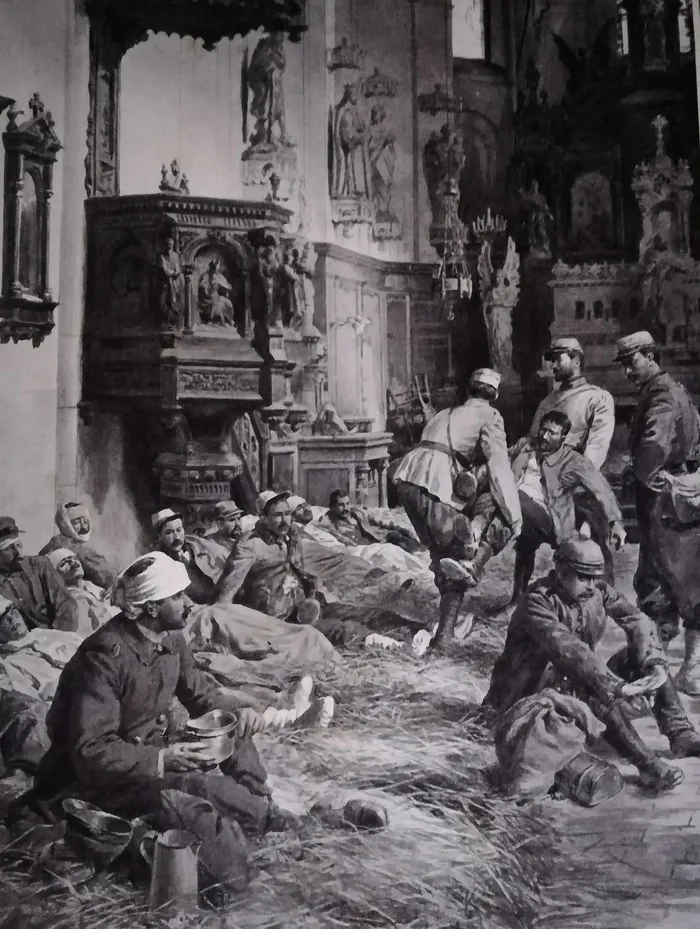
A church close to the front lines is used by the French Red Cross to care for the wounded, 1915.
Image: Supplied
In the second World War, one of the school's former pupils, Captain Edwin Swales, was posthumously awarded the Victoria Cross. After his plane was badly damaged by enemy fighters, he managed to keep it aloft long enough for his entire crew to parachute to safety on February 23, 1945.
This was achieved at the cost of his own life. DHS named one of their school houses in his honour. The school has a bust of Swales which was commissioned by Barclays Bank where he worked from 1935 to 1939. The bust was donated to the school in 2007 where it remains on display.
One wreath layer at DHS was Alan Yates who together with his Borzoi dog, laid a wreath of purple poppies in memory of the millions of animal victims of war. They did not volunteer, but too often endured unimaginable suffering.
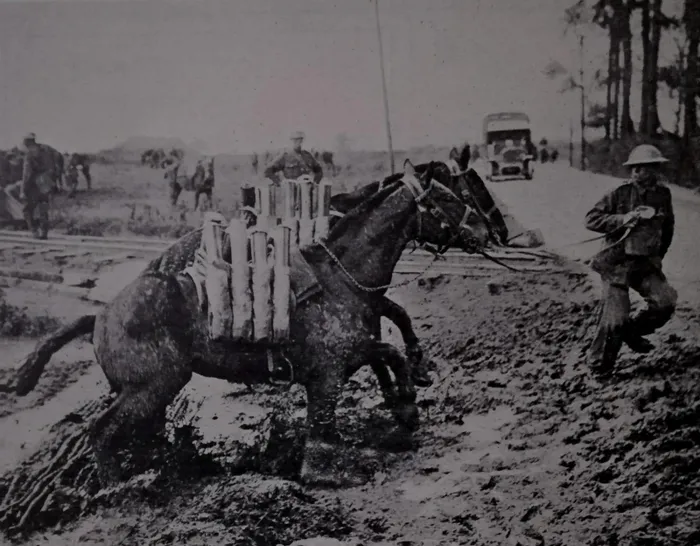
A pair of ammunition pack horses struggle through the mud with their load of shells in September 1917.
Image: Supplied
It is estimated that 16 million animals served in the First World War alone. Horses, mules, oxen, camels, dogs, and pigeons were the life blood of the military. Many of those animals that were traumatised were not spared. Considered ”mad”, they were duly shot.
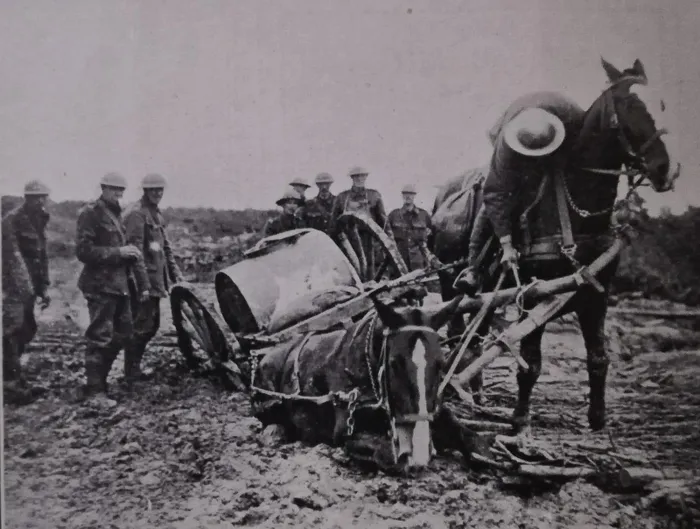
An exhausted horse collapses trying to pull a water cart in Flanders in September 1917.
Image: Supplied
Statistics vary, but less than 10% of the horses conscripted from Britain for the war effort actually returned home. Deeming it too expensive to repatriate them, they were either sold for slaughter or abandoned in fields, where they died of their injuries, starvation or exposure.
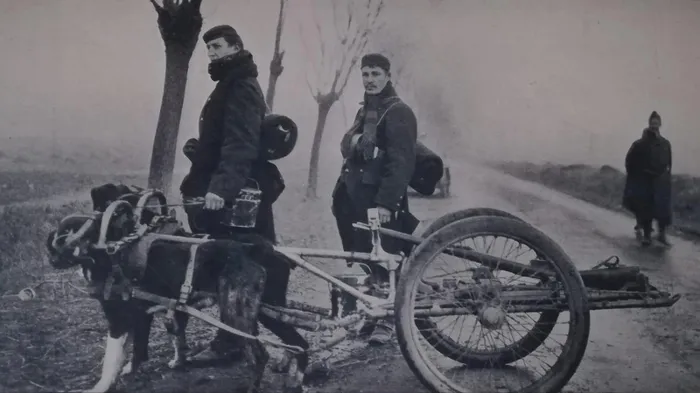
Two dogs pull a machine gun in Flanders in 1915.
Image: Supplied
At war’s end, many soldiers chose to shoot their own horses rather than abandon them for their fate.
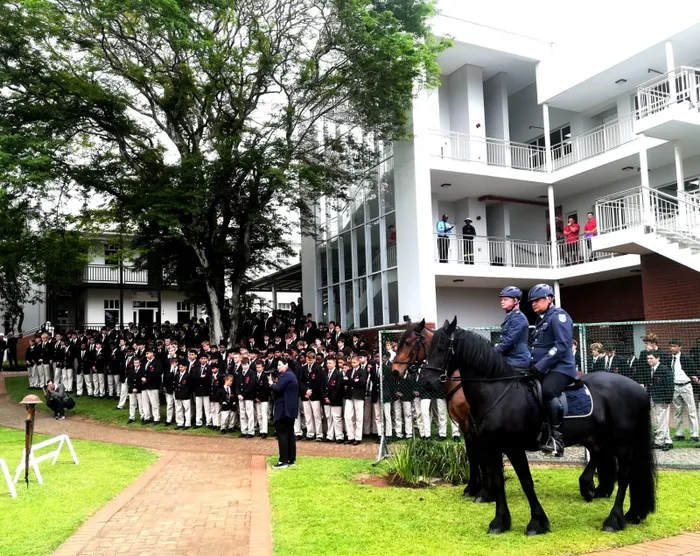
Clifton high school boys with Superintendent Jonathan Foster (on Lady Light) and Inspector Jeffrey Gunter (on Chanel) from the Metro Police Mounted Unit on parade.
Image: Mark Levin
Clifton held its memorial service with both Prep and High school boys in attendance on Friday. The school placed a special emphasis on the contributions of animals in war. Both the Metro Police Mounted Unit and Dog Unit were present to represent the animals of war. In one presentation by Grade 11 pupil, Benjamin Gooch, he spoke of the harsh conditions endured by horses, which were treated not as animals but as equipment.
Some eight million horses died in World War l alone, many literally worked to death. He suggested that in our own approach to life, we should follow their dogged tenacity.
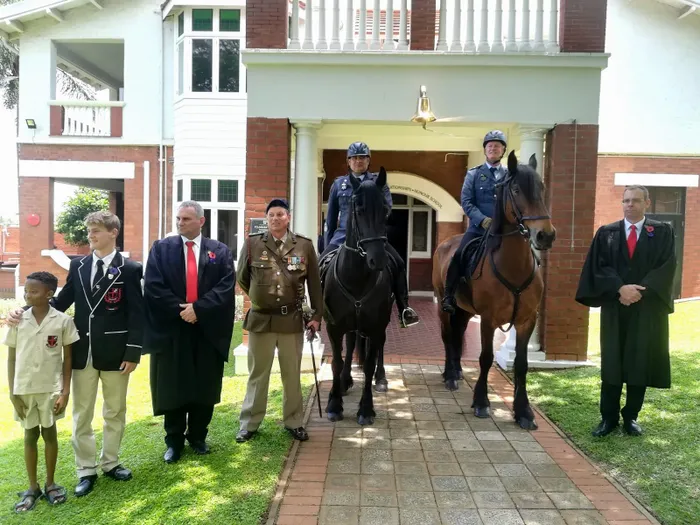
Clifton prep pupil, Daniel Joss, Head Boy, Jason Brown, Headmaster Prep School, Major Craig Nel (former OC Natal Field Artillery), Jeffery Gunter, Jonathan Foster, and Clyde MacDonald ,Executive Headmaster of Clifton standing in front of Founders House on Friday, November 14, 2025.
Image: Mark Levin
In the "Eulogy to Animals in War", two lines stand out:
"We give freely our loyalty, hard work and trust
We don't understand causes and if they are just."
These lines could apply equally to both animals in war and the majority of soldiers, who were nothing more than cannon fodder - the faceless statistics of conflict.
It is a sad irony that the very organisation in South Africa that should be most resolute in paying tribute to the war dead is the military. Yet it is the military that too often appears to no longer care. One can but ask how many serving soldiers comprehend the meaning behind the Last Post, Reveille or the two minutes silence.
Instead, it is schools across South Africa with their dignified, meaningful armistice services that truly honour the war dead. Our duty to them is to understand the toll exacted by war. It is through our own actions to make our nation a better place that we can ensure that their fear, suffering and ultimate death were not in vain. It is a lesson worth learning.