Falling birth rates: are women inadvertently saving the planet?
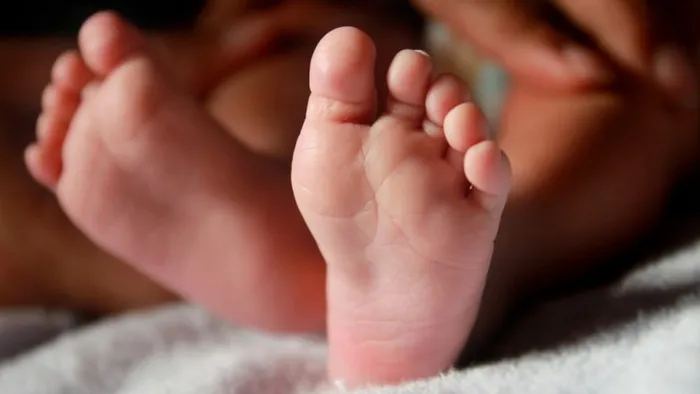
As climate change intensifies globally, an unexpected demographic shift may be helping the planet: declining birth rates driven by women's changing social roles. Women's pursuit of education and independence is inadvertently addressing overpopulation concerns, even as the world faces complex challenges between environmental sustainability and economic stability.
Image: File
A few years ago scientists, environmentalists and climate change activists were worried about overpopulation and warned about the harm it would cause to the earth's environment and its biodiversity.
They said that if nothing was done to curb the rapid increase of the human species with its voracious appetite, it would cause untold environmental degradation and damage. The earth would suffocate to death.
Many ignored the warning. But true to the scientists' and environmentalists' predictions, climate change is causing havoc around the world. Wildfires, storms and floods are becoming fiercer and more frequent.
But just as the scientists and environmentalists were wringing their hands in despair, help from an unexpected quarter came to the earth's rescue: women! Not that it was a deliberate, conscious attempt but rather an indirect consequence of their action.
Women all over the world are rebelling, ditching their traditional role of a housewife that kept them subservient to the male.
Educated and financially independent, they are flinging the broom and the apron, forsaking their reproductive role in the bedroom and going out into the world, enjoying their freedom and independence. Some are so fiercely independent that they don't even want to marry.
A consequence of their newfound freedom is the abandonment of the traditional role of motherhood. They don't want to end up like their mothers. burdened with half a dozen or more children.
For many women, not two but one is enough! Consequently, the birth rate has dropped from 2.1 to 1.6 in Europe, the UK, the US and Japan. Even in the third-world countries, the birth rate is dropping.
Besides education and independence, other factors such as contraception, the high cost of living and raising children are also playing a role in the low birth rate.
Add to the low birth rate the problem of an ageing population. Economists and industrialists are worried. Productivity and profitability are adversely affected.
Although environmentalists and climate change activists are breathing a sigh of relief, they are still concerned. The birth rate may be falling in 3rd world countries, but it is still high and more than makes up for the low birth rate in the first world countries.
Climate change is still a threat. The Paris Accord on Climate Change was signed in 2015, but the nations of the world are still dragging their feet in implementing its resolutions.
The UN predicts that world population will still hit the 10 billion mark in the not too distant future!
Birth rate has to drop dramatically in the 3rd world to save the earth. Not men, the greedy oil barons or demented Trump, but the independent woman may save the world. | T MARKANDAN Kloof