

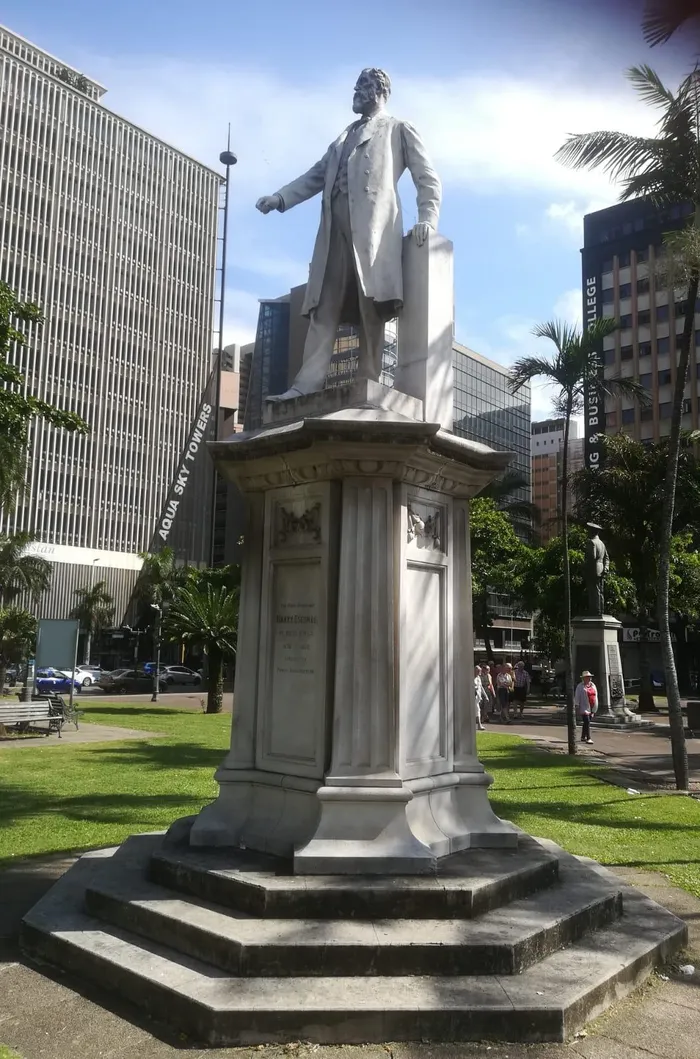
Harry Escombe's statue still stands in the City Hall gardens.
Image: Mark Levin
In 1865, a newly married couple often strolled down to Durban’s bay to look at a plot of land which they dreamed of owning. Without the financial resources and a growing family-four daughters and a son followed in quick succession - their dream remained out of reach. Seventeen years would pass before they could purchase the site at 15 Beach Grove and build a house.
The young couple was Harry Escombe, a lawyer, and his wife Theresa, the plucky, beautiful daughter of Dr W G Taylor. Even before she had accepted him, the smitten Harry had named his little yacht “The Theresa”.
How could she refuse him? He chose the architect Philip Dudgeon to design a large double-storey house with generous verandas opening onto a garden which ran down to the bay - in 1882 when the family moved in, the Esplanade had not yet been built. They named their new home “Bay View”. It was there that Escombe's most important work was done.
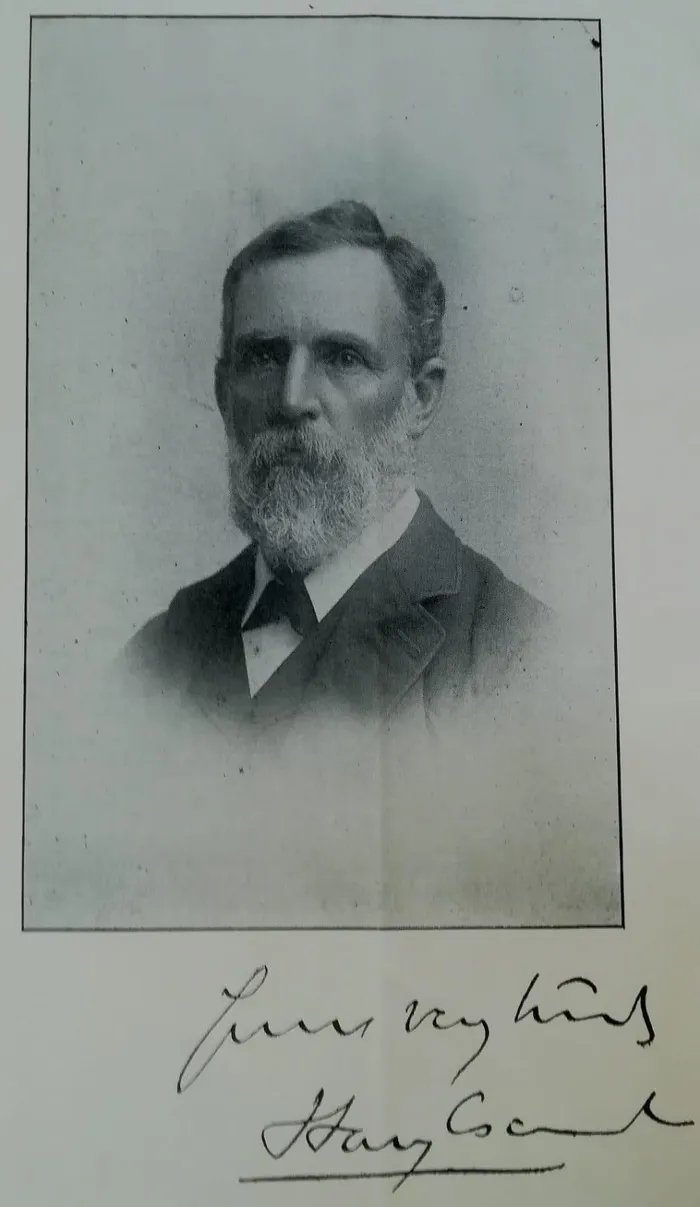
A photograph of Harry Escombe signed by him.
Image: Supplied
Escombe arrived in Natal in 1860 aged 22. After settling in Durban, he entered the legal profession gaining a reputation as one of the most able lawyers of his day. In 1870, he was appointed solicitor to the Durban Town Council, a position he held until 1893 when he became Attorney-General in Sir John Robinson’s first cabinet. He remained, however, the standing counsel to the Corporation until his death.
Although few today are aware of it, Escombe’s most enduring legacy was his relentless determination to develop Durban’s harbour. After his appointment in 1881 as chairman of the Harbour Board, he had the influence to drive what he believed was the key to the whole economy of Natal.
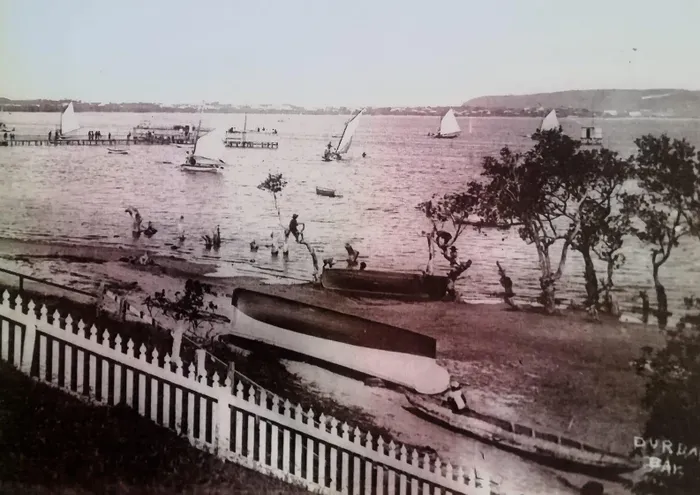
Durban's bay in the 1880s before the Esplanade was built. The white picket fence in the foreground marked the boundary of Escombe's home, Bay View. At this time, it is easy to see why this was so desirable a site.
Image: Supplied
He was not trained as an engineer, but he studied the technical questions and then presented them with the skill of a solicitor arguing his case. He was not afraid to take on experienced engineers when he found fault with their conclusions or where unnecessary expenditure would be incurred.
Crucially, the removal of the sand bar transformed the harbour into a deep water, commercial part enabling ships of all sizes to safely enter it to load and unload cargo and passengers.
With the harbour’s increasing significance, Escombe turned his attention to its security. Supported by the Port Captain Ballard, Harbour Engineer Innes and others, Escombe promoted the establishment of a Naval Reserve unit in Durban. His idea found favour and in May 1885, the Natal Naval Volunteers was established with Escombe as its first Commanding Officer. Many of its early meetings were held at Bay View.
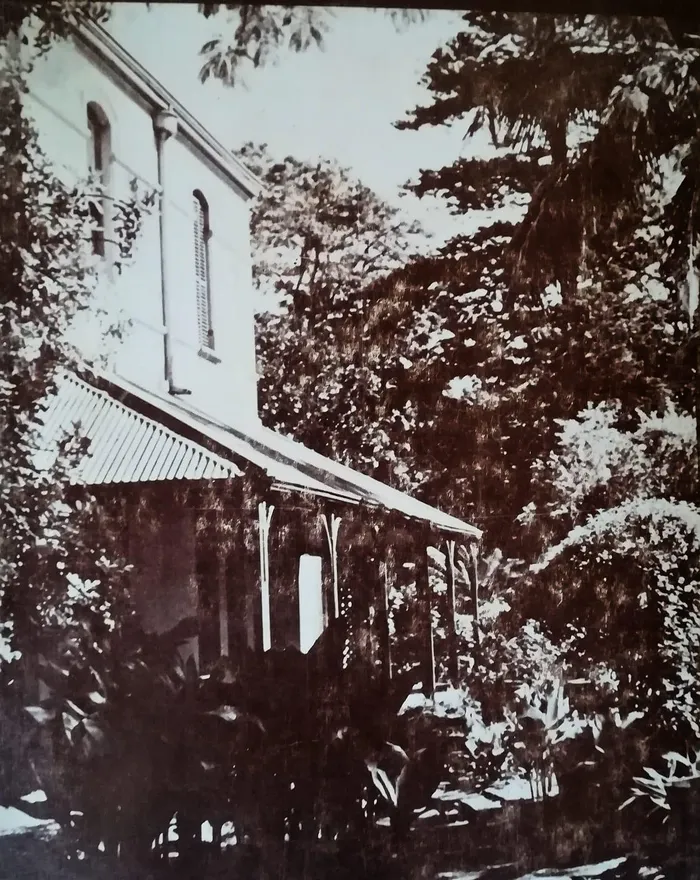
A side view of Bay View, shaded by its indigenous garden.
Image: Supplied
Escombe also found time for politics. Entering the political arena in 1872, he remained a prominent, even formidable figure, until his sudden death in 1899. During his early years in the legislative assembly, he opposed responsible government for the colony, coming into conflict with Sir John Robinson, the other towering figure of the era.
After 1886, his view changed and he became a staunch supporter of self- government. In 1893, Natal was granted responsible government with Robinson, the owner-editor of The Natal Mercury, its first Prime Minister. When Robinson resigned for health reasons in February 1897, Escombe became the colony’s second premier.
In June, he and Theresa attended Queen Victoria’s Diamond Jubilee celebrations in London. There he was made a member of the Privy Council and awarded an honorary Doctorate of Laws by Cambridge University. His premiership did not long survive his return home.
In October 1897 he resigned. The pace of life at Bay View though, never slackened being ideally positioned for a man with his interests.
One of his granddaughters, Cicely Tower, has left an account of life at Bay View. The house had separate staff quarters as well as stables for the family carriage and two horses, Scout and Warrior. The garden retained many indigenous trees including “an Essenden tree upon which all the family carved their names”.
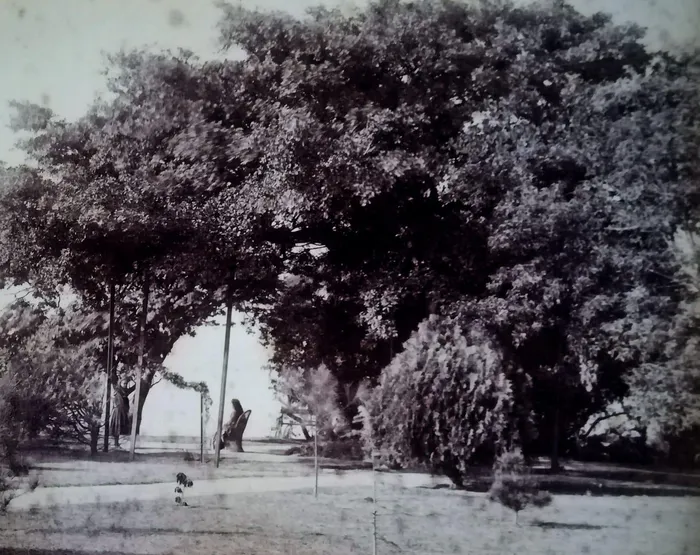
Theresa Escombe sits beneath a canopy of trees in her garden at Bay View.
Image: Supplied
The four daughters, Kate, Coral, Ivy and Fanny were well educated but their only brother Rowland, a bright boy, had a weak heart. His health was of such concern that Escombe took him to London where he was carried ashore by his tutor. The doctors could not help Rowland and aged eleven, he died there. It was a bitter blow to his parents.
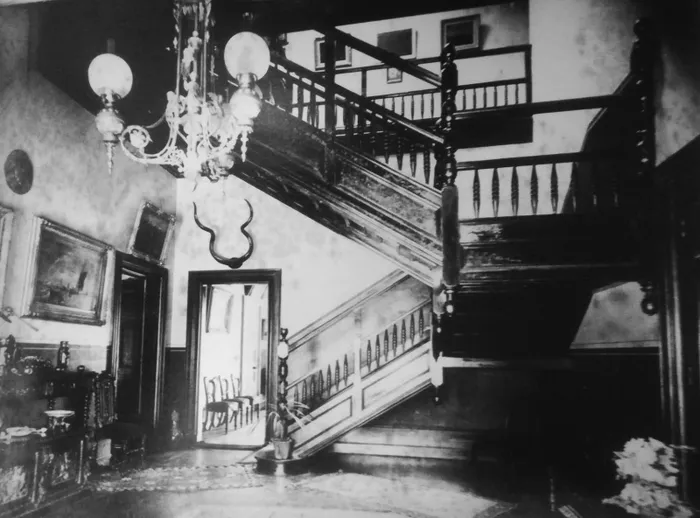
The entrance hall at Bay View :dark wood, polished floors and a large Victorian light fitting.
Image: Supplied
Escombe’s study reflected his interest in astronomy - he was a frequent lecturer on the subject - and law but there were also volumes of Dickens and Thackeray. After his death, his study remained as it had been during his lifetime. The drawing room was his wife’s domain. There she held her “ At Homes” where the ladies elegantly sipped from Dresden teacups. The hostess poured the tea herself from a massive silver tea set, a wedding present which was much used.
Escombe’s day began early. When possible, a morning bathe was one of his habits. A powerful swimmer, he would sometimes swim across to Salisbury Island or across to the Bluff. Cave Rock was a favourite haunt. More than one stranger would be invited to join him for a swim at 6am: it was difficult to refuse. By 7am, he was at his Harbour Board office at the Point.
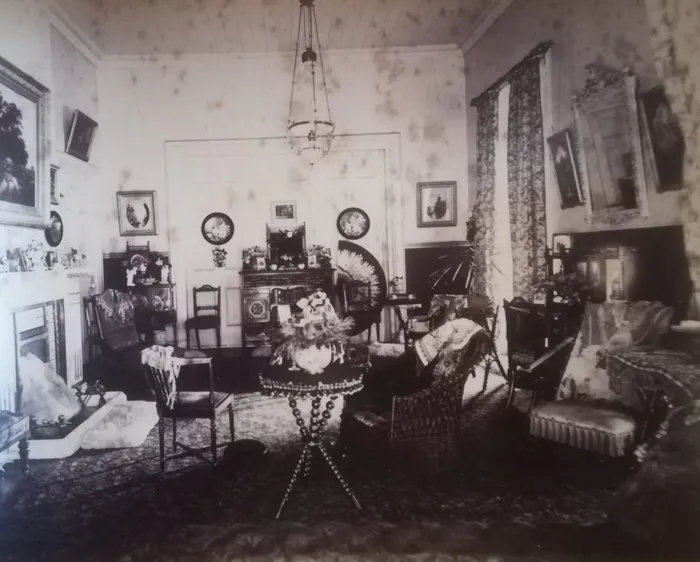
The drawing room. The folding doors on the back wall were swung open and the carpets rolled up so that the girls and their partners could dance.
Image: Supplied
When the girls grew older, the folding doors separating his study from the drawing room were opened, the carpets rolled up and dances held. During the day, tennis parties, which were all the rage in the 1880s and 1890s, were held on the lawn.
Many prominent people visited Bay View, including Mohandas Gandhi who leased a property further up Beach Grove. Although Escombe and Gandhi clashed on Indian Policy in Natal, each recognised the calibre of the other, two lawyers who were also politicians.
Their last meeting was at Bay View on December 13, 1899. After the outbreak of the Anglo-Boer War two months earlier, Gandhi offered to form the Natal Indian Ambulance Corps, an offer which was accepted. The night before the Corps left for the front, its leaders met at Bay View where both the Mayor and Escombe addressed them.
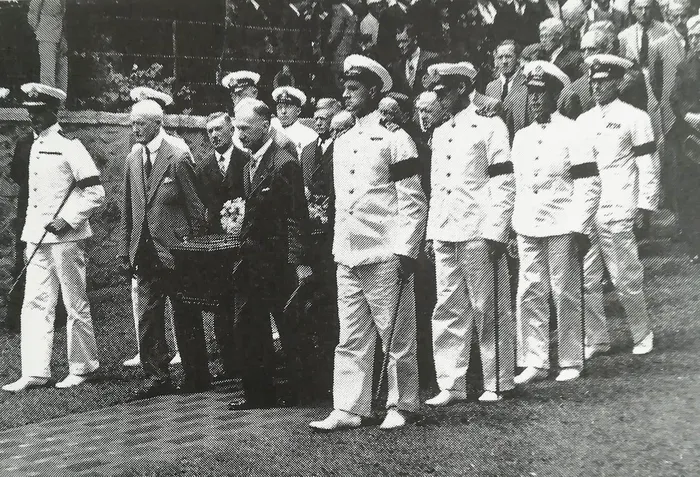
Pallbearers from the Natal Naval Volunteers slow march alongside Theresa Escombe's coffin in March 1937. Harry was its first Commander. Renamed SA'S Inkonkoni in 1954, the regiment was closed down in 2004.
Image: Supplied
Two weeks later, on December 27, 1899, Theresa had some ladies over for an “At Home “ tea. Escombe decided to walk to his Club, but feeling faint in the heat, he entered Mr Pope’s carriage works and sat down on some planks to rest. There he died. There was an immediate outpouring of grief and shock at his sudden death at just 61 years. After the Anglo-Boer War, a statue of Escombe was erected in the Town Hall gardens, where it still stands.
A long widowhood of 38 years lay ahead for Theresa, but she remained active lending her support to organisations such as the Girls Friendly Society. One of her daughters, Ivy, never married and continued to live at Bay View, a welcome companion for her mother. Theresa died in 1937 aged 89.
In a touching tribute, Escomb’s old regiment, the Natal Naval Volunteers, provided pallbearers. Ivy did not long outlive her mother. Following her death, Bay View was sold in 1938 and converted into government offices known as Escombe House.
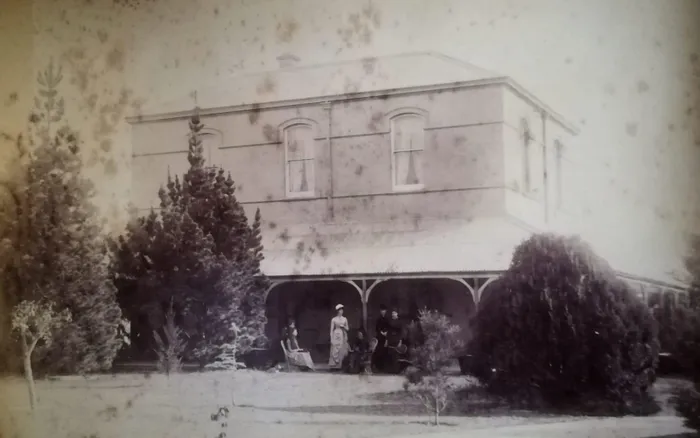
The Escombe family enjoying one of the verandas at Bay View, circa 1895.
Image: Supplied
Cicely Tower provided a sad recollection of the last years of the house: “Through the open windows could be heard the busy tapping of typewriters and the shrill alarm of telephone bells. Inside, dust descended onto office files and tea was drunk from coarse white office crockery instead of Dresden cups. Bay View had become a dead house and those who could remember it as it had been were not sorry when it was eventually pulled down”.
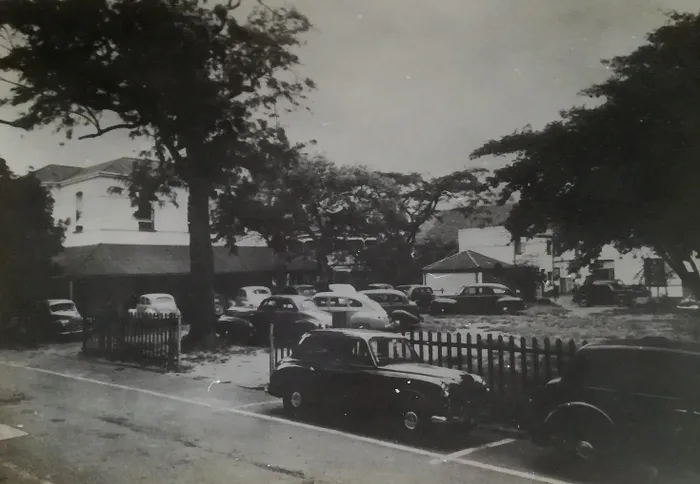
Bay View in about 1951. The garden is a car park from which the "tapping of typewriters" could be heard. The house was demolished in 1958.
Image: Supplied
It was demolished in 1958, replaced by the functional but drab building for the Department of Labour.
Driving along the Esplanade today, it is difficult to believe that there was once a Prime Minister’s home with stables and a garden which swept down to the bay and tennis parties on the lawn.
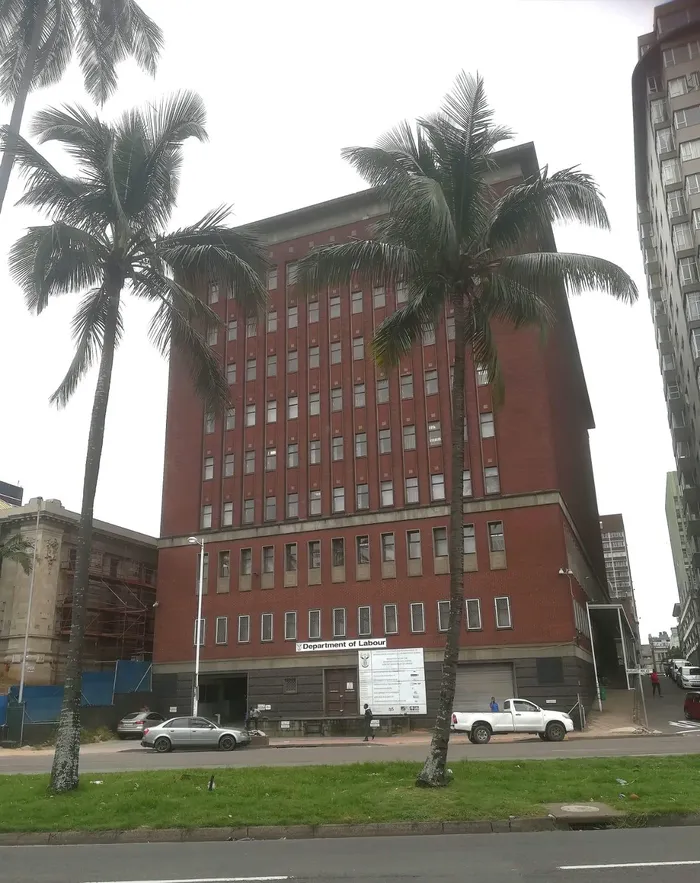
The Department of Labour building occupies the site once graced by Bay View.
Image: Mark Levin