

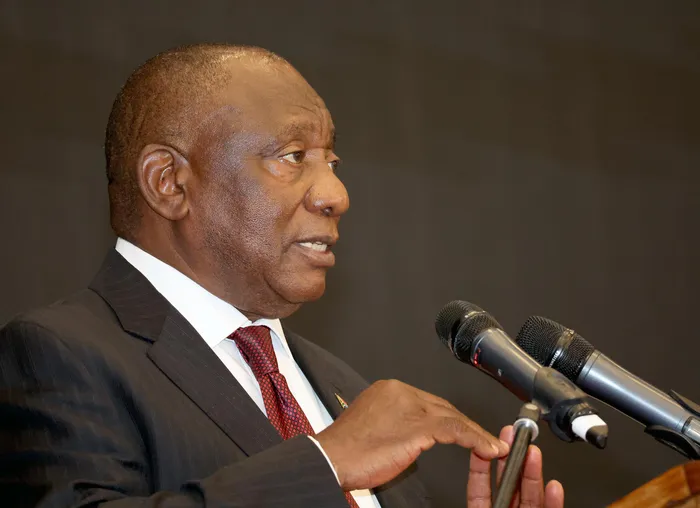
President Cyril Ramaphosa has no intention of holding a referendum to test public opinion for secession of any part of South Africa.
Image: GCIS
In a decisive response to growing calls for the Western Cape to hold a referendum on secession, President Cyril Ramaphosa reaffirmed his commitment to maintaining South Africa as a unified entity.
During a recent parliamentary session, Ramaphosa stated that he has no intentions of facilitating a referendum to gauge public opinion on the matter, stressing the importance of the Constitution in his role as president.
“The founding provisions of our Constitution state that the Republic of South Africa is one, sovereign, democratic state,” Ramaphosa asserted.
This declaration came during a challenging inquiry from Economic Freedom Fighters (EFF) Member of Parliament Thapelo Mogale, who questioned whether the president would consider a referendum to assess support for the independence of the Western Cape, alongside other matters aimed at the creation of a Volkstaat for Afrikaners.
Addressing the concerns brought forth by Mogale, Ramaphosa emphasised his constitutional obligation to uphold the law and promote national unity.
“In line with the constitutional responsibility of the president to uphold, defend, and respect the Constitution as the supreme law of the Republic and to promote the unity of the nation, I have no intention of considering a proposal or holding a referendum on the secession of any part of the country,” he said.
The president also clarified that he has not been lobbied by any entity within the Government of National Unity regarding the issue of secession, indicating a consensus at the highest levels of government to maintain national integrity.
The session also saw discussions surrounding the roles and responsibilities of deputy ministers in the Cabinet. EFF leader Julius Malema posed queries regarding the authority and performance agreements for deputy ministers, especially in light of recent revelations that some had not been assigned specific functions within their respective departments.
Ramaphosa confirmed that he has indeed signed performance agreements with all ministers, which include the delegation of responsibilities to deputy ministers, a point he stressed would be measured during their individual performance reviews.
As the debate unfolded, ActionSA introduced a Private Member’s Bill aimed at abolishing the position of deputy ministers altogether, igniting further discussions about the necessity and financial implications of these roles within the Cabinet. Ramaphosa noted that the financial breakdown of deputy ministers’ travel and other costs would be reflected in departmental budgets.
Moreover, the president declined to disclose the number of Cabinet members holding dual citizenship, stating that such information was not considered pertinent for their appointments.
“The Constitution does not require members of Cabinet to be vetted and cleared by the State Security Agency before they are appointed by the president.”
Ramaphosa added that all ministers who are currently serving in the Cabinet qualified to be ministers according to the Constitution.