
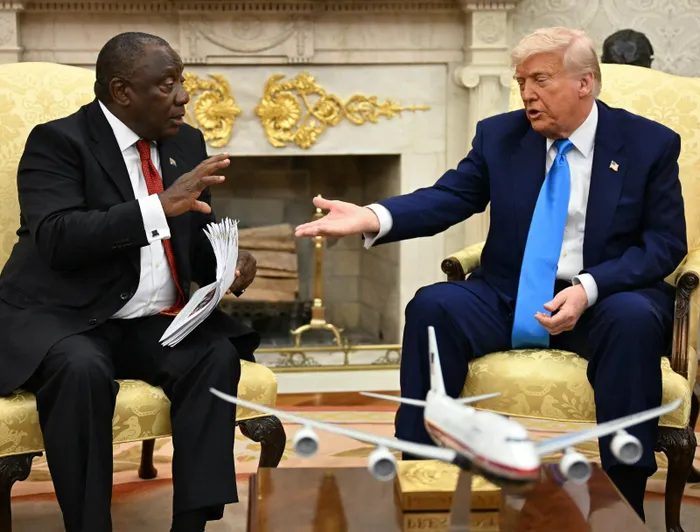
President Cyril Ramaphosa and US President Donald Trump engaging on Afrikaner genocide misinformation during a meeting in the Oval Office of the White House, Washington DC on May 21, 2025. South Africa faces mounting pressure to focus solely on domestic issues, but this analysis reveals why disengagement from global affairs would harm the economy, compromise national security, and betray our constitutional values
Image: File/ AFP
When a minister in Pretoria issues a statement about Gaza, Venezuela, Zimbabwe, Somalia, Pakistan or Taiwan, the predictable domestic reaction follows: “Why are we meddling when we have so many problems at home?” It is a reasonable question, but it rests on a false premise that global events are remote from South African daily life. They are not. In a world of integrated markets, cross‑border migration, global supply chains and weaponised diplomacy of the Trump era, silence is not neutrality; it is vulnerability.
Here I attempt to argue, in plain terms, why South Africa’s engagement abroad is driven by hard political‑economic interests as much as by moral obligation, why isolationism is naïve and unsustainable, and why a consistent, principled voice even when it attracts pressure from great powers, is in the national interest.
The political economy: how distant crises land on our doorstep
South Africa is a small, open economy whose fortunes are shaped by global events. We export minerals, import refined goods, rely on foreign direct investment, and trade in a world priced and settled in major currencies. That means shocks elsewhere translate quickly into local pain.
A few concrete mechanisms explain this transmission:
•Commodity and energy price shocks.
•Conflicts in the Middle East or disruptions in Latin American (Venezuela) oil production push up global fuel prices.
Higher fuel costs feed into transport, food and electricity costs here, squeezing households and firms and adding inflationary pressure that the Reserve Bank must manage.
Currency volatility.
The rand is sensitive to shifts in global risk appetite. Political instability in other emerging markets, or a sudden re‑ordering of geopolitical alliances, can trigger capital flight from emerging markets and a weaker rand, which raises the cost of imports and increases inflationary pressure.
Supply‑chain fragility.
Modern manufacturing depends on inputs sourced globally. Tensions in East Asia for example around Taiwan, a hub for semiconductors can ripple through global manufacturing and can delay or raise the cost of goods South African firms and consumers rely on.
Trade and investment channels.
South African firms operate across Africa and beyond. Political instability in partner countries raises business risk, deters investment and can close markets that our exporters depend on.These are not abstract connections; they are everyday realities that affect jobs, prices and the fiscal room government has to address domestic priorities. Engagement abroad is therefore economic policy that is not optional, but essential.
Borders and migration: regional instability becomes a domestic challenge
South Africa’s geographic and economic position makes it a magnet for migrants from across the region. When Zimbabwe’s economy collapses, or when conflict displaces people in Mozambique, the DRC or Somalia, migration pressures increase. That has immediate consequences for border management, social services, housing, and local labour markets.
Pretending that instability in neighbouring states is “someone else’s problem” is a luxury we cannot afford. Preventing and mitigating forced migration is cheaper and more humane than managing its chaotic consequences. That requires diplomatic engagement, development partnerships and regional conflict‑resolution efforts. All of which demand an active foreign policy.
The moral dimension: history, law and consistency
South Africa’s foreign policy cannot be divorced from its history. The anti‑apartheid struggle was sustained by international solidarity that included sanctions, boycotts and diplomatic pressure helped make the country ungovernable for the apartheid regime. That history is not merely sentimental; it is a moral claim on how we conduct ourselves internationally.
Our Constitution and our post‑1994 identity commit us to human rights, international law and the defence of the oppressed. To be silent in the face of mass suffering is to betray the very principles that underpinned our liberation. Moreover, silence is often read as complicity. When atrocities occur, failing to speak is itself a political act.
South Africa’s recent choices to pursue strategic autonomy and to take independent positions on global issues reflect a desire to be principled and to represent a Global South perspective in international fora. But principled positions must be matched by diplomatic competence and readiness to manage the consequences.
Why isolationism is naïve, misinformed and unsustainable
Isolationism imagines that borders are impermeable and that global events will not affect domestic life. That is demonstrably false. The modern world is characterised by interdependence: trade, finance, migration, climate and information flows cross borders with ease. Retreating into isolation does not insulate us; it reduces our ability to shape outcomes that affect us.
There are three practical reasons why isolationism fails:
Economic exposure.
As noted, global shocks hit our prices, jobs and public finances.
Diplomatic marginalisation.
Countries that do not speak up lose influence in international institutions where rules are set. From trade to climate finance to peacekeeping. Influence is not a moral luxury; it is a tool to protect national interests.
Collective action problems.
Many challenges like pandemics, climate change, transnational crime require cooperation. Unilateral withdrawal leaves us exposed to problems we cannot solve alone.
South Africa’s attempt to chart an independent course that is sometimes labelled “strategic autonomy” is understandable, but it is not cost‑free. To succeed, the country needs bureaucratic capability, economic leverage and political will, and must be prepared for reprisals that may follow independent stances. That is the hard reality of global politics.
The weaponisation of diplomacy and economic architecture
In recent years, powerful states have increasingly used economic and diplomatic levers like visas, sanctions, trade restrictions, access to financial systems to influence other countries’ behaviour. This is not a new phenomenon, but its scale under US President Donald Trump’s leadership and brazenness have grown.
For South Africa, this creates a stark choice: either mute our voice to avoid retaliation, or speak and risk economic and diplomatic costs. Succumbing to coercion would set a dangerous precedent. It would signal that our foreign policy is negotiable under pressure and that our constitutional commitments can be traded away.
A better path is to build resilience: diversify economic partners, deepen regional integration, strengthen domestic institutions and cultivate multilateral coalitions that can blunt unilateral coercion. Consistency and principled engagement build credibility and reduce the leverage of coercive actors.
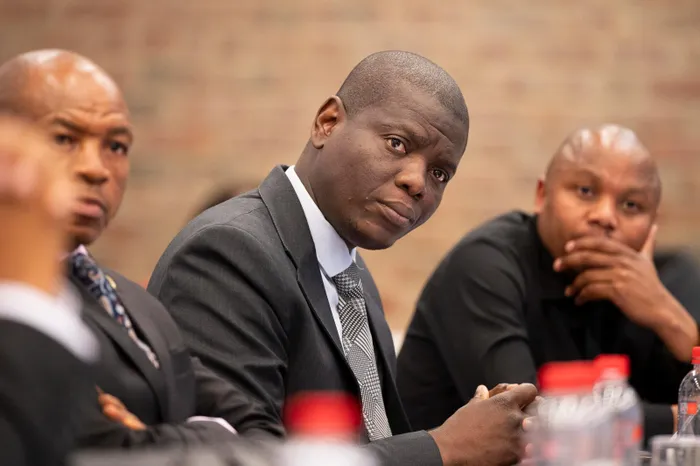
INTERNATIONAL Relations Minister Ronald Lamola, flanked by Supra Mahumapelo, the chairperson of Portfolio Committe on International Relations and Cooperation in the National Assembly and Xola Nqola the chairperson of the Justice and Constitutional Development Portfolio Committee, shows support for Palestine, saying they will see the case against Israel at the International Court of Justice (ICJ) to the finish line. The ICJ case along with the false Afrikaner genocide has complicated and deterioted relations between South Africa and the USA. However, this analysis argues that South Africa cannot afford to disengage from global matters like the issue of the US's invasion of Venezuela.
Image: ARMAND HOUGH Independent Newspapers
Why being vocal matters and how it makes a difference
There is a practical payoff to speaking out. A consistent, values‑based foreign policy:
Shapes international norms: When middle powers like South Africa take principled positions, they help shape the discourse in multilateral institutions and can influence outcomes that matter to developing countries.
Protects national interests: Speaking up on issues that affect regional stability, trade or human rights can prevent crises from escalating into problems that hit us at home.
Builds alliances: Vocal engagement attracts partners who share values and interests, creating networks of support that can be mobilised in times of pressure.
Preserves moral authority: Our ability to criticise abuses abroad is strengthened when we are seen to act consistently with our own values at home.These are not abstract benefits. They translate into better trade terms, more predictable investment, stronger regional markets and a safer neighbourhood.
Practical steps: how South Africa should engage
If engagement is necessary, it should be strategic, consistent and capacity‑driven. That means:
Prioritise Africa.
Our immediate neighbourhood matters most for migration, trade and security; deepening. African partnerships should be the first order of business.Invest in diplomacy. Skilled diplomats, a capable foreign service and coherent policy coordination across ministries are essential. Strategic autonomy requires bureaucratic excellence, not rhetorical independence.
Diversify economic ties.
Reduce over‑reliance on any single market or financial architecture; expand trade and investment links across regions.
Build multilateral coalitions.
Work with like‑minded states in the Global South to push for reforms in global finance, trade and climate governance.
Link foreign policy to domestic resilience.
Strengthen social safety nets, industrial policy and skills development so external shocks have less destructive domestic impact. Engagement is not altruism, it is survival
South Africa’s foreign policy choices are often framed as either moral or pragmatic. The truth is they are both. Engagement abroad protects jobs, stabilises prices, manages migration pressures and preserves the moral legacy of our liberation. Isolationism, by contrast, is a luxury we cannot afford: it is economically costly, strategically risky and morally hollow.
We should not confuse the discomfort of international controversy with failure. Speaking out even when it invites criticism from powerful states, is part of being a sovereign nation with a conscience and with interests to defend. The task for South Africa is to be principled, prepared and persistent: principled in our values, prepared in our institutions, and persistent in our diplomacy.
If we forget the solidarity that helped end apartheid, or if we allow fear of reprisals to silence us, we will have traded away both our moral authority and our capacity to shape a world that increasingly shapes us. That is a bargain no responsible government should accept.
(Dube is a noted political economist, businessperson, and social commentator on Ukhozi FM. His views don't necessarily reflect those of the Sunday Tribune or IOL. For further reading and perspectives, visit: http://www.ncodube.blog)
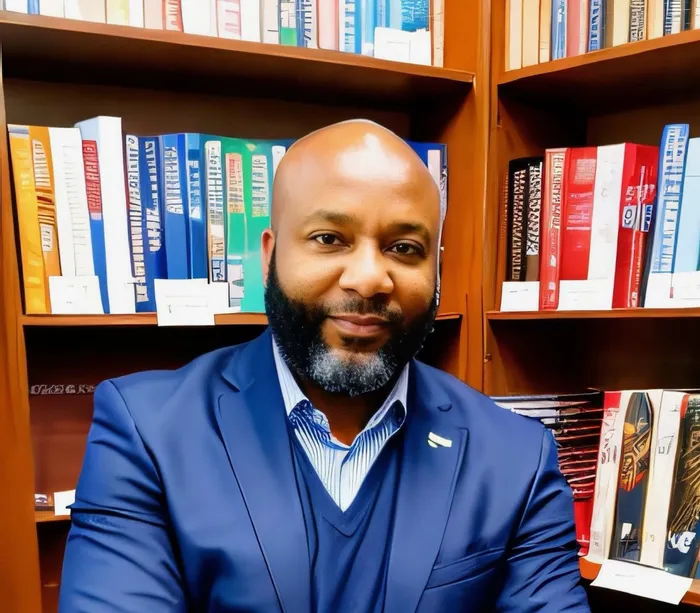
Nco Dube, a political economist, businessman and social commentator
Image: Supplied