
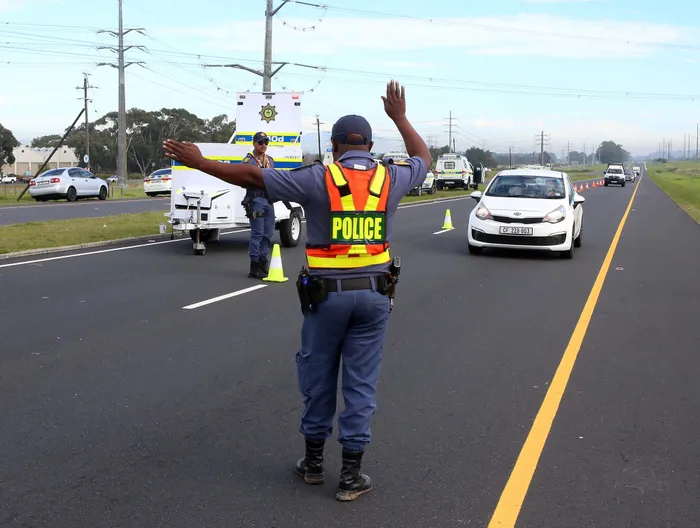
DAILY roadblocks and police visibility could be a deterrent for errant motorists and effect positive driver behaviour and compliance, argues the writer.
Image: Independent Newspapers Archives
Imagine a South Africa where roadblocks were as routine as traffic lights; where every driver, every day, faced the possibility of being breathalysed or drug tested. At first, it might sound excessive, but what if that kind of visibility and consistency was exactly what we needed to make our roads safer? Right now, many drivers still take the risk of driving under the influence because they believe they won’t get caught. Roadblocks are too sporadic and enforcement too inconsistent to act as a real deterrent. But that could change if we approached road safety not as a once-off campaign but as a constant, community-wide commitment.
Daily checks drive daily change
We’ve already seen the effect of frequent testing in high-risk environments. At mines, industrial sites, and manufacturing facilities, consistent alcohol testing has transformed behaviour. Workers who know they’ll be breathalysed every day will adjust their consumption to within responsible levels.
That same principle would apply on our roads. If drivers expected to pass a roadblock every day, or even every week, fewer people would take chances. Impaired driving would drop. Licences would be kept up to date. Unroadworthy vehicles would be pulled off the streets. And most importantly, lives would be saved. Because the real power of daily roadblocks isn’t the fine or the arrest, it’s the mindset shift.
Visibility is the first step to accountability
The lack of visible law enforcement has led to widespread lawlessness on South African roads. Taxi drivers stop and go wherever they like, and speed limits are ignored. Basic courtesies, like indicating, have become optional. People drive this way because they know, statistically, they’re unlikely to be stopped.
This absence of consequence fuels a culture of reckless driving. However, when law enforcement becomes visible, that culture changes. The mere presence of a roadblock is enough to prompt better behaviour, not just regarding drinking and driving, but in all aspects of road use. When the rules are enforced, the rules start to matter again.
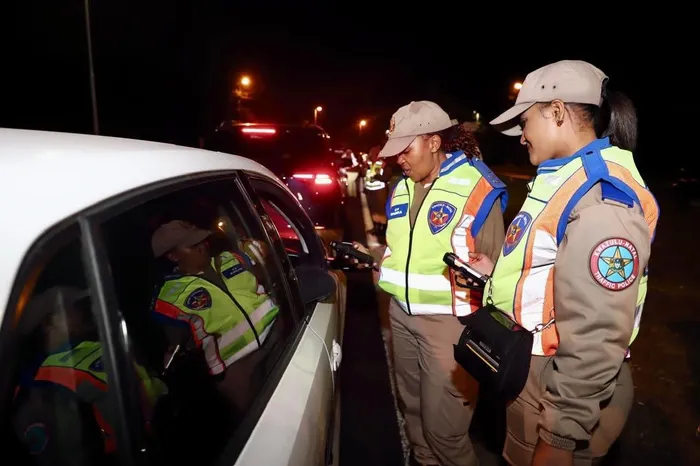
ROUTINE roadblocks where motorists face the daily possibility of being breathlysed for alcohol and drugs would see less motorists taking chances on the road. The KwaZulu-Natal Road Traffic Inspectorate intensified its Nenzani Ezweni roadblock blitz in the second leg of last year where thousands of motorists were nabbed and fined for various violations.
Image: KZN Transport
Equipment, planning and the power of local partnerships
One of the biggest barriers to effective road safety enforcement is a simple one: a lack of tools. Without enough breathalysers, drug-testing kits, or properly trained officers, even the most committed law enforcement teams are forced to fall short. You can’t enforce what you’re not equipped to act on, and you can’t build skills without the right resources in place.
This is where local businesses have the power to be part of the solution—and strengthen their social capital in the process. In high-risk areas, companies can collaborate to co-fund vital enforcement tools, sponsor officer training, and help implement well-planned, strategic roadblock initiatives. These partnerships can be facilitated through independent community trusts or non-profits to ensure transparency, accountability, and public trust.
The benefits go far beyond compliance. By actively investing in safer roads, businesses demonstrate genuine commitment to the wellbeing of the communities they serve. The return? Stronger relationships, a more stable local workforce, fewer accidents, and lower rates of absenteeism linked to road trauma. This is road safety as a shared investment, not just in infrastructure, but in people. When companies, communities, and law enforcement work together, they create something far more powerful than policy: they build trust, resilience, and a culture of care.
Smarter, not just stricter: lessons from abroad
Countries like Australia have provided a blueprint on how to make frequent roadblocks work, even with limited resources. Down under, enforcement isn’t random. It’s planned. Testing targets hotspots like bars, taverns, and bottle stores, especially during peak seasonal times. Officers have clear quotas and use data to decide where and when to act.
This smarter strategy allows police to get the most out of what they have, and ensures their presence is felt where it matters most. South Africa can do the same, particularly with support from the community and local businesses. This goes to show that we don’t need infinite resources; we just need a plan, the right tools, and the will to act.
So, what would happen if you drove past a roadblock every day?
You’d probably start thinking twice before getting behind the wheel after a drink. You’d check if your licence was current. You’d rectify that expired licence disc you’ve been ignoring. And the driver behind you would do the same. That’s how change begins - not with a single, high-profile crackdown, but with quiet consistency. With partnerships, not just policies. That’s how change happens; not all at once, but one roadblock at a time.
(Evans is the managing director of ALCO-Safe (Pty) Ltd a South African company specialising in supplying professional-grade electronic breath alcohol detectors, drug testing equipment (saliva/urine), and related accessories, serving industries like mining, transport, and petroleum for workplace safety and policy compliance. His views don't necessarily reflect those of the Sunday Tribune or IOL)
SUNDAY TRIBUNE

RHYS Evans, managing director of ALCO-Safe
Image: SUPPLIED