

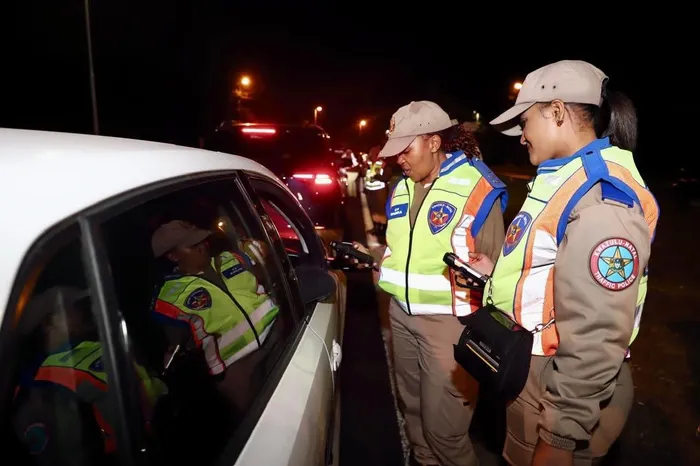
The KwaZulu-Natal Road Traffic Inspectorate intensified its Nenzani Ezweni roadblock blitz in the second leg of last year where thousands of motorists were nabbed and fined for various violations. However, a legal expert is warning the Department of Transport on positing images of motorists who are arrested for drunk driving and other traffic violations on social media.
Image: KZN Transport
Legal expert Mpumelelo Zikalala has criticised the KwaZulu-Natal Department of Transport for posting images and videos of motorists arrested for drunken driving and other traffic violations on social media, warning that the practice is illegal and violates suspects’ constitutional rights.
Since early last year, the department has regularly shared photos and footage of motorists arrested during its province-wide roadblock campaign, Nenzani La Ezweni. The multidisciplinary operation involves officers from the Road Traffic Inspectorate (RTI), SAPS and Metro Police, and targets not only private motorists but also the logistics sector.
As part of the campaign, several trucks have been impounded for offences including undocumented foreign national drivers, drivers without public or professional driving permits, and unroadworthy vehicles. The department has repeatedly hailed the operation as a success, releasing statistics on arrests, locations and, more recently, even the professions of those arrested for excessive speeding and driving under the influence of alcohol.
In some posts, the department listed professions such as teachers, engineers, soldiers, prosecutors, lawyers, police officers and nurses among those arrested. In two instances, priests were also named. Videos of motorists allegedly attempting to flee roadblocks on foot were also shared online.
Zikalala said publishing images of suspects before they appear in court amounts to a violation of the law.
“It is not permitted to distribute images of individuals who have not yet appeared in court. Photographing motorists and posting their pictures for purposes of naming and shaming on social media is unlawful,” he said.
While acknowledging that the department sometimes blurs the faces of suspects, Zikalala said this does not fully protect their rights.
“They are merely suspects of crimes they allegedly committed. Although the department may argue that faces were blurred, people who know these motorists well can still identify them from the images and videos,” he said.
Zikalala pointed to a recent social media post in which a suspect accused of transporting firearms and ammunition at the Mariannhill Toll Plaza on the N3 near Pinetown appeared without his face being blurred. There have been several other instances where suspects’ faces were clearly visible.
According to Zikalala, motorists whose images or videos were posted online could challenge the department in court on the basis of defamation of character. He added that if suspects were insulted during the arrest process, they could also pursue a claim of crimen injuria against the state.
He warned, however, that such cases could be lengthy, as the department may rely on arguments that faces were blurred and names not disclosed. Nonetheless, if a motorist were acquitted of a drunken driving charge after their image had been circulated publicly, they would have grounds to pursue a defamation claim.
KwaZulu-Natal Department of Transport spokesperson Ndabezinhle Sibiya skirted the issue of using images of suspects when questions were posed on him. However, he welcomed what he described as a drastic reduction in fatal road accidents since the launch of the Nenzani La Ezweni campaign.
“This is a direct result of our Nenzani La Ezweni campaign, which targets motorists who engage in drunken driving. We will continue to remove reckless motorists from our roads before they kill more road users,” said Sibiya.