

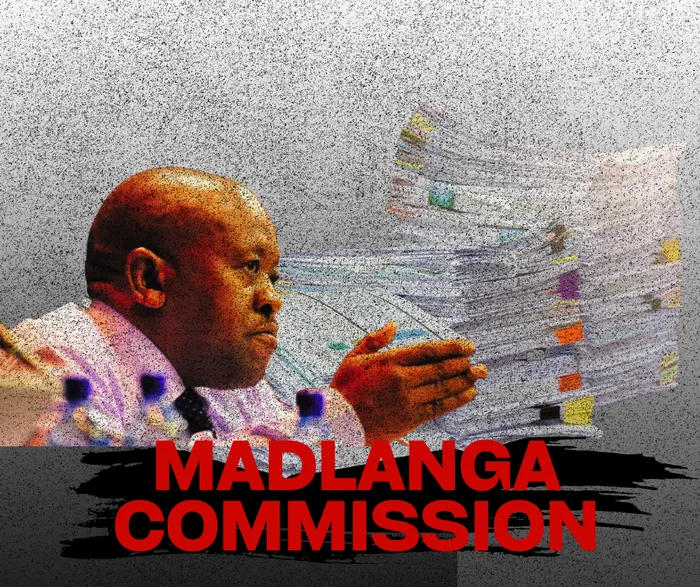
President Cyril Ramaphosa takes decisive action against police corruption, following the Madlanga Commission's findings, as he establishes a special task team to address the urgent need for accountability within law enforcement.
Image: IOL Graphics
PRESIDENT Cyril Ramaphosa has taken action following the Madlanga Commission's sweeping recommendations, which include criminal referrals and the establishment of a special police task team to address rogue elements within law enforcement.
The inquiry, initiated on July 13, was prompted by allegations from KwaZulu-Natal Police Commissioner Lieutenant General Nhlanhla Mkhwanazi.
He claimed that a sophisticated criminal syndicate had infiltrated law enforcement and justice institutions, undermining investigations, prosecutions, and internal accountability.
Chaired by retired Constitutional Court Justice Mbuyiseli Madlanga, the commission, supported by Advocates Sesi Baloyi SC and Sandile Khumalo SC, submitted its interim report on December 17, 2025. The President has confirmed that he has thoroughly reviewed the report and accepted its recommendations.
While the interim findings do not reach conclusions, they carry significant weight. The commission identified prima facie evidence of criminal conduct and corruption, leading to immediate referrals for criminal investigations, urgent prosecutorial decisions, and disciplinary actions. The allegations encompass serious crimes, including fraud, corruption, perjury, and murder.
In a statement from the Presidency, it was noted that several implicated individuals, including suspended Police Minister Senzo Mchunu, suspended deputy police commissioner Shadrack Sibiya, Mchunu’s chief of staff Cedric Nkabinde, Tommy Mthombeni, and Brown Mogotsi, are not included on the list of those facing criminal charges.
The commission, in line with its mandate, invoked powers under its terms of reference to recommend suspensions and referrals. Clause 7 authorises recommendations regarding the employment status of officials implicated on a prima facie basis, while Clauses 10.4 and 12 empower the Commission to refer matters for immediate investigation and prosecution.
Among those referred are five senior officials from the South African Police Service: Major Generals Lesetja Senona and Richard Shibiri, Brigadiers Mbangwa Nkhwashu and Rachel Matjeng, and Sergeant Fannie Nkosi.
The commission also uncovered prima facie evidence implicating current and former officials of the Ekurhuleni Metropolitan Municipality and the Ekurhuleni Metro Police Department, including suspended EMPD Chief Commissioner Julius Mkhwanazi, several EMPD officers, and former Ekurhuleni City Manager Dr Imogen Mashazi.
The commission will demand updates and explanations for delays in ongoing investigations, including those at the Independent Police Investigative Directorate (IPID). Importantly, the commission emphasised that, aside from EMPD’s Mkhwanazi, it has yet to hear responses from several implicated individuals, meaning the allegations remain preliminary and are not formal findings. Nevertheless, the Commission concluded that the seriousness of the claims justifies immediate action.
In response to the findings, Ramaphosa has directed Police Minister Professor Firoz Cachalia and National Police Commissioner General Fannie Masemola to establish a special investigations task team, which will report directly to Masemola, to expedite the cases highlighted in the report.
“The urgency is non-negotiable,” the President said, asserting that swift implementation is vital to restore public trust and rebuild operational capacity in institutions responsible for combating crime and corruption.
“President Ramaphosa expects all law enforcement agencies and other relevant criminal justice institutions to act with speed in implementing the recommendations of the Commission’s interim report. Such immediate action will help to restore public trust and strengthen operational capacity in the affected state entities tasked with fighting crime and corruption,” as conveyed in a statement from the Presidency.
Ramaphosa expressed gratitude to Justice Madlanga, the commissioners, and staff for their diligent work. He also indicated that he is awaiting the commission’s final report, which is anticipated to significantly influence the future integrity of South Africa’s criminal justice system.