
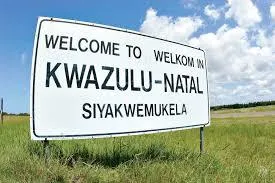
King Misuzulu kaZwelithini's call for the renaming of KwaZulu-Natal gets more support.
Image: South African National Roads Agency Limited
THE Inkatha Freedom Party (IFP) has emphasised the need for public hearings regarding the proposed renaming of KwaZulu-Natal to KwaZulu, as suggested by King Misuzulu kaZwelithini.
The party insists that this matter must be thoroughly discussed before any official requests are made through the appropriate channels.
In addition to the renaming proposal, the IFP is advocating for a public debate on concerns regarding the historical demarcations imposed by colonial authorities, which they argue divided parts of the Zulu Kingdom and transferred them into the Eastern Cape, Gauteng, and Mpumalanga provinces.
The IFP has expressed its support for the renaming initiative, which the king has pledged to campaign for. IFP National Chairperson Blessed Gwala stated, “It is only that after the king had spoken that we say it was our position right from the beginning. There must be a discussion among people of KwaZulu-Natal on the matter and come up with a solution. It is not a cut-and-dried issue.”
Gwala further highlighted that parts of the province were indeed situated in the Eastern Cape and Mpumalanga, stating, “The demarcation robbed us of tracks of land. This is a matter of discussion because we do not have answers, but I was just putting on the table that there are these things which have not been finalised. It must be a matter of discussion by the people of KwaZulu-Natal and come up with an amicable solution, and there must be a consensus.”
Zulu expert Professor Sihawu Ngubane supported the idea of renaming the province to KwaZulu but stressed the importance of following the parliamentary process.
“The name Natal is a colonial name, which belongs to the oppressors. The National Assembly should deal with the matter,” he asserted.
Ngubane also suggested that other provinces, whose names are based on geographic locations, such as the Eastern Cape and North West, should be given proper names. “Only Gauteng has a proper name, but there should be public consultation to find out what the communities say about changing the names, which is a long process that should start somewhere,” he added.
The Pan Africanist Congress of Azania (PAC) has also expressed its support for the renaming initiative, which King Misuzulu announced during the 147th commemoration of the Battle of Isandlwana. The king stated his intention to lead a campaign to remove the name Natal, arguing that “Natal is a colonial name imposed to commemorate colonial conquest, while 'KwaZulu' reflects African identity, history, and continuity.”
PAC Secretary General Apa Pooe remarked, “The PAC has consistently argued that colonial and apartheid symbols should not enjoy permanent status in a liberated Azania (South Africa).” He commended the Department of Sport, Arts and Culture (DSAC) Minister Gayton McKenzie for approving the renaming of Graaff-Reinet town in the Eastern Cape after its founding leader and Struggle stalwart, Robert Sobukwe. McKenzie approved the recommendation by the South African Geographical Names Council (SAGNC) to change 21 geographical names in the Eastern Cape and KwaZulu-Natal.
East London will soon be known as KuGompo City. Pooe stated, “On the renaming of Graaff-Reinet after Robert Mangaliso Sobukwe, the PAC regards this as long-overdue. Sobukwe was one of the foremost African thinkers and revolutionaries produced by this country.”
He further explained that the renaming of East London to KuGompo City restores indigenous African place names that existed before colonial conquest. “Names such as ‘East London’ are colonial impositions that erased African presence and memory,” he said.
Graaff-Reinet, known as eRhafu in the IsiXhosa language, is Sobukwe’s birthplace, and the colonial authority named it after Dutch Governor Cornelis Jacob van de Graaff and his wife, Reynet.
The PAC’s breakaway party, Revolutionary PAC-POQO of Occupied Azania (RPAC-POQO), has also supported the renaming initiative. Secretary-General Nkrumah Raymond Kgagudi described the renaming of Graaff-Reinet to Robert Sobukwe Municipality as “a significant act of decolonisation, reflecting a conscious effort to reclaim African identity and heritage.”
The DSAC has described the renaming as part of an ongoing commitment to transforming South Africa’s naming landscape, promoting social cohesion, and recognising the country’s diverse heritage. However, it remains unclear which other new names will be introduced to replace the old ones, as the DSAC stated this would only be publicised once the changes have been officially gazetted.
“In our efforts to build a socially cohesive society grounded in the values of human dignity, the standardisation and renaming of towns, cities, and geographical features also contribute to symbolic reparations. This aligns with the government’s commitment to implementing the spirit of the Truth and Reconciliation Commission’s (TRC) recommendations for restoring dignity and correcting historical imbalances,” the statement concluded.