

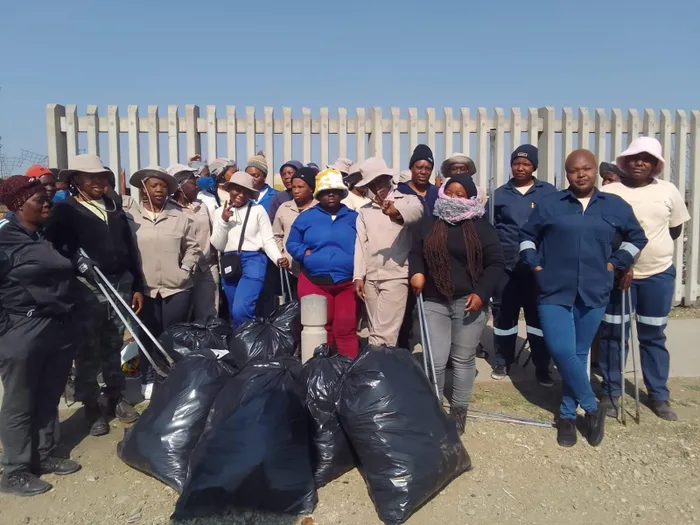
Some of the beneficiaries of the Social Empowerment Fund implemented by the Seriti Institute.
Image: Supplied
FOUR years ago, Standerton, like many towns across South Africa, was still reeling from the aftershocks of COVID-19. Jobs had disappeared, household incomes had collapsed, and hope was in short supply.
Young people, in particular, were left wondering where their futures might lead. Food insecurity deepened, illegal dumping spread across open land, and public spaces became symbols of neglect rather than pride.
It was into this reality that the Social Employment Fund, implemented by Seriti Institute stepped, quietly at first, but with purpose. What began as a modest intervention focused on skills development, environmental restoration, and sustainable agriculture has since grown into a powerful community-led movement. Today, the SEF story in Standerton is one of dignity restored, confidence rebuilt, and opportunity reclaimed.
The need was urgent. Unemployment was high, especially among youth who had few chances to gain work experience or develop marketable skills. Many families struggled to put nutritious food on the table. Illegal dumping sites multiplied, affecting health, safety, and morale. Standerton needed more than temporary relief, it needed a pathway back to participation and pride.
Since its implementation, the impact has been tangible and deeply human. More than 6,000 households have received fresh vegetables, improving nutrition where it matters most, at home. Twenty-five illegal dumping sites have been cleared and rehabilitated, and from this reclaimed land, ten parks now stand. These are not just green spaces; they are places where children play after school and communities gather, reclaiming what once felt lost.
The programme’s reach extends into backyards and livelihoods. Thirty community members have established their own backyard gardens using skills gained through SEF training, small plots that represent self-reliance, knowledge, and confidence taking root. Beyond food, the programme has opened doors to economic opportunity. Over 250 participants have transitioned into sustainable livelihoods, while two cooperatives have been formed and continue to receive support from the Seriti Institute and the Citi Foundation.
For those directly involved in implementation, the shift is evident.
We can see Standerton growing every day. The programme is recognised by stakeholders and other companies, participants are eager to learn, and the change in mindset among young people clearly shows the impact of the programme.
Her words speak to more than numbers, they capture a shift in how young people see themselves and their place in the local economy, particularly in agribusiness and related value chains.
In an area marked by high unemployment, SEF has employed more than 2,000 participants. But employment is only part of the story. Participants who once arrived uncertain and inexperienced have grown into confident leaders, mentoring others, managing responsibilities, and taking initiative. They have learned how to improve soil, plant and maintain crops, and harvest produce. Equally important, they have learned professionalism: how to communicate, work as a team, and meet workplace standards.
The programme is now firmly embedded in the fabric of the community. A local produce stall offers affordable, fresh vegetables to residents, strengthening local food systems while supporting the project’s long-term sustainability. It is a simple idea with profound implications—keeping value within the community and reinforcing the link between work, food, and dignity.
Standerton’s experience shows what is possible when social employment is designed not as a stopgap, but as a platform for growth. The Social Employment Fund has done more than create jobs; it has restored environments, nourished households, and empowered young people with skills for the future. In doing so, it has helped a community move from survival toward shared prosperity and reminded us that meaningful work can still be one of the strongest foundations for hope.
When social employment is treated as an investment rather than a short-term intervention, the returns are felt across generations. To deepen and sustain this impact, government, the private sector, and civil society must commit to longer-term programme cycles, stronger local partnerships, and clearer transition pathways into sustainable livelihoods. Extending funding horizons, supporting community-based enterprises, and scaling proven models like SEF can unlock far greater social and economic value. If we are serious about tackling unemployment, food insecurity, and environmental degradation, we must back what works, and give communities like Standerton the time, trust, and resources they need to thrive.