

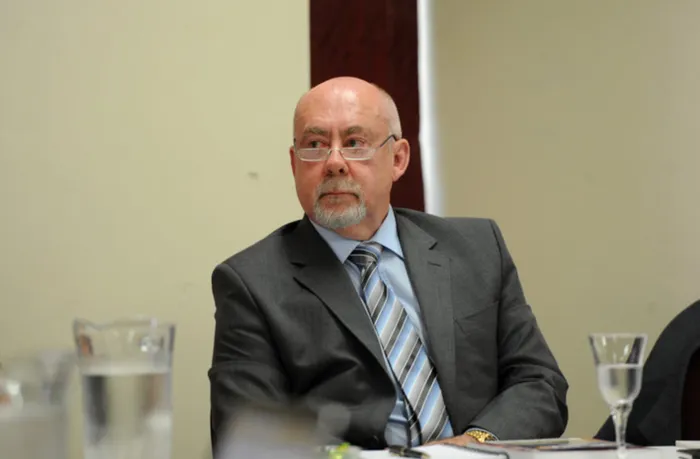
Dr Wouter Basson, infamous for his role in apartheid's chemical warfare programme, seeks to halt HPCSA disciplinary proceedings in a legal battle over decades-old allegations.
Image: file
DR Wouter Basson, who gained notoriety as the head of a secretive chemical and biological warfare programme during apartheid, has taken legal action to prevent the Health Professions Council of South Africa (HPCSA) from pursuing disciplinary proceedings against him.
In December 2013, Basson was found guilty of unprofessional conduct following a disciplinary hearing that investigated complaints related to his actions in the early 1980s, when he led the apartheid government’s chemical and biological warfare initiative, known as Project Coast.
His sentencing proceedings began in January 2015 but were halted after Basson filed an application for the recusal of the committee members, in an effort to protect his professional standing.
In 2023, a new committee was established to address the matter after the recusal of two members from the original committee. Although the case was scheduled to be heard in 2024, it was delayed again as Basson sought a permanent stay of proceedings from the Gauteng High Court.
One of Basson's primary arguments centres on the significant delays in the proceedings. He pointed out that the complaints leading to the HPCSA disciplinary hearing were lodged around 2000, with the first inquiry commencing only in 2007. He emphasised that the complaints pertained to his conduct during the 1980s.
Furthermore, Basson highlighted the lengthy gap from 2007 to 2019, when the court ultimately mandated the recusal of committee members.
He stated that the disciplinary hearing encountered challenges from the outset, noting that it was initially scheduled for two weeks in 2007 but could not commence due to the HPCSA's difficulties in convening a committee.
At that time, he had already cancelled all consultations and work to attend the hearing.
When the hearing finally began months later, Basson pleaded not guilty to all six charges of unprofessional conduct brought against him. During cross-examination, the main witness for the pro forma complainant later testified that, upon reconsideration of all the facts, Basson’s conduct was not unethical, contrary to the claims made in the charges.
The inquiry was subsequently postponed for approximately a year to locate another witness to testify against Basson. After the additional sitting, Basson provided his testimony and was found guilty on two of the charges.
In 2014, the proceedings related to his sentencing commenced, during which Basson indicated his intention to request the recusal of the panel. This led to prolonged court proceedings and culminated in a final recusal order in 2019, followed by unsuccessful appeals by the HPCSA to both the Supreme Court of Appeal and the Constitutional Court.
As the HPCSA aims to resume the proceedings, Basson has expressed his frustration, stating that enough is enough. He remarked that the incidents at the heart of the matter occurred between 40 and 45 years ago, asserting that he needs to move on with his life.
Basson also pointed out that he was acquitted in 2002 of any criminal conduct related to Project Coast, which is the basis for the HPCSA charges, and that he merely acted on orders as a soldier at the time.
In opposing Basson’s application for a stay of the proceedings, the HPCSA highlighted the lengthy legal battle concerning the recusal of the panel, which was only legally resolved in 2020. They argued that it is not unreasonable to now initiate disciplinary proceedings against Basson.
The HPCSA stated that the 25-year delay in finalising disciplinary proceedings against Basson is not attributable to them, citing numerous hurdles encountered along the way. They contended that, in the interest of justice, the stay of the proceedings should not be granted.