

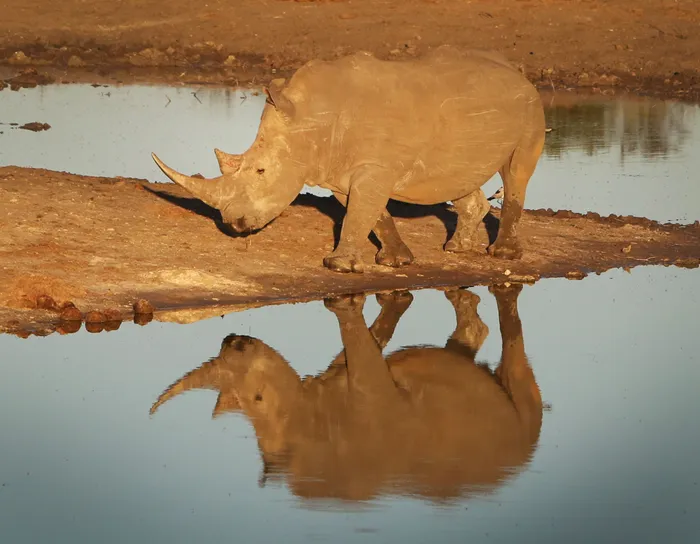
South Africa has reported a remarkable 16% decline in rhino poaching in 2025
Image: Shelley Kjonstad/ African News Agency (ANA)
In a promising turn for wildlife conservation, South Africa has reported a remarkable 16% decline in rhino poaching in 2025, according to Willie Aucamp, the Minister of Forestry, Fisheries and the Environment.
The total number of rhinos poached decreased from 420 in 2024 to 352 in the past year, a hopeful sign that the combined efforts of various stakeholders are beginning to take effect.
On state properties, 266 rhinos were killed, while 86 were lost on privately owned parks, reserves, or farms.
The most significant drop in poaching statistics was observed in the Hluhluwe-iMfolozi Park in KwaZulu-Natal, where the number of poached rhinos plummeted from 198 to an encouraging 63 in just one year.
This substantial reduction can be largely attributed to strategic collaboration between Ezemvelo KZN Wildlife and KwaZulu-Natal rhino owners through the Integrated Wildlife Zones (IWZ) Programme, supported by key conservation partners such as WWF, Save the Rhino International, Wildlife ACT, and the Peace Parks Foundation (PPF).
As Aucamp highlighted, the earlier implementation of a strategic dehorning programme initiated in 2024 played a pivotal role in stabilising poaching pressures, allowing for rapid and targeted interventions to take place.
The success achieved in 2025 stems from multiple complementary strategies. Enhanced detection capabilities have risen through the integration of advanced camera technologies and sensors, alongside the Integrity Implementation Plan, which bolstered organisational integrity through the successful polygraphing of all park law enforcement personnel.
However, not all regions experienced a positive trend. Mpumalanga faced a troubling increase in rhino losses, rising from 92 poached rhinos in 2024 to a staggering 178 in 2025.
The Kruger National Park bore the brunt of this increase, with reports of 175 rhinos lost, a significant rise from the 88 reported the previous year.
Aucamp said they continue to see some very good convictions in relation to rhino-related cases, with lengthy direct imprisonment terms in respect of cases related to rhino crimes.
Efforts to combat rhino-related crimes have seen more stringent legal repercussions, with Minister Aucamp noting an uptick in convictions leading to lengthy imprisonment terms for offenders related to rhino crimes.
Central to these improvements is the National Integrated Strategy to Combat Wildlife Trafficking (NISCWT), fostering cooperation among various law enforcement agencies, including the National Prosecuting Authority and the "Green Scorpions," which are instrumental in pursuing and convicting poaching criminals.
Aucamp expressed his gratitude towards the anti-poaching efforts of the private sector, especially that of private rhino owners.
“South Africa continues to strengthen its international collaboration to curbing rhino poaching and wildlife trafficking. These efforts led to the country receiving the Asia Environmental Enforcement Recognition of Excellence Award late last year, which celebrates excellence in enforcement by government officials, institutions and teams combatting transboundary environmental crimes.
“Working together with the South African anti-poaching and anti-trafficking organisations, we remain committed to a balanced, intelligence-driven, and partnership-based approach to rhino protection, recognising that sustained success requires constant adaptation, integrity, and cooperation across all sectors,” said Aucamp.