
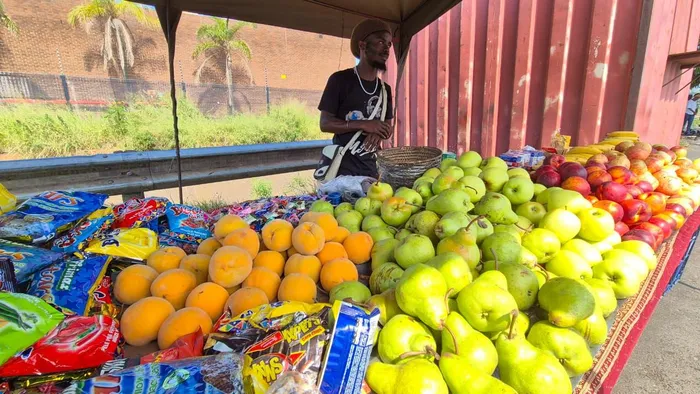
Informal trader, Rasta Jija, who is one of many street vendors who is accusing the Durban Metro Police of targetting them while allegedly failing to address the surge in drug-related crime and vagrancy in the CBD amid intensified by-law ennforcement operations in areas like Bertha Mkhize Street and the Warwick Triangle.
Image: SIBONELO NGCOBO Independent Newspapers
Frustrated street vendors in Durban’s Central Business District are hitting back at Metro Police, accusing officers of relentless harassment while failing to contain the city's burgeoning and often dangerous vagrant population.
The outcry follows a candid admission by Metro Police Colonel Boysie Zungu in the Sunday Tribune's sister newspaper, the Daily News, where he acknowledged that authorities are "losing the battle" against vagrants. This admission came after a group of homeless individuals returned to Che Guevara Road, re-erecting a makeshift tent settlement near the M4 bridge just days after being cleared.
According to Colonel Zungu, the lack of long-term housing facilities is a critical factor in why vagrants return immediately after being removed. For five months, this group has occupied the extreme right lane of the road with tents, creating a safety hazard. Last week, the situation reached a breaking point when a viral video showed vagrants robbing a motorist, forcing the driver to abandon their vehicle and flee on foot.
While the police struggle with crime and vagrancy, street vendors say the force being used against them is methodological and relentless. A street vendor, Thabo Ngcobo, who is a member of the Phinifa neDuku Association (pinafore and headscarf vendors), claims that police raids on Bertha Mkhize Street are a daily ordeal.
"We are literally living with the police," Ngcobo said. "They come every day to confiscate our stock. Even if you kneel down and beg them, they don’t listen."
Ngcobo explained that when stock is seized, vendors are hit with a R600 fine. To reclaim their livelihood, they must pay the fine in full; a sum many simply do not have.
"It pains us when the Metro Police admit they are losing the battle against amaphara (whoonga addicts), yet they seem to be winning the one they are waging against us," she added.
While Ngcobo acknowledges that many vendors trade without permits in violation of municipal bylaws, she argues there is a moral difference between honest labour and criminal activity.
"The whoonga addicts terrorise people by robbing and stealing. Those are the people the Metro Police should show enthusiasm to fight, not us. We are just putting food on the table for our families," she said.
Despite his earlier admission of a "lost battle," Colonel Zungu maintained this week that the Metro Police are simply fulfilling their mandate.
"We have a duty to enforce all bylaws," Zungu stated. "The street vendors know well that they need permits to trade. We are not fighting with them; we are ensuring the City’s bylaws are upheld."
In a notable shift in tone from his previous comments, Zungu added: "We are in the midst of cleaning Durban’s streets, and we are winning. It is not true that we are not fighting those living in the streets."