288 KZN amakhosi empowered as commissioners of oaths in historic rural justice initiative
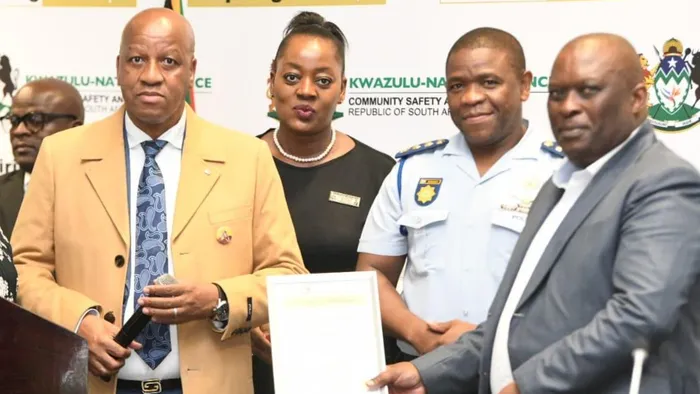
KwaZulu-Natal premier, Thami Ntuli, the acting Head of Community Safety and Liaison in KwaZulu-Natal, Nokuthula Khanyile, KwaZulu-Natal Police Commissioner Lieutenant General Nhlanhla Mkhwanazi, and the Chairperson of the KwaZulu-Natal Provincial House of Traditional and Khoi-San Leaders Inkosi Sifiso Shinga at the confirmation of over 280 amakhosi as commissioners of oaths, in Mayville, Durban, on Monday.
Image: ZANDILE SHANGE/KZN Premier's Office
KwaZulu-Natal Premier Thami Ntuli has reaffirmed the provincial government’s commitment to strengthening cooperation with traditional leadership after 288 amakhosi were officially designated as Commissioners of Oaths.
Speaking at the Archie Gumede Conference Centre in Mayville, Durban, on Monday, Ntuli said the move formally recognises the vital role traditional leaders play in community development, social cohesion and improving access to government services, particularly in rural areas.
The new designation grants amakhosi statutory authority to administer oaths and affirmations, certify official documents and assist community members in accessing legal and administrative processes closer to where they live.
Ntuli said closer collaboration between government, law enforcement agencies and traditional leadership structures was essential in addressing socio-economic challenges facing the province.
"Empowering amakhosi in this capacity will improve access to legal services, enhance community trust in the justice system and facilitate more efficient interaction between communities and public institutions," he said.
KwaZulu-Natal Police Commissioner Lieutenant General Nhlanhla Mkhwanazi said, the power invested in amakhosi will help communities who had to travel long distances to access the service. Mkhwanazi said the development would help ease the load on police stations and sort the long queues to people who relied on police stations to certify copies of their identity documents and academic qualification certificates.
"As we all know that the Constitution says the police must fight crime, and investigate cases and protect the community, but now find themselves doing work that is not part of their job description," said Mkhwanazi who added that there are now more people who are now authorised to be commissioners of oaths.
The initiative forms part of broader provincial efforts to accelerate rural development, promote inclusive governance and ensure justice services reach remote communities that often struggle to access formal institutions.
By positioning amakhosi as intermediaries between communities and state institutions, the provincial government hopes to bridge service delivery gaps while strengthening local governance structures.
Ntuli added that traditional leaders remain key partners in maintaining stability, upholding customary law and advancing development initiatives aimed at improving livelihoods across KwaZulu-Natal.
He said the collaboration was also expected to enhance social cohesion, reinforce lawful conduct and support integrated community safety strategies.
The provincial government reiterated its commitment to working closely with traditional leadership institutions to advance inclusive socio-economic development, improve access to services and strengthen public confidence in governance and the justice system throughout the province.