

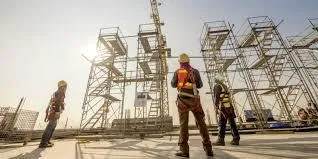
President Cyril Ramaphosa announces a historic R1.07 trillion investment in infrastructure during the 2026 State of the Nation Address, aiming to transform South Africa's economic landscape
Image: file
The National Treasury has announced an ambitious plan to invest R1.07 trillion over the next three years, aimed at fulfilling South Africa's significant infrastructure objectives.
During the 2026 State of the Nation Address (SONA), President Cyril Ramaphosa characterised this allocation as the largest in the country’s history, not merely as a construction initiative but as a transformative investment designed to reverse years of declining fixed investment and stagnant growth.
“Through the Infrastructure Fund and new regulations for public-private partnerships, we are using innovative funding models, reducing risk and attracting investors to fast-track projects in energy, water, transport, and digital infrastructure,” he said.
Dr Duncan Pieterse, the Director-General of the National Treasury, elaborated on the government's strategy to increase funding for strategic capital projects while reforming institutional arrangements to expedite the delivery of infrastructure projects.
“Over the next three years, total planned infrastructure expenditure will amount to R1.07 trillion, of which 54.1%, or R577.4 billion, will be executed by state-owned companies and public entities, with funding pooled from the national budget, own revenue and private investors,” Pieterse explained.
“Boosting infrastructure investment will spur longer-term economic growth by removing constraints in areas such as transport, energy and water, and in the short term by raising demand for workers and inputs,” he said
In 2025, the government issued its first sovereign infrastructure and development finance bond, successfully raising R11.8 billion at favourable rates, reflecting strong market interest in financing public investment projects.
“These funds will be ring-fenced for strategic capital projects, based on a rigorous assessment process by the Budget Facility for Infrastructure,” Pieterse noted.
During the 2025/26 fiscal year, the facility approved five projects with a total value of R49.5 billion, of which it will fund R21.9 billion.
Pieterse also highlighted that other infrastructure delivery reforms are progressing steadily. The National Treasury and the Development Bank of Southern Africa are laying the groundwork for the Infrastructure Finance and Implementation Support Agency.
“Public-private partnership regulations for national and provincial governments have been revised, and amendments to the municipal regulations will be concluded in June 2026,” he added.
Additionally, a performance-based conditional grant was introduced in 2025 to reform metropolitan trading entities responsible for services such as electricity, water, sanitation, and waste management, ensuring they reinvest revenues from services into infrastructure. This initiative has been allocated R27.7 billion over the medium term.
The National Treasury has indicated that the country’s infrastructure deficit limits productivity and raises the cost of doing business, particularly through transport bottlenecks, water insecurity, and uneven municipal service delivery.
They emphasised that accelerating investment while improving project execution and maintenance is crucial to attracting private capital and expanding productive capacity.
Investment will be supported by a diverse pipeline of projects across various sectors: energy (20%), water (17.4%), and transport infrastructure (39.2%).
Looking ahead, the National Water Resources Infrastructure Agency is expected to commence operations in 2026, facilitating increased maintenance and investment in water infrastructure.
In 2025, the Cabinet approved the National Water Amendment Bill, and a National Water Crisis Committee has been established to centralise the coordination of water sector reforms and restore service reliability.
During SONA, Ramaphosa reiterated the government's commitment to building new dams and upgrading existing infrastructure to ensure long-term water security.
“We have committed more than R156 billion in public funding for water and sanitation infrastructure over the next three years,” he stated.
“The construction of the Lesotho Highlands Water Project and other large-scale projects, such as the Ntabelanga Dam—part of the Mzimvubu Water Project in the Eastern Cape—is advancing, and we are in the final stages of establishing a National Water Resource Infrastructure Agency to effectively manage and mobilise funding for the country’s water infrastructure,” Ramaphosa concluded.