

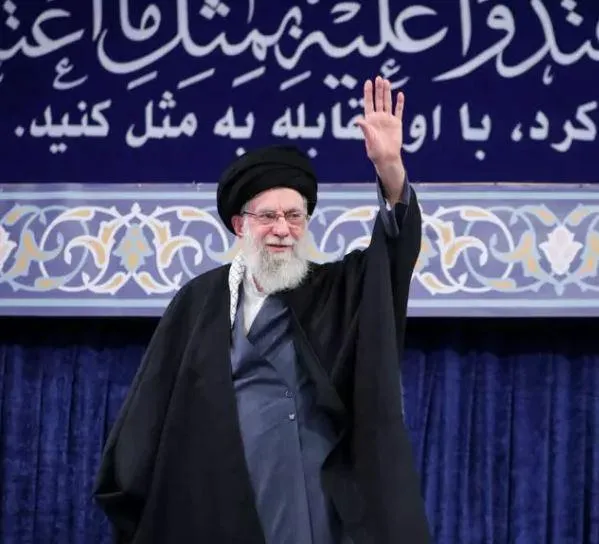
Ayatollah Ali Khamenei, the supreme leader of Iran, was killed during a large-scale air attack attributed to the United States and Israel
Image: AFP
The Council for Muslim theologians in KwaZulu-Natal says the killing of Ayatollah Ali Khamenei, the supreme leader of Iran, is not a cause for tears.
Khamenei's demise, resulting from a large-scale air attack attributed to the United States and Israel, has generated polarised reactions, but the council urges a more principled approach to the complexities surrounding the event.
The Jamiatul Ulama KZN said Muslims must rise above emotional reactions and assess events with clarity and justice, adding that the removal of a ruler under whose leadership so much suffering occurred is not a cause for tears.
In a statement, the clerical body stated that Muslim reactions to the news of Khamenei's death must be guided by principle and fact, not emotion.
"The fact that Khamenei was killed by an adversary of the Muslim world does not elevate him to the status of a hero or martyr. While the Israeli-American coalition has long been immensely hostile towards the Muslim world, this does not erase the reality that Iran, too, has caused tremendous harm. One enemy opposing another does not transform either into a friend.
"Despite its public slogans of “Death to America” and “Death to Israel,” Iran’s history reveals instances of quiet cooperation with global powers when it suited its own interests and agenda," read the statement.
It further stated that in its drive for regional control, Iran became deeply involved in conflicts across Lebanon, Syria, Iraq and Yemen.
The statement from the Jamiatul Ulama not only critiques Khamenei's leadership in its foreign policy but also condemns the ramifications of his unwavering support for the deposed Syrian President Bashar al-Assad.
"Under Khamenei’s leadership, backing Assad was framed as a religious duty. Militias were mobilised and the Syrian conflict resulted in catastrophic loss of life, displacement and destruction," read a statement by the council's executive committee.