

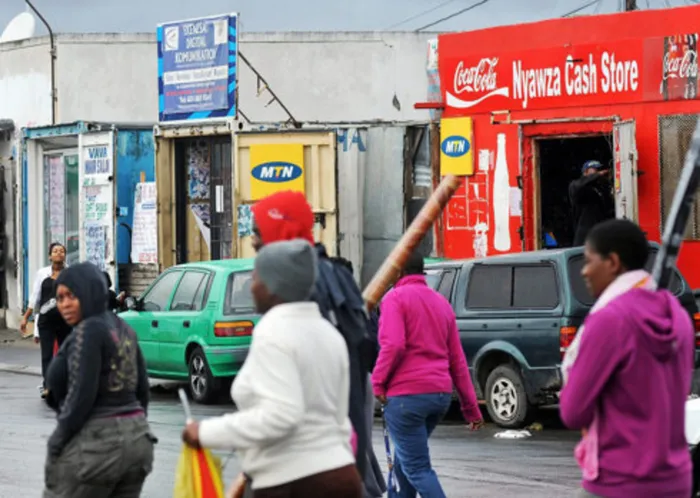
Of the 81 039 spaza shops registered nationally, only 18 722 are licensed or permitted to operate. .
Image: Independent Newspapers Archives
The Portfolio Committee on Small Business Development has called for urgent intervention to address delays in municipalities issuing operating licences to spaza shops, describing the licensing backlog as the primary constraint limiting access to the Spaza Shop Support Programme.
The committee was briefed on Wednesday, March 4, on the issuing of operating licences by municipalities across the country and on the implementation of the Spaza Shop Support Fund (SSSF).
The reports were presented by the Department of Cooperative Governance and Traditional Affairs (CoGTA) and the Department of Small Business Development (DSBD).
According to CoGTA, of the 81 039 spaza shops registered nationally, only 18 722 are licensed or permitted to operate.
Committee Chairperson Masefako Dikgake said the licensing bottleneck is undermining the very objective of the Spaza Shop Support Programme.
“If spaza shop owners cannot obtain the required permits timeously, they are effectively locked out of funding and growth opportunities. Municipal processes must not become barriers to economic participation,” said Dikgake.
On the funding side, DSBD reported that 3 797 applications have been received since the inception of the programme. Of these, 1 683 applicants submitted licences or operating permits and progressed in the process, while 1 370 could not proceed due to the absence of the required documentation.
The committee noted that 990 spaza shops have been approved to a stock value of R39.6 million. However, it stressed that the licensing gap remains the primary obstacle to scaling up support and ensuring broader participation in the fund.
To address the licensing challenges, both departments indicated that municipalities are being encouraged to issue conditional or temporary trading permits, provided that health requirements are met. The fund considers applications only from spaza shops that possess Certificates of Acceptability, trading permits (including conditional licences) or full operating licences.
The committee expressed full support for proposals that provinces and municipalities allocate dedicated budgets towards deploying electronic business licensing systems. It also endorsed capacity-building workshops to assist municipalities in adopting and implementing digital licensing solutions.
The committee further reaffirmed its commitment to ensuring that the Spaza Shop Support Programme achieves its intended impact of formalising, strengthening and sustaining township and rural enterprises.