

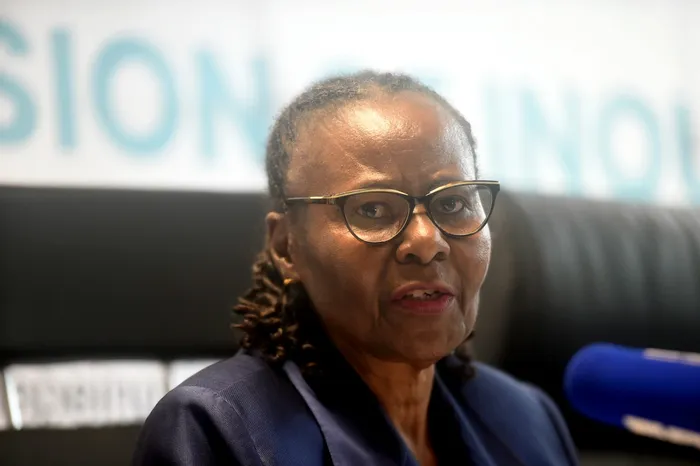
Retired Justice Sisi Khampepe, the chair of the Judicial Commission of Inquiry into the alleged suppression of Truth and Reconciliation Commission (TRC) cases recommended for further processing. Former Presidents Jacob Zuma and Thabo Mbeki have sought her recusal, something the affected families describe as attempts to derail the commission.
Image: Itumeleng English / Independent Newspapers
Families of victims of apartheid-era crimes are set to publicly respond to legal challenges brought by former presidents against the commission investigating alleged political interference in prosecutions linked to cases from the Truth and Reconciliation Commission (TRC).
Relatives and survivors will address a media briefing on Sunday, March 15 at the offices of the Foundation for Human Rights in Braamfontein Werf, Johannesburg, where they are expected to outline their position on High Court applications filed by former presidents Thabo Mbeki and Jacob Zuma. The families are also expected to comment on the position taken by President Cyril Ramaphosa in the ongoing legal proceedings.
The two former leaders are seeking a judicial review of a decision by Justice Sisi Khampepe, who rejected their requests for her recusal from presiding over the inquiry.
Among those expected to address the media are Nomonde Calata, widow of anti-apartheid activist Fort Calata of the Cradock Four; Alegria Nyoka, sister of the late Caiphus Nyoka; Sizakele Ernestina Simelane, mother of the late Nokuthula Simelane; and Hlekani Rikhotso, sister of the late Ignatius 'Iggy' Mthebule.
The inquiry, formally known as the Khampepe Commission of Inquiry, was established in May 2025 after 25 families of victims and survivors, supported by the Foundation for Human Rights, successfully pushed for a probe into claims that apartheid-era murder and torture cases recommended for prosecution by the TRC were deliberately blocked.
The commission is mandated to investigate allegations that political interference within South Africa’s criminal justice system prevented hundreds of cases involving killings, disappearances and other serious crimes from being prosecuted after the TRC process.
Applicants in the case represent families of several high-profile victims and activists, including members of the Cradock Four, the PEBCO Three and individuals who were forcibly disappeared during the apartheid era. Survivors of incidents such as the 1993 Highgate Hotel massacre in East London are also among those involved.
Families say the inquiry is a crucial step in uncovering why decades-old cases linked to apartheid-era abuses were never pursued and in holding those responsible for blocking prosecutions accountable.
They are also expected to discuss their legal stance and broader demands for justice as the court challenge over the leadership of the inquiry unfolds.