
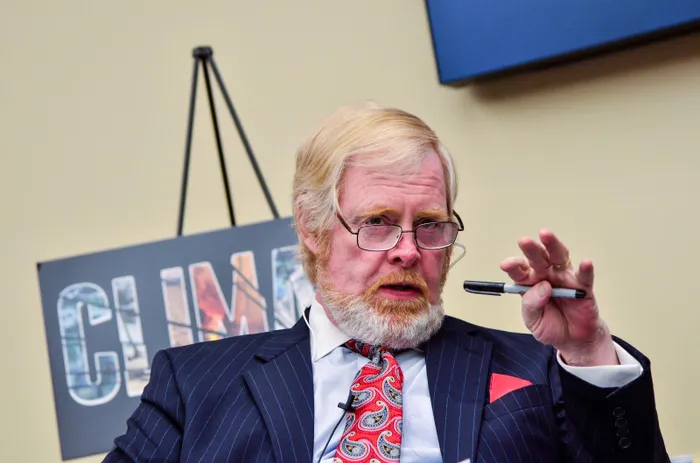
US Ambassador to SA Leo Brent Bozell III has made undiplomatic remarks about SA
Image: Kris Connor / Getty Images North America / AFP
South Africa’s decision to summon, but not expel, the United States ambassador after controversial remarks about the struggle song “Kill the Boer” reflects a calculated diplomatic effort to repair strained relations between the two countries, international relations experts say.
The government this week issued a formal démarche to Leo Brent Bozell III, Washington’s top envoy in Pretoria, after he dismissed South African court rulings on the chant during remarks at a BizNews conference.
Bozell sparked controversy when he said he was indifferent to court judgments that have previously ruled on the legality of the chant.
“We may not get clarity on the Kill the Boer chant that we believe is hate speech. I am sorry, I don’t care what your courts say, it’s hate speech.”
The comments triggered concern within government circles, leading the Department of International Relations and Cooperation (Dirco) to call the ambassador in to explain his remarks.
Bozell, a conservative activist, writer and founder of the Media Research Center, was confirmed as ambassador to South Africa in December and formally assumed his diplomatic post last month.
Despite the diplomatic reprimand, the South African government stopped short of declaring him persona non grata — a step that would have forced his expulsion from the country.
The measured response stands in contrast to events last year, when the United States expelled South Africa’s ambassador to Washington, Ebrahim Rasool, after he criticised US President Donald Trump. At the time, US Secretary of State Marco Rubio declared Rasool persona non grata.
On Wednesday, Bozell sought to clarify his remarks in a statement posted on X, saying his comments reflected a personal view while affirming respect for South Africa’s courts.
“The U.S government respects the independence and findings of South Africa’s judiciary.”
South Africa’s decision not to escalate the diplomatic dispute appears aimed at preserving dialogue between the two countries.
Minister of International Relations and Cooperation Ronald Lamola said the ambassador had been summoned to explain his comments and reaffirm the importance of diplomatic conduct.
Lamola stressed that maintaining open channels with the United States was essential.
"It is important that between SA and the US there is a bridge of engagement. The only platform you can do that is through the ambassador of the US."
"We have given him a benefit of a doubt with one sole aim, to bridge the gap of communication between the two countries, and it is also within that context that he was dèmarched here to engage him that remember our meeting, our engagements, but these remarks are not in line with these commitments that you have made and we made. It is going to deteriorate the relationship which we want to build the bridge," he said.
Lamola added that diplomacy often requires engaging with those who hold opposing views.
"If we only engage with those that engage with us then we are not bridging any gap of disagreement. Diplomacy is engaging with people who don't agree with you," said Lamola.
He emphasised that South Africa regards the United States as a key strategic partner.
Dirco director-general Zane Dangor said the ambassador had expressed regret during their meeting.
"In our very first meeting he stated very clearly that he wanted to work very constructively with the government of South Africa. So in terms of what happened, he apologised and expressed regret and that includes the comment that appeared to be undermining the judiciary."
"He also reaffirmed that given our history, and he has been to a few museums, that SA does need redress policies and measures. He concluded that he wants to continue to work constructively with SA on building a mutually beneficial relationship with SA and the US and that includes looking at how the redress issues could be dealt with," said Dangor.
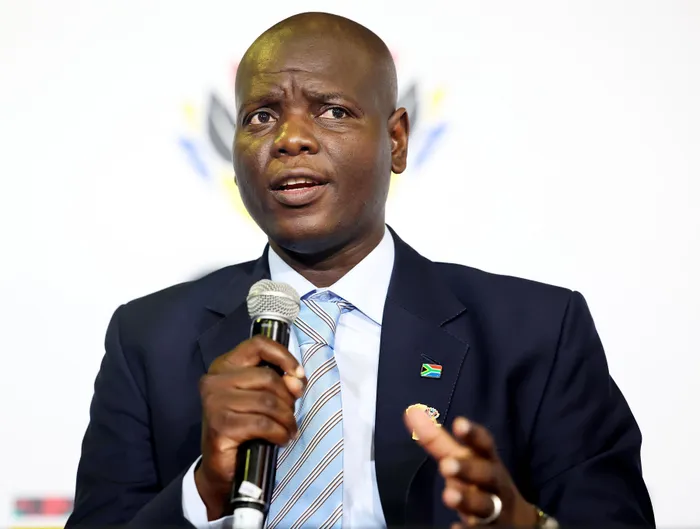
International Relations and Cooperation Minister, Ronald Lamola
Image: GCIS
Political analysts say the démarche reflects a pragmatic diplomatic approach.
Lubna Nadvi, a political scientist at the University of KwaZulu-Natal, said ambassadors must respect the legal systems of the countries in which they serve.
"An ambassador cannot dictate to South Africa on how to run its affairs, in the same way that South Africa cannot tell the US government how to manage its state. Hence the demarche in response to the ambassador’s comments is an appropriate response by DIRCO and the SA government."
She said the government could have taken stronger action.
"The response could have been an expulsion of the ambassador from SA but it appears that the SA government is attempting to repair and build relations with the United States, regardless of how the USA government has treated it in the past. This is a mature and balanced approach from the SA government, however it is possible that it may consider much stronger action in the future if the US Ambassador does not conduct himself with dignity and decorum befitting a diplomat representing his country abroad," said Nadvi.
Another expert, Zakhele Ndlovu, also from the University of KwaZulu-Natal, said South Africa must manage the relationship carefully.
"The relationship between the two countries is skewed. We have more to lose if we turn our backs on them. Whereas they don't have much to lose if they turn their backs on us. If relations continue to suffer then the people of SA will suffer, as more than a quarter of a million are employed by US companies based in SA."
"Rather engage them in a manner that will ensure relations don't continue to suffer," said Ndlovu.
Relations between South Africa and the United States have deteriorated since Trump returned to the White House last year. The US president has repeatedly criticised the government of Cyril Ramaphosa, accusing it of failing to protect the country’s white minority and condemning its land reform policies.
Tensions escalated further when the United States imposed the highest tariffs of any African country on South African exports, deepening strains between the two governments.