

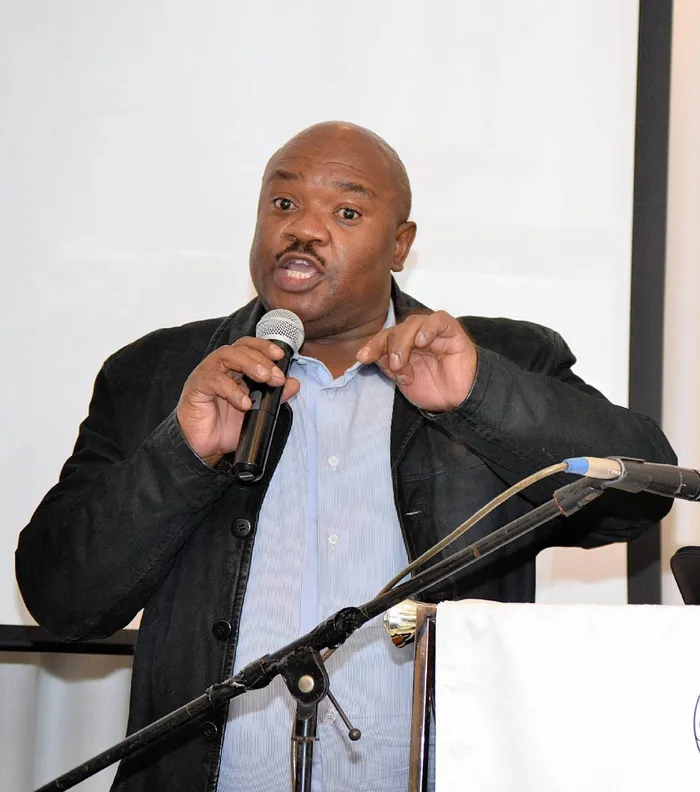
UMNINI traditional authority leader, Inkosi Phathisizwe Luthuli who will be interred today led his amaThuli community for more than three decades.The amaThuli land has uninterrupted views of the Indian Ocean and stretches from uMnini to the uMkhomazi River on the KwaZulu-Natal South Coast along the N2.
Image: Independent Newspapers Archives
The KwaZulu-Natal community of uMnini, South Coast, is mourning the sudden death of Inkosi Phathisizwe Luthuli, 64, who collapsed at his uMgababa home on Monday.
The traditional leader, who guided the amaThuli community for more than three decades, will be interred today at his uMgababa home after a funeral service at uMnini Primary School where a 2000-capacity marquee has been prepared for the mourners.
Political parties including the African National Congress (ANC), Inkatha Freedom Party (IFP), and KZN government expressed shock and offered their condolences.
KwaZulu-Natal MEC of Cooperative Governance and Traditional Affairs, Thulasizwe Buthelezi, dispatched senior officials to assist the Luthuli family with funeral preparations.
Inkosi Luthuli had led the amaThuli community since 1988. Three weeks ago, one of Inkosi Luthuli's induna, Sipho Dlamini who was also an ANC branch convenor in ward 67 was gunned down.
Dlamini was travelling with two other people at the time of the ambush. Inkosi Luthuli had said the he didn't believe his murder was politically-motivated but said he suspected it was linked to a dispute of izinduna positions in the area.
His eldest daughter, Nomasonto Luthuli-Madlala, described the family’s shock at his sudden death.
“My father had just finished supper when he collapsed. The bodyguard alerted us, and we rushed him to hospital, where he was declared dead,” she said.
Induna Msawakhe Luthuli of Magcino vilage described Inkosi Luthuli as a dedicated leader passionate about education and community development.
“He wanted to see numerous initiatives that would benefit local people. His passing is a devastating blow,” he said. The Inkosi leaves behind his wife and more than 20 children. Last month, he was part of the traditonal leader that graduated in the Leadership and Good Governance Programme at the University of KwaZulu-Natal.
Political parties have visited the family to pay respects. ANC provincial task team coordinator Mike Mabuyakhulu described Luthuli as “warm, effervescent, and deeply committed to his people.” Under his leadership, uMnini, including the uMgababa resort, experienced notable social and economic progress, said the ANC.
Inkosi Luthuli’s tenure was not without controversy. In 2024, he faced criticism for allegedly appointing his children to council vacancies, and earlier accusations surfaced regarding land sales and a busy social life.
A long-standing dispute over the uMnini holiday resort saw businessman Edward Mpeko evicted, later winning nearly R6.5 million at the Pietermaritzburg High Court against the Ingonyama Trust Board for losses.
Mpeko had built and renovated the uMnini holiday resort, using a large portion of his Telkom pension, expanding the resort with an 80-seater restaurant, 21-chalets, and a conference centre. At the height of the resort's popularity, in 2013, Mpeko's relations with Inkosi Luthuli soured, and the Ingonyama Trust Board (ITB) started demanding "rent" despite him owning the land.
After his eviction the resort was looted and abandoned.
Despite these challenges, Inkosi Luthuli is remembered for his commitment to uplifting his community, fostering education, and bridging tradition with modern development.
During the week, some of the mourners who visited the family included award-winning maskandi artist, Phuzekhemisi.
Luthuli’s traditional authority land stretches from uMnini in uMgababa to the uMkhomazi River mouth.
The Luthuli family was moved from iSibubulungu (which is today known at the Bluff) in 1858 and settled in uMgababa on land allocated to them by the British Crown. Their removal under the traditional leadership of Inkosi Mnini Luthuli was to make way for the construction and expansion of the Durban Harbour. The land that falls under the traditional authority is named after the Inkosi Mnini Luthuli.
The land later became the subject of a multimillion-rand land claim under the Land Restitution programme for families who were removed from iSibubulungu, many of whom were the Luthulis. Other families affected included the Makhanyas, Mkhizes, Celes and the Ngcobos.