

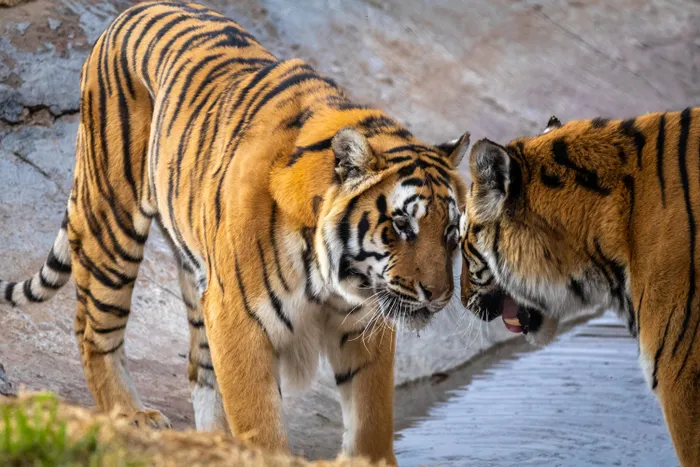
Shevar and Sharukh, the tiger brothers have regained their health and adapted to a more natural, enriched environment at the LIONSROCK Big Cat Sanctuary.
Image: Four Paws
Two tiger brothers rescued from neglect at a defunct South African zoo are marking six years at a big cat sanctuary, highlighting ongoing concerns about captive animal welfare.
The tigers, Shevar and Sharukh, were relocated in March 2020 to LIONSROCK Big Cat Sanctuary, operated by FOUR PAWS, after being removed from the now-closed Bloemfontein Zoo.
The rescue took place just days before South Africa entered a national COVID-19 lockdown, amid deteriorating conditions at the facility where animals reportedly faced starvation and neglect.
At the time of their rescue, little was known about the brothers’ medical history. Sanctuary staff say the animals arrived in a fragile physical and emotional state. Over the past six years, however, both tigers have shown significant recovery, requiring only one minor veterinary procedure during that period.
According to caretakers, the brothers have developed distinct personalities but remain active and responsive to enrichment activities designed to encourage natural behaviours. Observations indicate consistent playfulness and curiosity, as well as a strong social bond between the pair.
Sanctuary manager Hildegard Pirker said the animals’ transformation has been notable. “When Shevar and Sharukh arrived, they were fragile, physically and emotionally,” she said. “Watching them now, basking in the sun, playing in their pool and simply being tigers again, it moves me deeply.”
Located near Bethlehem, LIONSROCK houses nearly 100 rescued big cats from around the world. The facility provides long-term care for animals that cannot be returned to the wild, offering large enclosures and environments intended to replicate natural habitats.
Shevar and Sharukh have since become well known among staff for their close bond, often seen resting together or interacting with enrichment objects. Caregivers report that the tigers frequently engage in playful behaviour, including dragging toys into water features within their enclosure.
Animal welfare groups say the brothers’ story underscores broader concerns about the treatment of big cats in captivity, particularly in poorly regulated zoos and private facilities. Organisations such as FOUR PAWS argue that sanctuaries play a critical role in addressing these issues by providing rescued animals with improved living conditions and lifelong care.
While Shevar and Sharukh are unlikely to return to the wild, staff say their progress demonstrates the potential for recovery when animals are removed from harmful environments and placed in suitable care.