

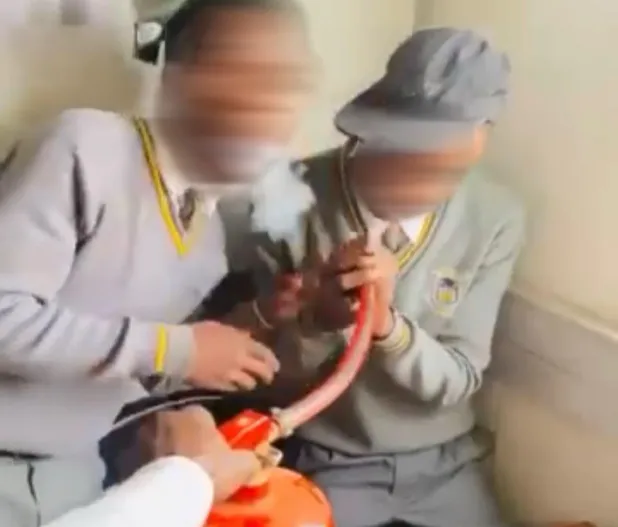
The viral video showing pupils inhaling fire extinguisher contents.
Image: File
The Motor Industry Staff Association (MISA) has joined other authorities in raising serious concerns about a troubling new trend emerging among school learners.
Known as “chuffing”, the dangerous practice involves inhaling the contents of fire extinguishers. Videos circulating on social media show learners breathing in toxic fumes and exhaling smoke—an act that carries significant health risks.
Fire extinguishers are designed strictly for emergency use to save lives. The chemicals they contain, whether dry powder or carbon dioxide, are hazardous when inhaled and can lead to severe medical conditions such as pneumonia, seizures, and, in extreme cases, death.
Furthermore, the high-pressure release from these devices can result in physical injuries or even explosions if handled improperly.
MISA’s Chief Executive Officer of Operations, Martlé Keyter, expressed alarm at the situation, emphasizing that many union members are parents who are deeply concerned about the safety of their children.
She warned that inhaling substances from fire extinguishers is life-threatening and urged parents to remain vigilant. Open conversations with children about the dangers of harmful social media trends are essential to prevent experimentation with toxic substances. Protecting young people, Keyter stressed, is a shared responsibility that requires urgent action.
MISA supports calls from the City of Johannesburg Emergency Management Services and the Department of Basic Education for stronger awareness initiatives. Schools are encouraged to invite safety officials to conduct educational programmes, while communities should actively engage with available resources to improve their understanding of fire safety and prevention.
MISA is urging parents, educators, and authorities to take decisive action to curb this trend before it leads to further harm.