

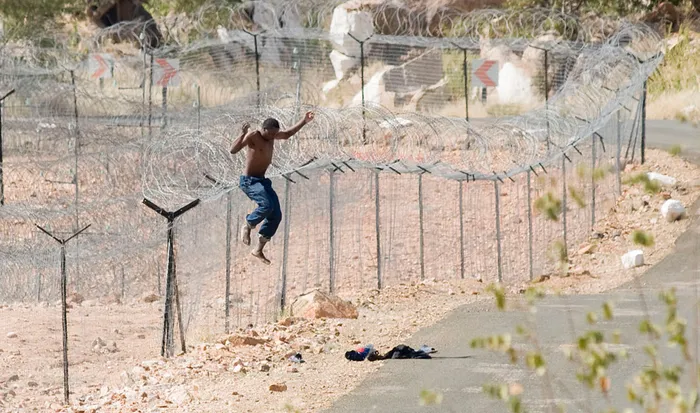
Illegal border crossings remain a daily reality along South Africa’s porous borders with neighbours such as eSwatini, Mozambique, Zimbabwe, and Botswana. During the 2025/2026 festive season, the Border Management Authority reported a 46% drop compared with last year. Yet illegal immigration continues to impact South Africans, who blame weak government control, alleged corruption among officials, and inconsistent law enforcement, factors that have given rise to civic organisations like March and March.
Image: HENK KRUGER Independent Newspapers
Tuesday, March 24, will mark one year since an anti-illegal immigration protest in Durban evolved into a movement led by Jacinta Ngobese-Zuma.
What began as a once-off demonstration soon transformed into the March and March (MAM) after its founders realised that South Africa's immigration crisis could not be confronted through a single protest.
For many citizens, the movement's message resonates because it speaks to lived frustrations. Competition with immigrants for overstretched resources in healthcare, housing, education and jobs has intensified in communities that already feel underserved by the state.
The growth of hijacked buildings and the perception that certain sectors of the informal economy, especially spaza shops, CBD stalls and scooter delivery services, are controlled by immigrant networks have deepened that resentment.
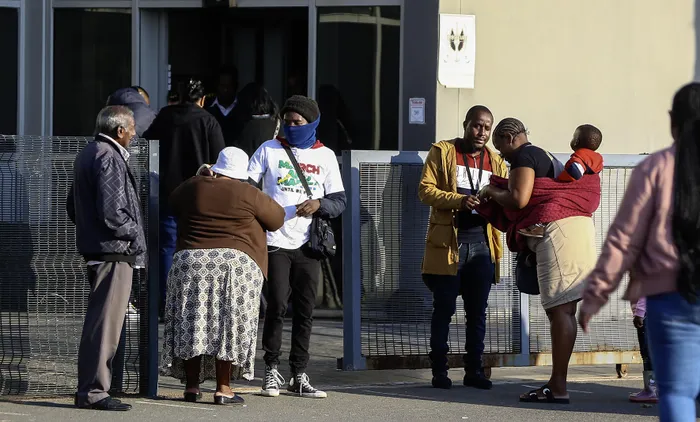
Xenophobic, vigilante, and illegal are some of the adjectives used to describe the anti-illegal immigration civic organisation March and March, whose practice of screening patients at hospitals aims to prevent undocumented foreign nationals from accessing public healthcare. Some South Africans, however, have praised the group for the faster service they have since been receiving at public facilities. Seen in this images are individuals affiliated with the civic group at Addington Hospital in Durban screening patients.
Image: LEON LESTRADE Independent Newspapers.
Predictably, MAM has been fiercely criticised and rightly so. Its controversial tactic of screening patients at public health facilities has been condemned by government and human-rights activists as unlawful, discriminatory and bordering on xenophobia.
But the outrage directed at the movement often sidesteps a more uncomfortable truth: South Africa’s immigration crisis did not begin with street activism. It began with porous borders, corruption within immigration systems and a political class that has repeatedly failed to enforce its own laws.
Critics argue that the movement targets the symptoms rather than the cause. Perhaps. But dismissing it entirely is both intellectually lazy and politically dangerous.
Over the past year, MAM has evolved from a protest into a civic actor increasingly present in policy conversations. Ignoring it will not dissolve the grievances that sustain it.
As the country observed Human Rights Day on Saturday, a day that was supposed to commemorate the 66th anniversary of the Sharpeville Massacre where 69 unarmed protesters were killed by apartheid forces, an uncomfortable reality remains: organisations defending the rights of undocumented immigrants and asylum seekers are not obliged to prioritise the struggles of South Africans who have yet to fully reap the dividends of democracy.
History reminds us that few movements are born perfect. Even the African National Congress, founded as the South African Native National Congress (SANNC), excluded women from its ranks for 31 years. Yet today, it stands among the organisations that have advanced significant causes in gender politics; a testament to how institutions can evolve over time.
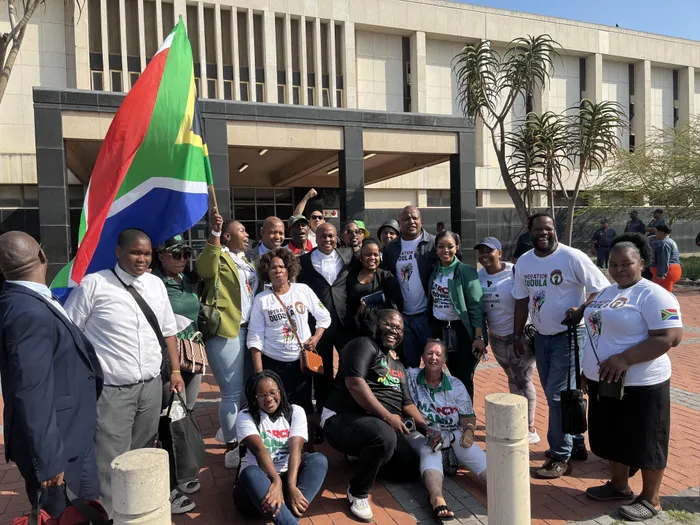
Members of the anti-illegal immigration civic groups March and March and Operation Dudula celebrated outside Durban High Court after an urgent application against them by the South African Human Rights Commission (SAHRC) was dismissed with costs. The SAHRC and other human rights NGOs have long been at odds with the two formations over their practice of screening patients at public health facilities to deter undocumented foreign nationals—even those legally in the country—from accessing public healthcare.
Image: NOMONDE ZONDI
Active citizenship must be encouraged. Many civic organisations that once championed causes during apartheid have since withered away, leaving a vacuum in public participation and accountability.
It is equally clear that South Africa faces a serious crisis in its immigration policy framework, compounded by weak or inconsistent implementation.
Civic organisations, however imperfect or polarising, have played a role in sensitising South Africans to the complexities and pressures associated with immigration.
The least citizens can do is to take decisive action in ways they consider impactful, ethical, and firmly within the bounds of the law and the values enshrined in the country’s globally admired Constitution.
To simply fold one's arms and point to the imperfections of civic organisations attempting to address these challenges, even at a basic level, is not only disingenuous but also a bit lazy. In a country beset by multiple, overlapping crises, expecting politicians alone to resolve problems many of them helped create may well be the greatest illusion of all.