

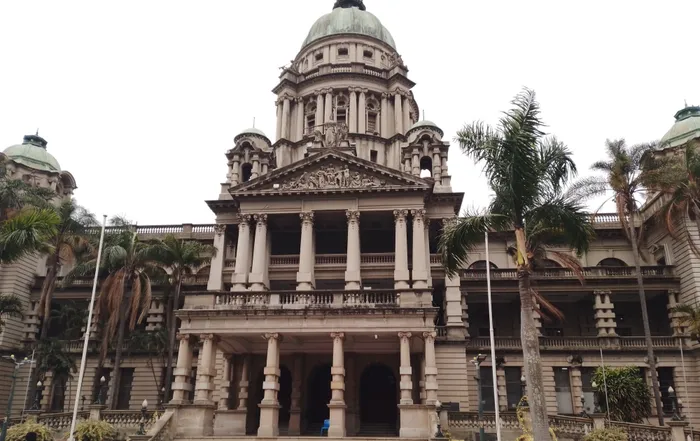
As of February 2026, a total of 3,765 eThekwini Municipality employees were in debt.
Image: File
eThekwini Municipality has recorded a decline in the debt owed by its employees, according to its February 2026 debt collection report, though overall municipal debt remains high at R44 billion.
The report shows that employee debt fell from R91 million in December 2025 to R77 million by the end of February 2026. The number of indebted employees also decreased, from 4,308 to 3,765 over the same period.
Municipal councillors also remain in arrears, with 41 of the city’s 111 ward councillors collectively owing R2.8 million.
The municipality said staff and councillors in arrears are subject to credit control measures, including service disconnections, credit bureau redlining and legal action. Employees who are more than 90 days behind on payments may also face salary deductions.
"This is often insufficient to cover the arrears, leading to a continuous increase in staff debtors," it stated, explaining that deductions are capped at 25% of net salary.
The municipality added that employees have the option of using their leave benefits to settle outstanding accounts. It attributed the reduction in councillor debt to reports submitted to the municipal speaker’s office for intervention.
The employee and councillor debt forms part of a much larger municipal debt burden of R44 billion. Household accounts make up the majority, totalling R33 billion, which the municipality said reflects increasing financial strain among residents.
Unpaid water bills account for the largest share of total debt at 42%, followed by property rates at 23% and electricity at 15%. Overall, R39.5 billion is linked to rates and services, while R4.6 billion relates to other debtors, including sundries and interest charges.
Government departments owe the municipality R1.8 billion, while parastatals account for R386 million.
The municipality has intensified its credit control measures. In January 2026, 2,570 water disconnections valued at R209 million and 1,897 electricity disconnections were recorded.
In February, electricity disconnections rose sharply to 11,458, representing R1.7 billion, while 3,212 water disconnections were carried out, valued at R290 million. The municipality said the increase in electricity disconnections was due to a new disconnection contract.
The report also highlighted ongoing infrastructure challenges. Electricity meters for residential customers are read every three months, while business meters are read monthly to ensure accurate billing.
"There are 22,941 faulty meters that have been reported to maintenance to resolve; however, there are delays in replacing these meters. There are also 15,889 meters that are disconnected; however, in some instances, there seem to be movements, which therefore suggests tampering," the report stated.