

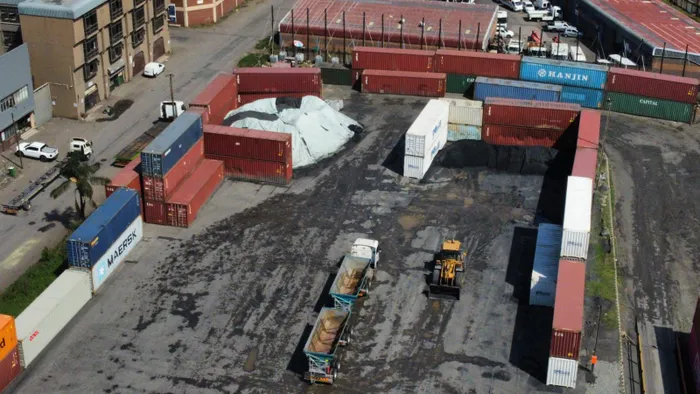
Drone footage of a premises in Clairwood that is allegedly storing chrome
Image: Supplied
Businesses in Clairwood, south of Durban have objected to the proposed handling and storage of chrome by one of South Africa’s largest bulk logistics operators, saying it poses serious health and environmental risks.
Reinhardt Transport Group has submitted an application to the eThekwini Municipality for the granting of a scheduled activities permit to handle and store chrome at its premises in Marajh Road in Clairwood.
Nearby businesses claim they and their employees have already been affected by dust they allege is emanating from the site, which they say is storing chrome despite not yet receiving municipal authorisation.
Objections were submitted after a public notice called for comment on the application.
Norman Williams, who runs a mechanical workshop, said since August last year they noticed a black chrome dust.
"At first I thought it was in the area and later realised it was from the premises next door. We complained to the owners and the City. We were told that they have been fined and told to not store or deal with the product, yet they are still dealing with the product
"My company has to stop working outside when it is windy as the contamination of chrome dust is so severe we cannot work in those conditions. I have had to close the workshop on several occasions due to this. This chrome dust is affecting my business financially. It is risky if the dust gets into the engines," said Williams.
He added that he has been at these premises for 21 years and have never been affected like this.
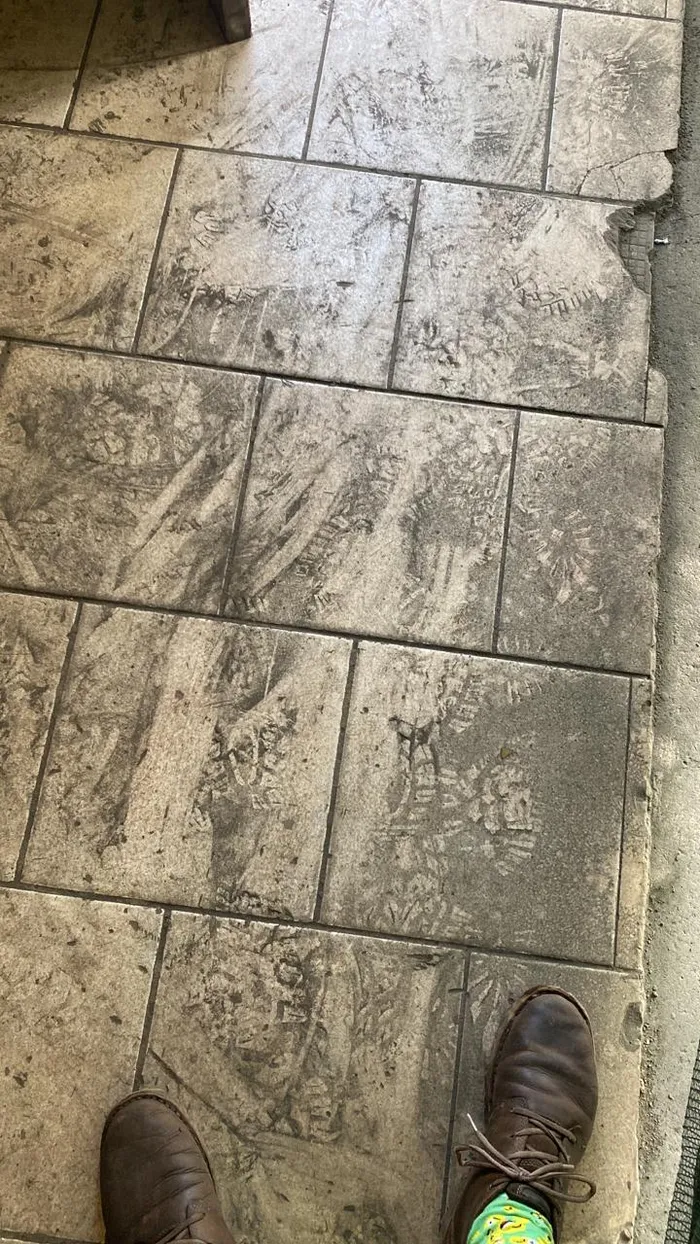
Clairwood businesses are complaining about the black chrome dust that is from a neighbouring business
Image: Supplied
In his objection to the municipality, Williams warned that chrome dust posed significant health and environmental risks, particularly when exposed to wind and weather.
"The presence of this material in an open or inadequately contained area raises significant concerns regarding air contamination, soil pollution, and potential health hazards to nearby residents, including children and pets.
"Since the material has been stored, I have become increasingly concerned about exposure and the long-term impact on our living and working environment. The dust has easily become airborne and spread to surrounding properties, which is unacceptable and potentially unlawful under environmental and municipal health regulations.
He said he and his staff have red eyes, are constantly coughing and have chrome dust between their teeth on a daily basis.
Williams has requested that the municipality provide air quality test results, proof that the material is not toxic, documentation permitting storage of the chrome, and evidence of enforcement action taken.
Another business owner, who did not want to be named, said the location of the facility poses a serious risk to the surrounding community and environment.
"Directly opposite this facility are residential flats where families with young children reside. Approximately three blocks away lies a river, and within a kilometer, there is a school. The proximity of these sensitive areas makes the use of hazardous substances in chrome plating particularly dangerous," he said.
He added that chrome plating involves the use of several hazardous substances, including Hexavalent chromium, Sulfuric acid, Hydrochloric acid, Cyanide compounds and heavy metals.
"These substances pose risks of air contamination, water pollution, and soil contamination. Exposure can lead to severe health issues such as respiratory problems, skin irritation, cancer, and neurological damage. In addition, workers performing welding and other tasks outside the facility are at risk of direct exposure," he said.
A businesswoman, who also declined to be named, said there is always a layer of black dust on the surfaces.
"The notice calling for objections to the application was not published in local newspapers in this area. Someone had seen it in a paper that is not even circulated in this community. We have lodged our objections.
"They should not have been storing this until permission was granted. It looks like they have been trying to cover the product, but it has not helped. We are not just objecting for commercial reason, but on behalf of the neighbouring communities and schools," she said.
She added that certain chrome substances cause cancer.
"Who knows what harmful impact this would have on our health in five to 10 years. We want to ensure our community in Clairwood and surrounding is safe," she said.
Johan Smuts, Reinhardt Transport Group's legal representative, said his client has submitted the relevant application to the municipality in respect of the handling and temporary storage of chrome material at its premises.
"This forms part of the company’s ongoing efforts to ensure that all regulatory requirements are appropriately aligned with its operations.
"The application is currently under consideration by the competent municipal authority and remains subject to the prescribed administrative processes," he said.
Smuts said his client was aware that certain concerns have been raised by neighbouring businesses.
"Reinhardt Transport Group takes such concerns seriously and has implemented operational controls aimed at minimising dust generation, including stockpile management, dust suppression measures and ongoing monitoring.
"Reinhardt Transport Group remains committed to complying with all lawful directives issued by the competent authorities and to ensuring that its operations are conducted in accordance with applicable environmental and regulatory requirements," said Smuts.
Gugu Sisilana, the municipality’s marketing and communications deputy head said the company was not permitted to store chrome at the facility.
"The company has since been issued a notice to cease operations and remove all chrome stored on the facility. In addition, the facility has been fined in terms of the Public Health By-Law," said Sisilana.
eThekwini Municipality’s Scheduled Activities By-Law 2019 permits companies listed under Schedule 1 to operate in accordance with the objectives of the by-law, which include:
Prof Rajen Naidoo, head of discipline of Occupational and Environmental Health at the University of KwaZulu-Natal, said it was important to identify the type and nature of the chrome that is being stored.
"It would be of concern if it is Hexavalent chromium as this form of chrome is most hazardous and leads to chronic problems, asthma and lung cancer," said Naidoo.