

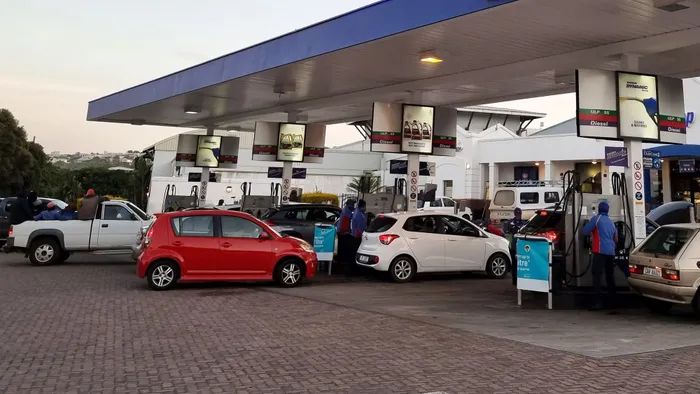
Fuel prices are set to increase significantly from Wednesday, April 1.
Image: David Ritchie / Independent Newspapers
South Africa will temporarily cut the general fuel levy by R3 per litre for April, as motorists brace for steep fuel price increases driven by turmoil in global oil markets.
Finance Minister Enoch Godongwana announced the measure on the eve of the hikes, saying, "I will temporarily be lowering the fuel levy for this month of April by R3 and then I am still discussing what we can do for the next two months."
The intervention follows a surge in global oil prices linked to escalating geopolitical tensions in the Middle East and the closure of the Strait of Hormuz, which have sent energy markets into volatility and pushed domestic fuel costs sharply higher.
From midnight, petrol and diesel prices will rise significantly, with increases of R3.06 per litre for both 93 and 95 unleaded petrol, while diesel will climb by up to R7.51 per litre depending on grade. Illuminating paraffin will jump by R11.67 per litre.
In a joint statement, Godongwana and Mineral and Petroleum Resources Minister Gwede Mantashe said, "the escalation of conflict in the Middle East has materially increased risks to global energymarkets, placing significant upward pressure on domestic fuel prices.
"Consultations have been held between the National Treasury and the Department of Mineral and Petroleum Resources to explore measures to provide short-termrelief to consumers, while maintaining a stable and sustainable fuel supply system,"
The levy reduction will run from 1 April to 5 May 2026, cutting the petrol levy from R4.10 to R1.10 per litre and diesel from R3.93 to R0.93. Government estimates the move will cost about R6 billion in lost revenue over the period, with plans to recover the shortfall within the current fiscal framework.
Officials said the decision balances pressure on households—particularly rising food and transport costs—against fiscal constraints.
Government also sought to ease concerns over supply, saying there is sufficient fuel nationally and attributing reported shortages to localised distribution issues and panic buying.
A broader package of support measures is under development, alongside a review of fuel pricing in the medium term.
The last time a fuel levy cut was implemented was in 2022 following the Russian invasion of Ukraine.