

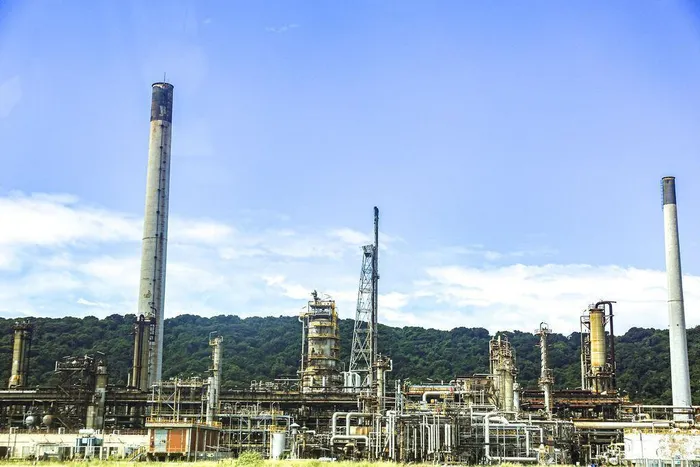
Plans are afoot to revive the former SAPREF refinery in Prospecton.
Image: eThekwini Municipality
eThekwini City Manager Musa Mbhele and Deputy Minister of Mineral and Petroleum Resources Phumzile Mgcina on Monday led an oversight visit to the former SAPREF refinery in Prospecton, as government moves to revive the idle facility and reposition it as a key industrial asset.
The visit signals a coordinated push by national and local authorities to bring the site—now rebranded as the South African National Petroleum Company (SANPC) Refinery—back into operation after a period of inactivity.
Once a cornerstone of South Africa’s fuel production, the refinery is being repositioned to support industrial renewal in KwaZulu-Natal. Its location within the petrochemical value chain and proximity to the Port of Durban’s logistics hub underscores its strategic importance to the regional economy.
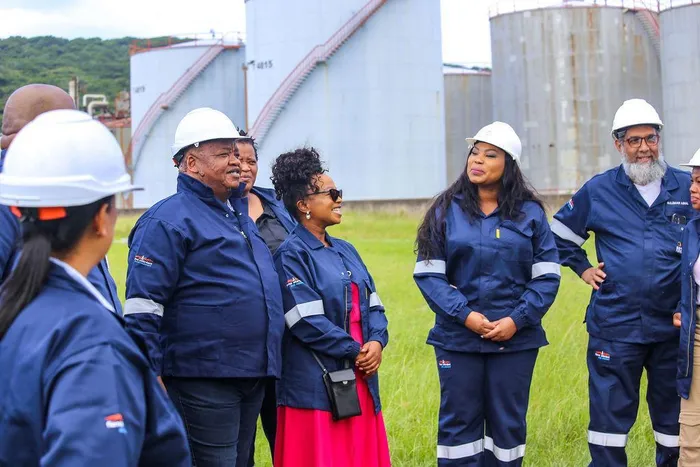
eThekwini City Manager Musa Mbhele and the Deputy Minister of Mineral and Petroleum Resources Phumzile Mgcina together with other officials on Monday visited the former SAPREF refinery to plan its revival as the SANPC Refinery.
Image: eThekwini Municipality
“This is more than a technical inspection; it signals strong alignment between national and local government,” said Mgcina.
Mbhele said the refinery’s revival would be critical to both local and national economic performance.
“The SANPC Refinery is a critical asset for both the municipal and national economy. Its revival will ensure that eThekwini remains globally competitive in industrial development.”
Government expects the restart of the refinery to unlock crude supply opportunities aligned with BRICS partnerships, aimed at improving energy security and diversifying supply sources. Officials say this could help stabilise fuel prices and strengthen resilience amid ongoing global geopolitical uncertainty.
The restoration project is expected to generate about 12,500 construction jobs and 2,850 permanent positions, while contributing an estimated 1.8% to national GDP. Authorities have also set a 65% local content target to support inclusive economic growth.
Monday’s visit included technical briefings and strategic discussions focused on aligning infrastructure investment with long-term energy and industrial objectives.