

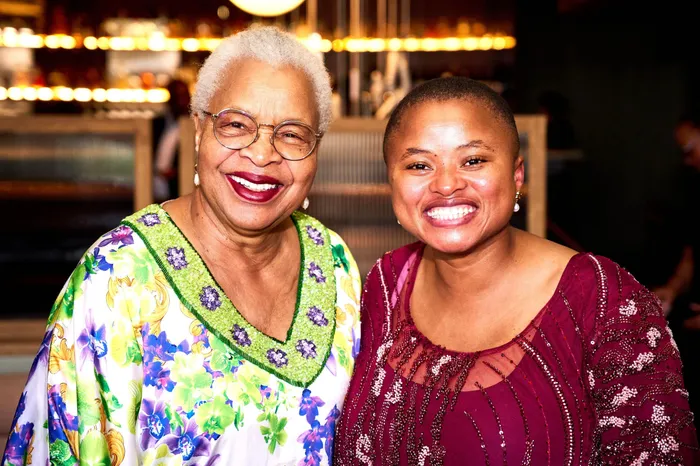
At a time when leadership is being tested globally, a powerful and timely conversation between former First Lady Graça Machel and Judy Sikuza, CEO of the Mandela Rhodes Foundation, is reframing what it truly means to lead.
Image: Supplied
At a time when global division and uncertainty continue to shape societies, a powerful conversation between global humanitarian Graça Machel and Judy Sikuza, CEO of The Mandela Rhodes Foundation, is prompting renewed reflection on what leadership should look like today.
Hosted by The Mandela Rhodes Foundation and available as a podcast on its website, the discussion brings into focus a simple yet profound truth: Leadership is not just about position but also service. Machel emphasised a perspective that challenges traditional notions of authority and calls for a more grounded, human-centred approach to leadership.
Machel reflects on how the leadership discourse has increasingly drifted away from people towards power, markets and control. When societies begin to treat populations as markets, rather than communities, she argues, leadership risks losing its moral centre.
This perspective reframes leadership as a responsibility to human lives. A shift that has profound implications for how institutions define success, how governments shape policy and how economies measure growth.
These reflections align closely with insights from the World Economic Forum Global Future Council on Leadership, which presented its white paper at Davos titled Next generation leadership for a world in transformation: Driving dialogue and action.
Together, both the research and Machel’s lived experience point to a growing need for leadership models rooted in justice, care and interdependence, particularly across generations.
Nelson Mandela reminded us that ‘it is better to lead from behind and to put others in front’. His leadership was never about ego, it was about enabling others to rise. Machel supports this and stresses that leadership must be rooted in justice, care and interdependence, particularly across generations. It needs to be ethical, collective and human.
A key theme from the conversation is the need to rethink how intergenerational leadership is developed.
Rather than viewing leadership as something to be passed down, both Machel and Sikuza advocate for a model where it is shared, where leaders of today and tomorrow learn alongside one another. They argue that the leaders South Africa and Africa need are already here: They are young, diverse, restless and capable.
Often described as ‘the leaders of tomorrow’, while well intentioned this framing subtly delays responsibility. We need a ‘now’ generation of leaders, young people who are empowered, trusted and expected to lead today, while still being shaped for tomorrow.
This approach challenges linear notions of succession, rather promoting generational collaboration, where leadership is entrusted and shared.
At its core, the conversation underscores the truth that leadership must be human-centred before it can be system-centred.
In increasingly polarised societies, leadership that prioritises control over care risks deepening division. By contrast, leadership rooted in listening, dignity and relationship has the potential to rebuild trust and foster cohesion.
Drawing on the philosophy of Ubuntu - the understanding that our humanity is bound together - Machel presents leadership not as a title but as a practice: Grounded in presence, empathy and shared responsibility.
Young leaders today are exposed to international best practice, new technologies and diverse ways of thinking. Yet what they sometimes lack is not insight, but access to platforms, networks, decision-makers and the permission to challenge systems that no longer serve us.
Effective leadership in Africa is not about importing solutions, it’s about adapting global ideas to African realities. The future belongs to leaders who can think globally, act locally and collaborate regionally.
As global challenges become more complex and interconnected, the message is clear that leadership can no longer be performative or deferred. It must be lived: Daily, collectively and with intention. ‘We don’t need leaders in waiting, we need leaders in action,’ says Sikuza.
‘Leadership is a responsibility we choose and is something we must practise with humility and with a deep commitment to building a better future for all.’