

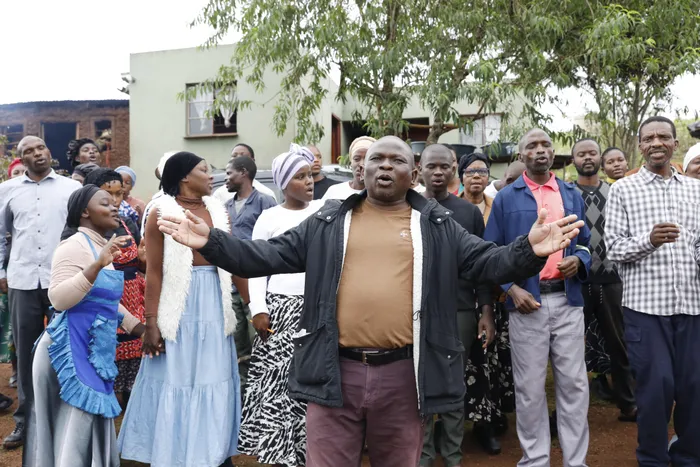
The chairperson of the Culture, Religion and Linguistic Rights Commission, Thoko Mkhwanazi-Xaluva has issued warnings about her concerns about the KwaMaphumulo-based religious sect that whose members have abandoned work, studies and their families to focus on faith-based farm-living led by Reverend Vusumuzi Sibiya (black jacket).
Image: DOCTOR NGCOBO Indepedent Newspapers
A faith-based community in KwaMaphumulo, northern KwaZulu-Natal, has come under renewed scrutiny after the Cultural, Religious and Linguistic (CRL) Rights Commission raised alarm over its practices.
The group, known as Abafundi bakaJesu (Jesus’ Disciples), has been criticised for encouraging members to abandon work, education and antiretroviral (ARV) treatment.
CRL Commission chairperson Thoko Mkhwanazi-Xaluva condemned the sect’s conduct, particularly its stance on HIV treatment.
Her comments follow warnings by KwaZulu-Natal Health MEC Nomagugu Simelane, who over the weekend called for the arrest of anyone urging HIV-positive individuals to stop taking ARVs.
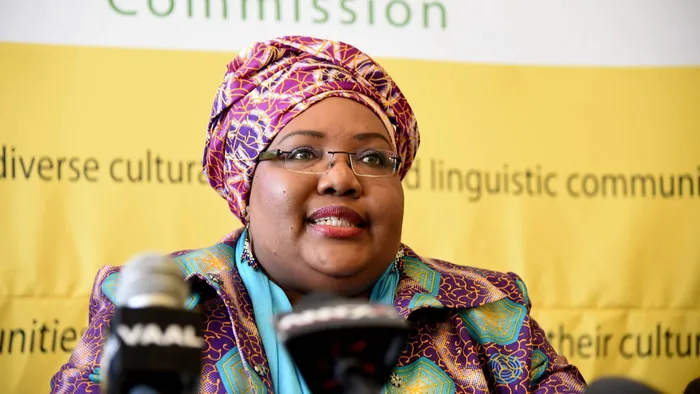
The chairperson of the Cultural, Religious and Linguistic (CRL) Rights Commission, Thoko Mkhwanazi-Xaluva, has warned that the situation of a religious sect in Dabangu, KwaMaphumulo, needs urgent intervention especially as it involves the welfare of children and HIV patients.
Image: Independent Newspapers Archives
Speaking at an Easter outreach programme hosted by the United Congregational Church of Southern Africa (UCCSA) in uMzinyathi, in Inanda, Simelane stressed that HIV/AIDS has no cure.
“Antiretroviral treatment enables people living with HIV to lead long, healthy lives while reducing the risk of transmission,” she said.
She warned that stopping treatment could lead to viral rebound, declining health, possible death and increased transmission.
“Spreading misinformation on this matter cannot be taken lightly,” Simelane added.
Reverend Vusimuzi Sibiya leads the sect at Ikhaya labafundi (Home of the disciples) in Dabangu village, KwaMaphumulo, where the community practices subsistence farming. Their livelihood depends on crop cultivation like sweet potatoes, mealie meal, avocados, guavas, amadumbe and other produce, alongside the management of livestock, specifically chickens, pigs, and cattle.
At Sibiya’s settlement, women in headwraps manage most of the cooking using cast-iron pots over open flames. The group is a diverse mix of former professionals and displaced families: graduates and business owners who resigned, students who abandoned their education, and children forced to drop out. Even a man who left his family in another province is among those now gathered here.
Sibiya maintains that members who stop taking medication believe in divine healing.
In television interviews after Sunday Tribune's sister paper, Isolezwe, broke the story, Sibiya said sick members are not taken to hospital but are prayed for until they recover.
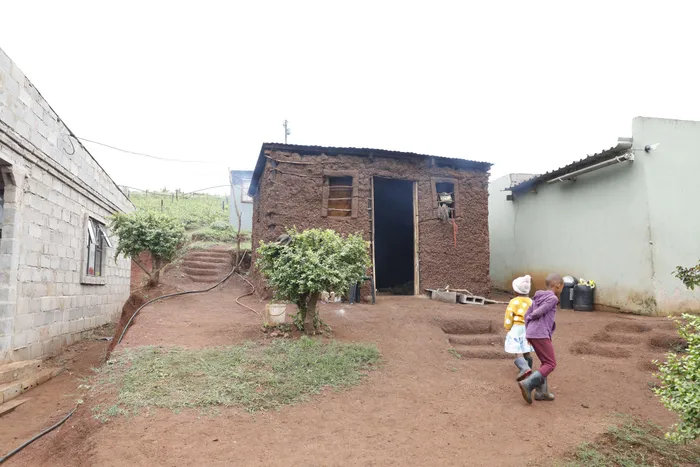
Some of the children loitering at the settlement of the Abafundi bakaJesu (Jesus' Disciples) in Dabangu village in KwaMaphumulo where a religious sect has abandoned jobs, studies, forced children to drop from school and HIV-positive individuals have stopped taking their antiretrovital treatment.
Image: DOCTOR NGCOBO Independent Newspapers
The revelations have sparked widespread concern, with public reaction ranging from shock to condemnation.
Mkhwanazi-Xaluva has urged the KwaZulu-Natal Department of Social Development to intervene urgently, warning that children in the community are particularly at risk.
She said it was deeply troubling that some children were being forced to abandon their education.
“This kind of religion exploits vulnerable people who may not fully understand the harm being done to them,” she said.
“We are committed to taking action. What is happening there is unacceptable.”
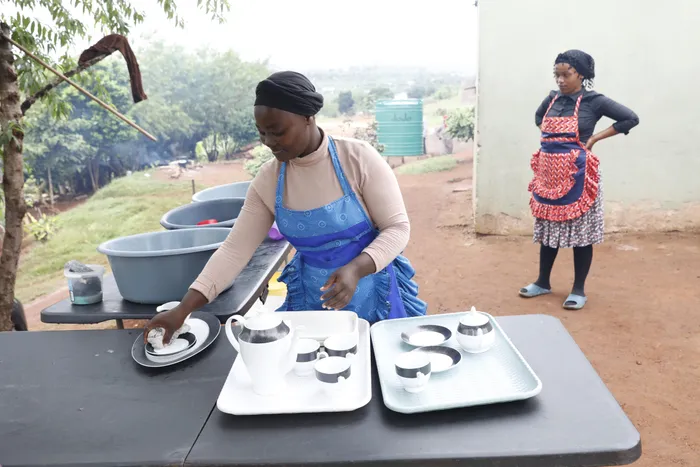
Noluthando Mbotho, from Harding in southern KwaZulu-Natal, left her job at Woolworths and a steady income to join about 100 members living a faith-based, self-sufficient lifestyle in the rural village of Dabangu in KwaMaphumulo. The Durban University of Technology marketing graduate says she has no regrets about her decision, as daily life in the community centres on worship and subsistence living.
Image: DOCTOR NGCOBO Independent Newspapers
She also criticised the rejection of ARV treatment, noting the powerful influence of religion over followers.
“People tend to follow instructions without question when religion is involved,” she said.
Mkhwanazi-Xaluva added that the broader state of religious oversight in South Africa remains weak, allowing harmful practices to persist.
“Let us pray that no harm comes to those living in that community,” she said.
She warned that such situations often end badly, adding that followers may eventually realise they have been misled.
The CRL chairperson called on authorities to act decisively, citing previous cases where religious leaders promoted dangerous practices.
“It is concerning to see people accept anything in the name of religion,” she said.
Despite mounting criticism, Sibiya remains defiant, insisting they won't stop practising what they believe in because they are guarded by God.
He said they are not panicking and are not afraid of those who are against what they are doing. Sibiya said they can't worry themselves about people who are not yet enlightened about faith.