

Today is the final day for public submissions on South Africa’s proposed new history curriculum for Grades 4 to 12
Image: File
Today marks the final opportunity for the public to comment on South Africa’s proposed new history curriculum for Grades 4 to 12, an initiative aimed at reshaping how the country’s past is taught in schools.
The draft curriculum stems from a process initiated in 2019, when former Minister of Basic Education Angie Motshekga appointed a task team to review and develop a revised history syllabus. The resulting document has been released for public input, with a focus on introducing an African-centred approach to history education.
The proposed curriculum seeks to equip learners with a foundational understanding and appreciation of the African continent and its relationship to the wider world.
The Minister of Basic Education, Siviwe Gwarube, said the draft was published to encourage meaningful public participation.
“The more inclusive this process is, the more inclusive our History curriculum will be. I therefore encourage as many people as possible to indicate where they believe the draft should be strengthened, corrected, expanded or refined,” said Gwarube.
Gwarube emphasised that the curriculum should remain balanced and not be shaped by political agendas.
She said the curriculum should not exclude key events or perspectives on political grounds, nor should it impose any particular ideology on learners.
“As South Africans we understand how complex our history is, and how important the study of it is for reconciliation and nation-building. Robust and responsible engagement is essential to ensure that the outcome of this process has a positive impact on our learners and our country,” said Gwarube.

An artist's impression of the monument, which will be erected to commemorate the arrival of indentured Indians to South Africa in 1860.
Image: 1860 Heritage Centre
However, some experts have raised concerns about gaps in the draft.
Social anthropologist Dr Rajendran Govender said that while the curriculum acknowledges Indian South African history, it does not yet go far enough.
"If we are serious about an inclusive South African history, then the curriculum must move beyond token references and properly integrate the experiences, struggles, institutions, leaders, women, workers, religious communities and local sites that form part of the South African story.
"The history of Indian South Africans is not peripheral, it is integral to the making of modern South Africa. A more comprehensive and nuanced inclusion of this history will not only enrich the curriculum but also strengthen social cohesion by ensuring that all communities see themselves reflected in the national story," he said.
Govender identified the arrival of Indian indentured labourers in 1860 in KwaZulu-Natal as a key starting point for broader inclusion.
"Beyond indenture, the curriculum must more robustly reflect the political and social contributions of Indian South Africans in the struggle for justice and democracy. While figures such as Mahatma Gandhi are referenced, the absence or limited treatment of other key figures is notable. Leaders such as Monty Naicker, Yusuf Dadoo, Ahmed Kathrada, and Fatima Meer played critical roles in shaping South Africa’s liberation history," said Govender.
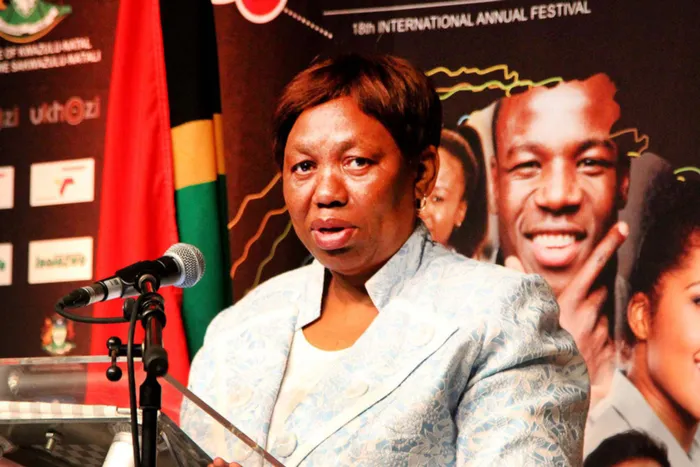
Former Minister of Basic Education Angie Motshekga appointed a task team to review and develop a revised history syllabus.
Image: File
He added that the current draft does not fully capture the depth and complexity of Indian South African experiences.
"The references to indenture in the draft curriculum are welcomed, but they require deeper engagement, including acknowledgment of documented abuses such as those captured in the Coolie Commission.
"Equally significant is the story of Valliamma Munusamy Mudaliar, a young martyr of the struggle whose courage and sacrifice at the age of 16 stand as a powerful symbol of resistance. Her story, and those of many others, deserves far greater prominence in the curriculum," he said.
Govender also called for a stronger emphasis on social history and lived experiences, including the forced removals of Indian communities from areas such as Magazine Barracks, Cato Manor and Clairwood to Chatsworth under apartheid spatial planning.
"Key historical events such as the Durban Riots of 1949 should also be more fully contextualised. The curriculum should also highlight stories of human courage and solidarity, such as the heroic actions of the Padavatan Brothers during the Umgeni River floods, where 176 lives were saved through extraordinary bravery in 1917," he added.
Govender said beyond politics and conflict, the curriculum should recognise the rich cultural, religious and community life of Indian South Africans.
Selvan Naidoo, director of the 1860 Heritage Centre, said the revised curriculum represents a “major contribution” toward reshaping education by centring African history, kingdoms, and agency.
He noted that the shift moves the curriculum away from its colonial legacy and toward a framework that promotes cultural reclamation and critical thinking.
Naidoo also welcomed the inclusion of oral testimony and other interactive methods of historical inquiry, describing them as more engaging for learners.
However, Naidoo raised concerns about gaps in the Grade 11 syllabus, particularly the absence of key topics such as the Dutch East India Company (VOC), slavery in the Indian Ocean, and the history of Indian indenture.
He argued that these subjects are essential for representing historically marginalised communities and should be taught alongside Atlantic slavery to provide a more integrated global perspective.
"The CAPS must consider including the critical differences and similarities between slavery and Indian Indenture, as well as the cultural resistance of the Minstrel Carnival and the development of Kaaps. This inclusion will diversify our history, allowing all our people to claim a place in telling a complete history of South Africa. South African children are better served when they can understand Atlantic and Indian Ocean slavery as a cohesive area of study and inquiry," said Naidoo.
Concerns were also raised about the Grade 12 syllabus, where Naidoo said several key aspects of colonial and liberation history require stronger emphasis. These include the economic and social impact of colonial policies such as the hut tax, as well as foundational anti-apartheid milestones like the Freedom Charter.
Naidoo called for expanded coverage of the role of women in the liberation struggle, including the Women’s March, and greater attention to pivotal events such as the Defiance Campaign, the Treason Trial, the Cato Manor Beer Hall Riots and the Sharpeville massacre.
"There should also be more on the United Democratic Front (UDF), the Release Mandela Campaign, as well as political assassinations and prominent figures including Ruth First, Dulcie September, Ashley Kriel, Lenny Naidu.
"Beyond the history of colonial and liberation politics, there is also room for the inclusion of social, cultural, and educational development in South Africa," said Naidoo.