

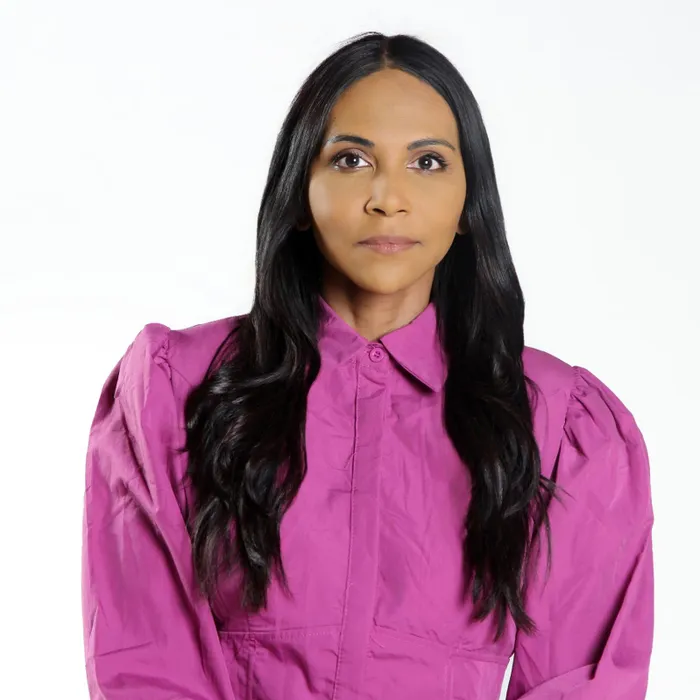
Kovini Moodley, a Chartered Accountant CA(SA), governance, risk and compliance specialist, and founder of Boss Babes of South Africa, is urging a national reckoning on how employees, particularly women, continue to experience workplace environments.
Image: Supplied
As Workers’ Day is commemorated across South Africa, a renewed call is being made to confront persistent challenges in modern workplaces, where dignity, equality and lawful conduct remain unevenly realised.
Kovini Moodley, a Chartered Accountant CA(SA), governance, risk and compliance specialist, and founder of Boss Babes of South Africa, is urging a national reckoning on how employees, particularly women, continue to experience workplace environments.
“Workers’ Day is not just about honouring the past. It is about confronting the present. And the truth is, for many South Africans, especially women, the workplace is still a space where dignity is negotiated rather than guaranteed,” said Moodley.
Moodley points out that workplace bullying and harassment remain deeply embedded across industries, often appearing in subtle, systemic forms that are difficult to prove.
“Too many women in South Africa continue to face various forms of workplace abuse, including intimidation, exclusion, harassment, and retaliation.
"What is particularly concerning is that this treatment is often triggered when women raise ethical concerns, challenge irregularities, or simply refuse to compromise their integrity,” she said.
Drawing on her experience in governance and risk, Moodley frames the issue as more than a social concern, but as a critical governance failure.
“When individuals are punished for speaking up, when ethical leadership is absent, and when power is misused to silence dissent, that is not a people issue alone. It is a breakdown of governance, accountability, and leadership,” she said.
Despite the country’s progressive legislative framework, including the Labour Relations Act and Employment Equity Act, Moodley argues that gaps in implementation continue to undermine worker protections.
“We have strong laws on paper, but inconsistent enforcement in practice.
"In many cases, formal processes such as grievances and disciplinary procedures are either delayed, diluted, or, worse, weaponised against those who speak out,” said Moodley.
She cautions that the impact reaches far beyond individual employees.
“A workplace that tolerates bullying and harassment erodes trust, destroys morale, and exposes organisations to significant legal and reputational risk. But more importantly, it strips people of their dignity,” she said.
As the nation reflects on the legacy of Workers’ Day, Moodley calls for a broader and more modern understanding of labour rights.
“The struggle for workers’ rights has evolved. Today, it is not only about wages and working hours. It is about psychological safety, ethical treatment, and the right to speak up without fear.”
She also outlined key actions for leaders across sectors, including prioritising independent reporting mechanisms, acting decisively on harassment cases, protecting whistleblowers, ensuring fair disciplinary processes, and embedding ethical leadership in organisational culture.
“We cannot claim to uphold the rule of law while allowing unlawful behaviour to persist within our own institutions. Leadership must be measured not by policies written, but by actions taken.”
“If dignity is still conditional, if equality is still contested, and if lawfulness is still selective, then we must ask ourselves whether we have truly honoured the spirit of Workers’ Day,” said Moodley.